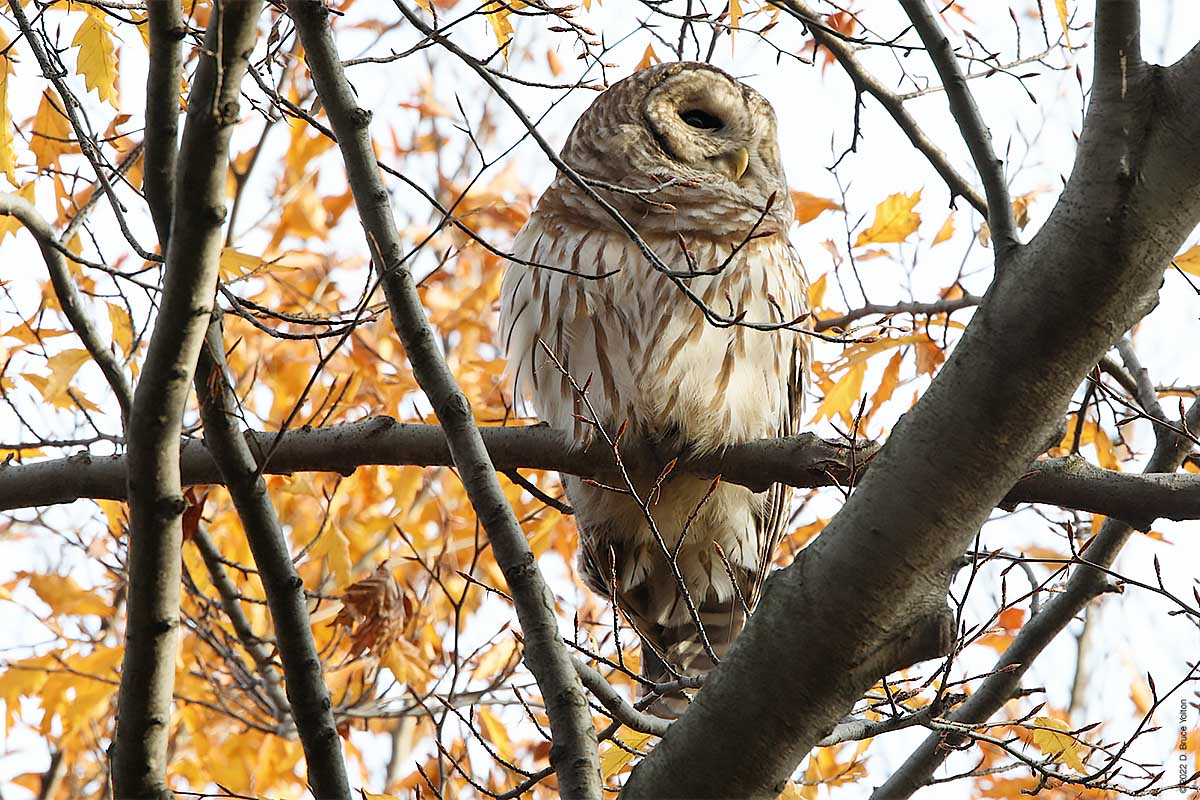
Amidst the cacophony of city life and the persistent pulse of urban sprawl, there exists a subtle, enigmatic presence that often goes unnoticed: the Barred Owl. This captivating bird, with its haunting calls and distinctive barred plumage, offers a compelling invitation to see cities not just as concrete jungles but as vibrant ecosystems brimming with untold wonders. Barred Owl watching in urban areas promises a profound shift in perspective—one that challenges preconceived notions of wildlife habitat and beckons the curious to embark on a journey of discovery amid the towering skyscrapers and manicured parks.
The Allure of Urban Raptors: Why Barred Owls Thrive in the Cityscapes
The notion of raptors thriving in urban environments may seem paradoxical at first glance. Yet, the Barred Owl’s ability to adapt to fragmented woodlands and suburban corridors reveals a remarkable ecological resilience. Cities, with their patchy green spaces, mature trees, and water bodies, inadvertently create microhabitats akin to the owls’ natural preferences. Mature deciduous trees provide ideal nesting cavities, while the diminishing presence of apex predators in urban zones offers a relatively safe haven for these nocturnal hunters.
Moreover, the urban environment provides a buffet of prey species—ranging from rodents, squirrels, to a variety of smaller birds and invertebrates—fuelling the Barred Owl’s dietary needs. These factors converge to position certain city spaces as unexpected sanctuaries, where woodland intrigue intertwines with urban rhythm. Watching a Barred Owl perched solemnly under streetlights or shadowed branches rewrites our assumptions, revealing a hidden nocturnal world that pulses with life beyond daylight.
Identifying Prime Urban Locales for Barred Owl Watching
Finding Barred Owls in a metropolis requires a keen eye and an understanding of their preferred environments. Urban parks with sprawling, mature tree canopies stand out as natural niches. Look for neighborhoods where patches of dense tree cover persist uninterrupted—old cemeteries, large botanical gardens, and riverine corridors all serve as covert launchpads for owl activity.
Waterways threading through cities also provide indispensable hunting grounds, drawing a healthy population of prey and, consequently, Barred Owls. Tree-lined streams and ponds often hum with the vibrant ecosystem required to sustain nocturnal raptors. Another secret lies in the suburban fringes—an intricate mosaic of small woodland pockets, backyards bursting with native trees, and quiet residential streets where artificial light is subdued, allowing the owls’ night vision advantage to come alive.
Urban planners and wildlife enthusiasts have noted that green belts and ecological corridors, when preserved and connected effectively, become vital for owls’ movement and breeding, underscoring the importance of thoughtful city design in supporting biodiversity.
Decoding the Barred Owl’s Signature: Calls and Behaviors in the Urban Night
A silent observer is often blind to the presence of Barred Owls until they lend voice to the twilight. Their distinctive hooting, a sibilant “Who cooks for you? Who cooks for you all?”, reverberates through the stillness of the urban evening, an eerie yet comforting hallmark for those attuned to their frequency. This auditory signature serves as both a territorial claim and a mating call, unlocking the owl’s secretive world for the perceptive listener.
Understanding their behaviors enriches the watching experience. Barred Owls are predominantly nocturnal but occasionally exhibit crepuscular activity, especially around dusk and dawn when their prey is most active. During breeding season, their territorial displays and occasional duets become more frequent, transforming parks and wooded patches into nocturnal theatres of life and survival.
Observing from a distance with minimal disturbance is crucial. The owls’ heightened sensitivity to noise and light means that respectful silence and the judicious use of red-filtered lights can greatly enhance the experience without compromising their natural rhythms.
Technological Allies and Time-Honored Techniques: Enhancing Urban Owl Watching
Modern technology has ushered in a renaissance of urban wildlife observation. Night-vision monoculars, thermal imaging cameras, and sensitive audio recorders empower enthusiasts to pierce through the urban veil and glimpse the elusive Barred Owl in action. These tools unravel mysteries hidden after sundown, revealing perching spots, flight patterns, and feeding rituals that escape the naked eye.
Yet, synthesis with traditional techniques often yields the richest encounters. Quiet patience, familiarity with local landscape features, and acute auditory listening remain timeless pillars. Mapping historical sightings within city parks, joining citizen science projects, and collaborating with urban wildlife groups contribute to a collective knowledge base that steadily illuminates the nocturnal narrative.
Additionally, seasonal rhythms dictate optimal periods for observation; late autumn through early spring when foliage thins offers improved visibility, while breeding seasons in late winter catalyze more vocal displays, both enhancing chances for meaningful encounters.
Conservation Imperatives: The Urban Owl’s Role in Biodiversity and Beyond
The presence of Barred Owls within cities transcends mere fascination; it serves as a barometer for urban ecological health. Their existence signals a balanced food web, the availability of suitable nesting sites, and a relatively intact habitat mosaic. Protecting such keystone species within urban environments fosters broader biodiversity benefits, encouraging the survival of other wildlife reliant on similarly shared habitats.
Urban conservation efforts must prioritize green space preservation, controlled light pollution, and educational outreach to nurture coexistence. Stakeholders—ranging from city planners to local communities—play a crucial role in stewarding these fragile urban oases. Embracing Barred Owls as emblematic residents compels us to reimagine urban spaces not only as human habitats but as intertwined networks of life.
The poetic allure of spotting a Barred Owl in the heart of the city awakens a profound empathy for nature’s tenacity and adaptability. It reminds us that even amidst glass and steel cathedrals, life persists, often in the shadows yet no less magnificent.
Navigating Ethical Wildlife Watching: Respect and Responsibility in Urban Settings
Encountering Barred Owls is a privilege that demands an ethical approach rooted in respect, responsibility, and restraint. Urban environments pose unique challenges; the risk of disturbance from foot traffic, noise, and light pollution is magnified. Enthusiasts must practice austere discretion—keeping a respectful distance, avoiding flash photography, and limiting extended human presence that could disrupt feeding or nesting behaviors.
Sharing sightings judiciously within wildlife communities encourages collective stewardship without overwhelming fragile habitats. Education on the importance of non-invasive observation techniques fosters a culture of reverence and protection.
The goal is not merely to observe but to honor these urban denizens as sentinels of a quieter, wilder city life. In doing so, we reaffirm our role as custodians, committed to nurturing the delicate dance between urban expansion and ecological preservation.
Conclusion: Rediscovering the City Through the Eyes of the Barred Owl
Barred Owl watching in urban areas offers a transformative lens through which to view the metropolis—not as a sterile labyrinth of human constructs but as a living, breathing habitat where man and nature persist in delicate equilibrium. Their haunting calls echo a timeless narrative, inviting city dwellers to rekindle a connection to wildness and wonder hidden in plain sight.
Following their ghostly silhouettes between lampposts and leafy boughs, one learns to perceive the city as an interwoven tapestry of life—complex, resilient, and endlessly fascinating. This pursuit not only enhances our appreciation of urban biodiversity but sparks a profound awakening to the extraordinary possibility that wilderness can thrive anywhere, even here in the heart of our constructed worlds.