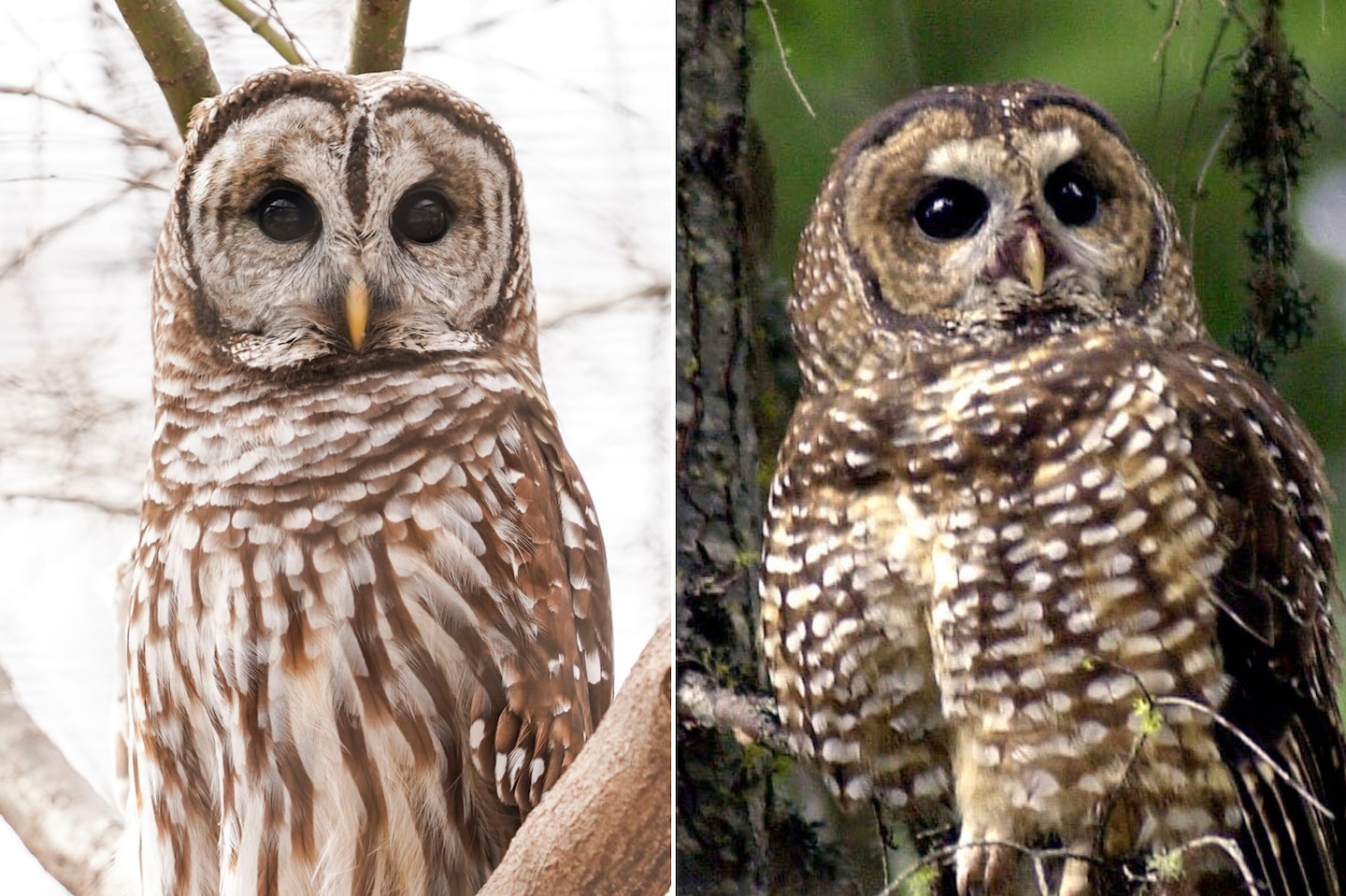
In the dense, whispering forests of the Pacific Northwest, a quiet war unfurls between two iconic species: the native spotted owl and the invasive barred owl. This conflict extends beyond mere coexistence—it threatens to unravel the very fabric of ecological balance that has persisted for centuries. Far from a simple predator-prey paradigm, the struggle over nesting sites elucidates profound shifts in wildlife dynamics, compelling us to rethink conservation, interspecies interaction, and the delicate art of coexistence in an evolving wilderness.
The Intricacies of Spotted Owl Nesting Habits
The spotted owl, an emblem of old-growth forests, is a species steeped in mystery and fragility. Their nesting sites are more than mere shelters; they are cradles of survival, meticulously chosen for their seclusion and abundance of prey. These owls prefer expansive, contiguous tracts of mature forest where towering conifers provide shelter and camouflage. Within these sanctuaries, they build nests on large tree branches or in natural cavities. Their reproductive success hinges on the preservation of these prime habitats, which simultaneously support a delicate network of biodiversity.
Each nesting choice is a calculated equation balancing safety from predators, proximity to food sources, and protection from the elements. The spotted owl’s low reproductive rate and long parental investment amplify the significance of each successful nesting season, making their vulnerability to nest site competition all the more consequential.
Barred Owls: A New Contender with Overlapping Territories
Enter the barred owl, a species native to the eastern United States, whose expansion westward into spotted owl territory has disrupted established ecological equilibriums. Unlike the spotted owl, barred owls are ecological generalists, adept at thriving in a broader range of habitats, including younger forests and fragmented landscapes. This adaptability affords them a competitive edge as they infiltrate into the spotted owl’s domain.
Barred owls are larger, more aggressive, and less specialized in their habitat requirements. Their presence introduces direct competition for nesting sites and prey. Because they tend to dominate encounters with spotted owls, barred owls have effectively displaced their more sensitive counterparts from critical nesting zones. This displacement not only affects the immediate nesting success but also reverberates through the spotted owl populations, exacerbating declines.
The Subtle Dynamics of Nesting Site Displacement
At the core of this interspecies conflict lies the competition for limited nesting real estate—a prized commodity in the fragmented forests of the Pacific Northwest. Barred owls do not merely coexist with spotted owls; they actively usurp prime nesting territories through aggressive encounters and territorial dominance. Encounters often culminate in the barred owls occupying nests once used by spotted owls or preventing the latter from establishing nesting territories altogether.
Further compounding the crisis is the barred owl’s ability to reproduce year-round and exploit a wider diet, which allows them to maintain and expand their populations at a rate that spotted owls cannot match. The result is a demographic squeeze where barred owls proliferate, while spotted owl numbers dwindle, intensifying the pressure on remaining nesting opportunities.
Ecological Consequences of the Invasive Barred Owl’s Expansion
This encroachment triggers more than a mere decline in spotted owl populations; it heralds a cascade of ecological consequences affecting the broader forest ecosystem. Spotted owls are often considered an umbrella species, meaning their habitat requirements encompass the needs of numerous other organisms. Loss of spotted owl nesting sites may signal broader environmental degradation, indicating disruptions in old-growth forest integrity and biodiversity.
Moreover, the displacement and potential local extirpation of spotted owls risk upsetting predator-prey dynamics. Barred owls, with their versatile diet, may alter prey populations differently, potentially creating imbalances in small mammal and bird communities. Such shifts can ripple outward, transforming forest floor ecology and impacting nutrient cycling, seed dispersal, and other vital ecosystem processes.
Conservation Dilemmas: Balancing Intervention and Natural Processes
In confronting the dominance of barred owls, wildlife managers face an ethical and ecological quandary. The artificial removal of barred owls to protect spotted owls, a strategy increasingly considered and implemented, challenges the notion of non-intervention and wilderness as untouched by humans. Yet, allowing barred owls to run rampant imperils the spotted owl’s survival, pushing it closer to local extinction.
The dilemma is stark: Should conservation prioritize the protection of a native, imperiled species at the expense of a newer but established rival? This question transcends ecology, touching on philosophy, ethics, and our role as stewards of the natural world. Selective removal or culling programs have been proposed and sometimes enacted, but these interventions underscore a larger debate—how do we manage the unintended consequences of past human alterations to landscapes and species distributions?
Rethinking Coexistence: Prospects for Adaptive Management
Amidst this fraught landscape, there is a growing call to shift perspectives from outright eradication to adaptive coexistence. Could novel conservation strategies allow the spotted and barred owls to share space, perhaps through habitat enhancement, niche partitioning, or assisted migration? Such approaches will require innovative thinking, a deeper understanding of owl ecology, and acknowledgment of changing environmental contexts driven by climate change and human activity.
Innovative research focusing on habitat restoration—encouraging the growth of old-growth characteristics even in younger forests—might reclaim ecological niches favoring spotted owls. Likewise, refining captive breeding and relocation programs could buffer populations while long-term solutions take root. These strategies highlight a more nuanced vision where conservation reconciles with complexity rather than seeks simple dichotomies of victor and vanquished.
Conclusion: A Catalyst for Broader Reflection
The saga of barred and spotted owls is a catalyst for profound reflection on how species adapt, compete, and survive amid shifting landscapes. It urges society to move beyond simplistic narratives of invasion and loss, prompting deeper inquiry into resilience, adaptation, and ethical stewardship of wilderness. Within this unfolding narrative, there lies a potent question: can humans redefine conservation to embrace complexity without forsaking the imperative to protect vulnerable species?
Ultimately, the future of spotted owl nesting sites depends not only on controlling invasive competitors but also on fostering ecosystems capable of sustaining diverse life. It challenges us to think creatively, act decisively, and nurture a world where coexistence is not an aspiration but a lived reality—an enduring testament to the intricate and evolving dance of life.