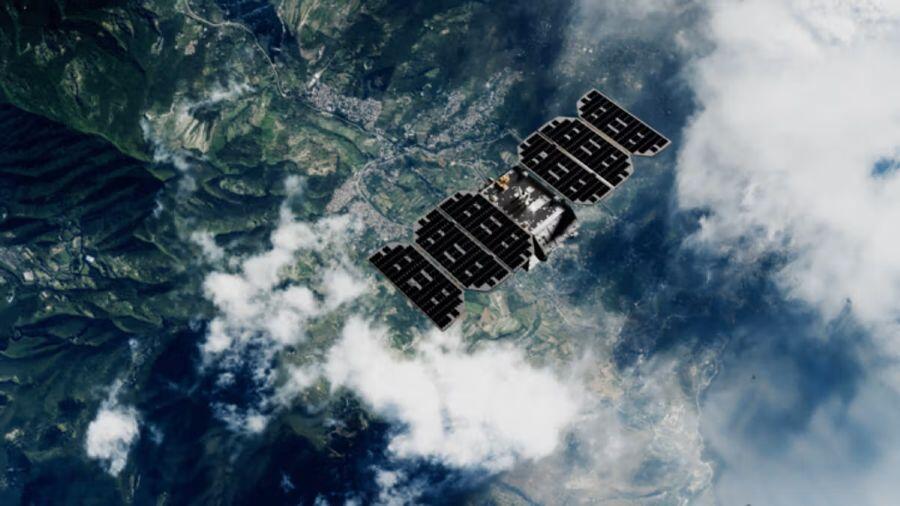
The owl, that silent sentinel of the night, has long been a creature of mystery—its haunts hidden in the dense canopies of ancient forests, its movements dictated by the moon’s phases. But what if we told you that the key to unlocking the secrets of these enigmatic birds might lie not in the rustling leaves or the whisper of wings, but in the cold, unblinking gaze of satellites orbiting hundreds of miles above? Welcome to the age where the heavens themselves become a tool for decoding the earth’s most elusive inhabitants.
The Silent Watchers: How Satellites Peer into the Owl’s Domain
From the vantage point of space, satellites equipped with high-resolution imagery can capture the earth’s surface with a precision that borders on the supernatural. These orbital observers don’t just see forests—they see the intricate tapestry of life woven into every leaf, every branch, every hollowed-out cavity in a tree trunk. For owls, whose territories can span vast, remote landscapes, this technology is nothing short of revolutionary.
Imagine a barn owl, its pale feathers blending into the moonlit fields as it hunts. From space, a satellite doesn’t see the owl itself—it sees the habitat that sustains it. The dense thickets where voles scurry, the open meadows where mice dart, the old-growth trees where the owl roosts. By analyzing vegetation density, moisture levels, and even the subtle shifts in terrain, scientists can map the ideal hunting grounds for these nocturnal hunters. But here’s the twist: what if the owl’s habitat is changing faster than we can track it?
The Paradox of Precision: When Technology Meets the Wild
Satellite imagery offers unparalleled clarity, but it’s not without its limitations. Owls, after all, are creatures of habit—yet their habitats are not static. Deforestation, urban sprawl, and climate change can alter landscapes in the blink of an eye, or rather, the click of a shutter. A satellite might capture a pristine forest one year and a clear-cut wasteland the next. The challenge? Ensuring that the data we gather keeps pace with the relentless march of time.
Consider the great horned owl, a master of adaptability. While some species retreat in the face of human encroachment, this particular raptor thrives in fragmented landscapes, nesting in everything from cacti to abandoned buildings. Satellites can map these adaptations, but they can’t predict the long-term consequences. Will the owl’s resilience be enough to outpace the destruction of its world? The answer lies in the pixels—and in the questions we haven’t yet thought to ask.
The Owl’s Secret Language: Decoding the Landscape
Every owl species speaks a different dialect of survival. The snowy owl, a wanderer of the Arctic tundra, relies on vast, open spaces where prey is abundant. The spotted owl, a denizen of the Pacific Northwest’s ancient forests, depends on the intricate structure of old-growth trees. Satellites can translate these needs into data, revealing patterns invisible to the naked eye. But what if the language of the land is changing faster than the owls can adapt?
Take the case of the burrowing owl, a ground-dwelling species that has carved out a niche in the grasslands of the Americas. Its survival hinges on the delicate balance between open terrain and scattered perches. Satellite imagery can map these conditions with stunning accuracy, but it can’t account for the subtle shifts in soil moisture or the creeping advance of invasive plant species. The owl’s world is a puzzle, and each piece must fit perfectly—or the picture falls apart.
The Shadow of the Algorithm: Can AI Predict the Owl’s Future?
Enter artificial intelligence, the newest ally in the quest to understand owl habitats. Machine learning algorithms can sift through terabytes of satellite data, identifying patterns that even the most seasoned ecologists might miss. They can predict where deforestation will occur next, where urban expansion will encroach on critical habitats, and where conservation efforts should be focused. But here’s the catch: AI is only as good as the data it’s fed. If the satellite imagery is flawed, or if the training datasets are incomplete, the predictions will be, too.
What if an algorithm, trained on data from a single region, assumes that all owl habitats are the same? The reality is far more nuanced. Owls are not monolithic; their needs vary by species, by season, by the whims of the climate. The challenge isn’t just collecting data—it’s ensuring that the data reflects the full spectrum of the owl’s world.
The Unseen Threats: Beyond the Forest’s Edge
Satellites can reveal the obvious threats—clearcuts, highways, sprawling cities—but what about the invisible ones? Light pollution, for instance, disrupts the owl’s nocturnal hunting patterns, casting a pall over its world. Noise pollution from distant roads or industrial sites can drive owls from their territories. Even the subtle changes in atmospheric composition, detectable from space, can hint at broader ecological shifts that threaten the owl’s survival.
Consider the case of the eagle owl in Europe, a species that has seen its range contract due to the encroachment of human activity. Satellites can map the spread of roads and buildings, but they can’t measure the psychological toll of a world that grows louder and brighter with each passing year. The owl’s silence is its strength—but in a world that never stops talking, that silence may become its undoing.
The Call of the Wild: What’s Next for Owl Conservation?
The future of owl conservation lies in the marriage of technology and tradition. Satellites provide the big picture, but ground-truthing—verifying satellite data with on-the-ground observations—remains essential. Citizen science initiatives, where volunteers contribute observations of owl sightings, can fill in the gaps left by orbital eyes. Meanwhile, conservationists are turning to drones and thermal imaging to monitor owl nests in real time, creating a multi-layered defense against habitat loss.
But the ultimate question lingers: Can we outpace the destruction? The owl’s world is a fragile one, shaped by forces both natural and man-made. Satellites can show us the way, but they can’t do the walking for us. The challenge is ours to meet—to ensure that the silent watchers of the night continue to thrive, long after the last pixel has been analyzed.