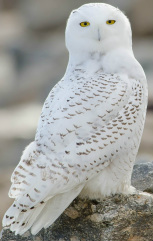
In the vast, desolate expanse of the Arctic tundra, a majestic sentinel rules the roost: the snowy owl. Clad in a cloak of pristine white feathers speckled with black, this formidable raptor is far more than just an emblem of Arctic wilderness. It is a pivotal actor woven intricately into the fragile and complex web of the Arctic food chains. Understanding the role of snowy owls offers profound insights into ecological balance, predator-prey dynamics, and the resilience of life in one of Earth’s most inhospitable environments.
Ecological Significance of Snowy Owls in Arctic Ecosystems
Snowy owls (Bubo scandiacus) occupy a unique niche in the Arctic due to their extraordinary adaptations and predatory prowess. They are apex predators in many parts of their range, capable of exerting top-down control over populations of smaller animals, primarily rodents and birds. This ecological role is a linchpin for maintaining the stability of the tundra’s delicate food web. By regulating prey populations, snowy owls indirectly influence vegetation growth and nutrient cycling—an intricate cascade that sustains the Arctic ecosystem.
Their hunting behavior and territory selection highlight intricate spatial and temporal patterns within the ecosystem. During peak breeding seasons, snowy owls concentrate their efforts on areas dense with lemmings and voles. These small mammals undergo population booms and busts, and the owls’ reproductive success closely mirrors these fluctuations, reinforcing their integral role in population dynamics.
Predatory Strategies and Prey Selection
Snowy owls employ a range of ambush and active hunting strategies extensively tailored to the Arctic environment. Their silent flight, enhanced vision, and acute hearing allow them to detect even the slightest movement beneath the snow or tundra grasses. Such adaptations make them consummate hunters of small mammals, which constitute the bulk of their diet.
Rodents such as Arctic lemmings and voles form the nutritional cornerstone for snowy owls. These prey items are not only rich in fat and protein but also abundant in Arctic summers, supporting the energetic demands of breeding pairs and their chicks. However, snowy owls are opportunistic and highly versatile, also preying on waterfowl, ptarmigan, and occasionally fish or carrion. This dietary diversity ensures their survival during lean periods when primary prey populations dwindle.
Interactions Within the Arctic Food Chain
The snowy owl’s presence resonates through multiple trophic levels, epitomizing the interconnectedness of Arctic life. As a mesopredator and sometimes apex predator, it competes with other carnivores such as Arctic foxes and jaegers for shared prey, engendering competitive pressures that reinforce natural selection and behavioral adaptations. These interactions sculpt the behavioral ecology of prey species, which evolve heightened vigilance and complex breeding strategies to evade predation.
Moreover, snowy owls contribute indirectly to scavenger guilds by leaving behind remains of consumed prey. This refuse provides essential nutrients for decomposers and scavengers, thus linking predator activity to soil fertility and the broader biological carbon cycle. Consequently, snowy owls occupy a nexus position in facilitating energy transfer within Arctic biomes.
Breeding, Nesting, and Population Dynamics
The reproductive cycles of snowy owls are tightly coupled with prey abundance, particularly the cyclic lemming populations. In years of lemming superabundance, snowy owls exhibit irruptive breeding behavior, producing larger clutches, and raising more offspring. Conversely, in low-prey years, breeding may be delayed or abandoned altogether, reflecting a profound ecological sensitivity to resource availability.
Nesting sites are typically established on elevated ground such as hummocks or rocky outcrops, offering panoramic views for spotting prey and scanning for threats. Parental investment is considerable; both males and females engage in provisioning and defending the nest against intruders. This reproductive strategy ensures the propagation of genes that support survival in harsh Arctic climates.
Impact of Climate Change on Snowy Owl Food Chains
The Arctic is warming at an accelerated pace, and this transformation is deeply unsettling the established food webs. Changes in snow cover, prey distribution, and habitat availability challenge snowy owl populations. Altered precipitation patterns may disrupt the synchrony between lemming population peaks and owl breeding seasons, precipitating reproductive failures and reduced juvenile survival.
Additionally, habitat shifts lead to increased competition with southern raptors encroaching on traditional snowy owl ranges. This ecological pressure threatens the delicate balance, with potential cascading effects throughout the food chain. Understanding these impacts is crucial for conservation strategies that aim to preserve not only snowy owls but the integrity of entire Arctic ecosystems.
Cultural and Scientific Importance
Beyond ecological functions, snowy owls hold a revered place in Indigenous cultures and scientific research focused on Arctic biodiversity. They are emblematic of wilderness and endurance, inspiring folklore and spiritual symbolism across circumpolar communities. Scientists study the population dynamics of snowy owls to glean insights into ecosystem health, climate change impacts, and the evolutionary adaptations that enable survival at extreme latitudes.
This dual role accentuates the owl’s importance—not merely as a predator, but as a gateway species that helps humans understand and appreciate the fragility and wonder of Arctic nature.
Conclusion: Snowy Owls as Guardians of Arctic Balance
In the relentless expanse of frozen tundra, snowy owls reign as both rulers and regulators. Their presence orchestrates the rhythm of the Arctic food chains, governing prey populations and facilitating nutrient flow. Through their adaptations and behaviors, these luminous raptors embody the resilience and interconnectedness of life in a world shaped by ice and wind.
Protecting snowy owls means more than saving a single species; it means safeguarding a vital thread in the intricate tapestry of Arctic life. Their fate is a mirror reflecting the broader health of an ecosystem undergoing profound and unprecedented change.