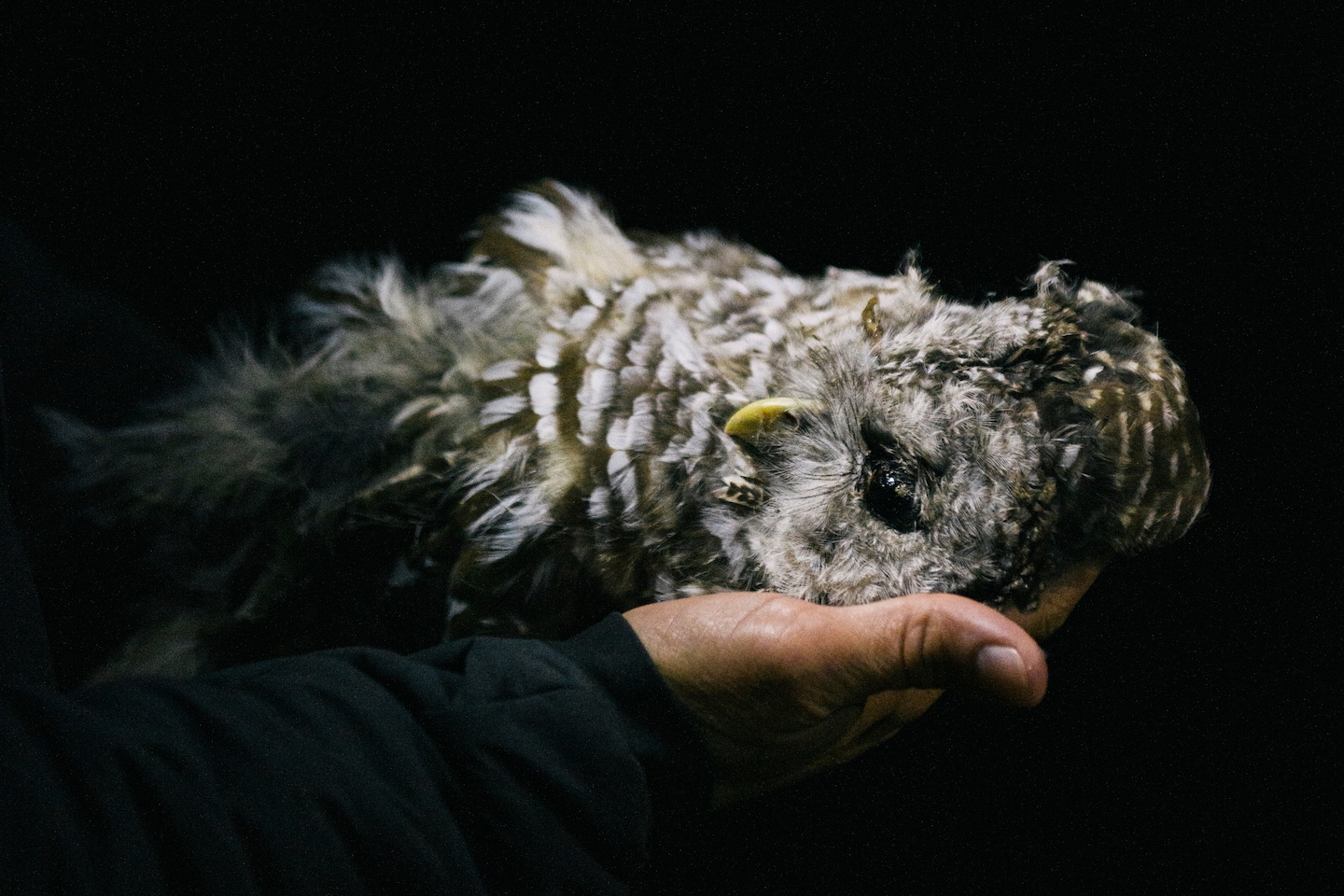
The barred owl, a native of the eastern United States, has become an unwelcome intruder in the ancient forests of the Pacific Northwest. Once a rare sight west of the Mississippi, this adaptable and aggressive species now thrives in ecosystems where the endangered spotted owl once reigned supreme. The conflict between these two owls is not merely a biological curiosity—it is a crisis exacerbated by the relentless march of climate change. As temperatures rise, habitats shift, and food sources dwindle, the competition between barred and spotted owls intensifies, threatening the survival of one of the most iconic species in North American conservation history.
The Unseen War in the Canopy: How Barred Owls Outcompete Their Spotted Relatives
The barred owl’s expansion into the West is a story of ecological displacement, driven by human-induced climate disruption. Unlike the spotted owl, which evolved in the stable, old-growth forests of the Pacific Northwest, the barred owl thrives in a broader range of habitats, from dense woodlands to fragmented landscapes. Its adaptability has given it a competitive edge, allowing it to exploit resources that the more specialized spotted owl cannot. Climate change has accelerated this invasion by altering precipitation patterns, lengthening growing seasons, and creating conditions that favor the barred owl’s generalist diet and nesting habits.
Spotted owls, with their strict reliance on old-growth forests and preference for dusky-footed woodrats and flying squirrels, are ill-equipped to compete when their prey becomes scarce or their habitat degrades. The barred owl, on the other hand, preys on a wider variety of animals, including the very species that spotted owls depend on. This dietary flexibility, combined with the barred owl’s larger size and more aggressive nature, has led to direct predation on spotted owls and their young. The result is a silent war in the treetops, where the survival of one species comes at the expense of the other.
Climate-Driven Habitat Fragmentation: A Double-Edged Sword
Climate change is not just warming the planet—it is reshaping entire ecosystems. Rising temperatures and prolonged droughts have weakened the resilience of old-growth forests, making them more susceptible to wildfires, pests, and disease. These disturbances fragment habitats, creating isolated pockets of suitable territory that are too small to sustain spotted owl populations. Meanwhile, the barred owl, with its ability to exploit disturbed and secondary forests, thrives in these altered landscapes. The once-pristine corridors that allowed spotted owls to disperse and find mates are now fractured, leaving them vulnerable to inbreeding and local extinctions.
In the Pacific Northwest, the frequency and intensity of wildfires have surged, scorching millions of acres of forest. While barred owls can retreat to lower elevations or edge habitats, spotted owls—dependent on the dense canopy and cool microclimates of old-growth stands—are left with fewer refuges. The loss of these critical habitats is not just a loss of trees; it is a loss of an entire way of life for a species that has called these forests home for millennia. The irony is stark: the very changes that are pushing barred owls westward are also eroding the foundation of the spotted owl’s existence.
The Prey Paradox: How Climate Change Disrupts the Food Web
At the heart of the barred-spotted owl conflict lies a fundamental imbalance in the food web, one that climate change has exacerbated. Spotted owls rely on a delicate balance of prey species, particularly the dusky-footed woodrat and the northern flying squirrel, both of which depend on the lush understory and abundant fungi of old-growth forests. As temperatures rise and moisture levels fluctuate, these prey populations decline, leaving spotted owls with dwindling resources. The barred owl, however, is not bound by such constraints. Its diet includes a broader array of small mammals, birds, and even insects, allowing it to adapt to changing conditions more readily.
This prey paradox is a microcosm of a larger ecological unraveling. Climate change is not just altering the abundance of food sources; it is disrupting the timing of biological events. Warmer winters can cause prey species to emerge earlier or later than usual, misaligning their life cycles with the owls’ breeding seasons. Spotted owls, with their slower reproductive rates, are particularly vulnerable to these mismatches. The barred owl, with its faster breeding cycle and higher reproductive output, can rebound more quickly from environmental stressors, further tilting the competitive balance in its favor.
Conservation in Crisis: The Ethical Dilemma of Culling Barred Owls
The escalating conflict between barred and spotted owls has forced conservationists into an agonizing ethical quandary. Some wildlife managers argue that culling barred owls is a necessary evil to prevent the extinction of the spotted owl, a species already listed under the Endangered Species Act. Others decry this approach as a form of ecological colonialism, where humans intervene to “correct” the natural order in favor of a species they deem more worthy. The debate is fraught with moral complexity: Is it justifiable to sacrifice one species to save another, especially when the root cause of the conflict—climate change—remains unaddressed?
The reality is that conservation efforts are playing catch-up in a world where human activity has already tipped the scales. While culling may provide temporary relief, it does nothing to address the underlying drivers of the conflict. Without aggressive action to mitigate climate change, restore old-growth forests, and reduce habitat fragmentation, the barred owl’s expansion will continue unabated. The ethical dilemma is not just about owls; it is about our own complicity in the destruction of the natural world and our responsibility to repair it.
Beyond the Owls: What This Conflict Reveals About Ecosystem Collapse
The barred-spotted owl conflict is more than a story of two birds competing for survival. It is a harbinger of ecosystem collapse, a warning sign of the cascading effects of climate change on biodiversity. When one species dominates at the expense of another, the entire web of life is thrown into disarray. Pollinators may decline, seed dispersal may falter, and invasive plants may take over, further altering the landscape. The owls are not just competitors; they are indicators of a much larger crisis.
This conflict also highlights the limitations of traditional conservation strategies in the face of climate change. Protecting isolated patches of habitat is no longer enough. Ecosystems must be allowed to shift and adapt, with corridors that enable species to migrate as temperatures rise. This requires a fundamental rethinking of land management, one that prioritizes connectivity over fragmentation and resilience over stasis. The fate of the spotted owl may well determine whether we are willing to make that shift.
The Path Forward: Can We Save Both Owls—or Is One Doomed?
The question is no longer whether we can save the spotted owl, but whether we are willing to try. Conservationists are exploring innovative solutions, from captive breeding programs to habitat restoration initiatives that create fire-resistant forests. Some advocate for translocating barred owls to reduce pressure on spotted owl populations, while others push for more aggressive climate mitigation to slow the pace of ecological disruption. But time is running out. The barred owl’s advance is relentless, and the spotted owl’s decline is accelerating.
Ultimately, the fate of these owls is a reflection of our own choices. Will we continue to treat the natural world as a battleground, where species must fight for scraps of survival? Or will we recognize that the health of the barred owl and the spotted owl are intertwined, and that their fates are a measure of our own stewardship of the planet? The answer will determine not just the future of these two birds, but the future of the forests they call home—and the future of life on Earth.