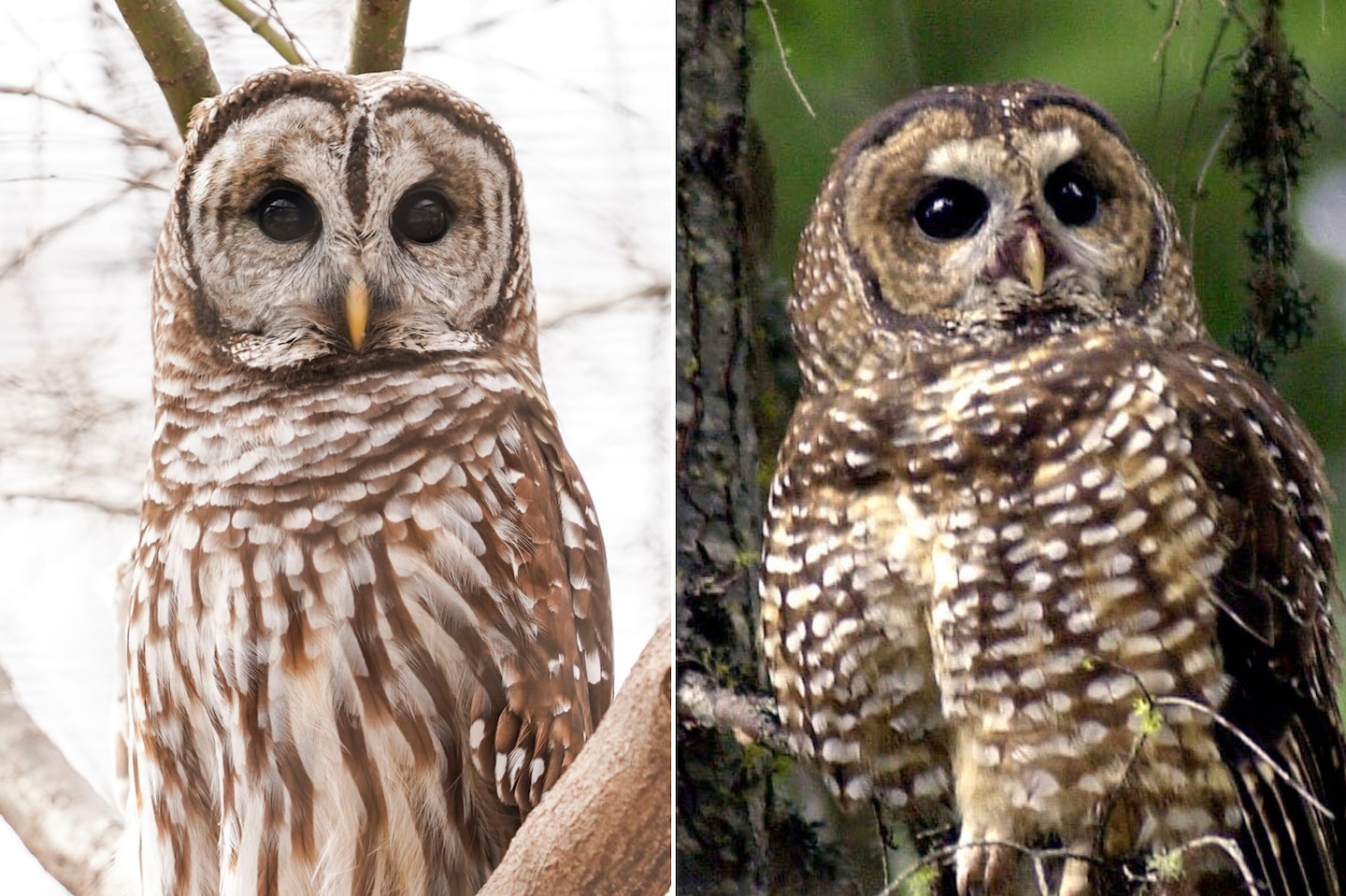
The ancient forests of the Pacific Northwest hum with a quiet, almost sacred tension—a clash of wings and whispers, where the fate of one owl species is pitted against another in a struggle for survival. The barred owl, a bold and adaptable invader, has encroached upon the dwindling territories of the spotted owl, a relic of old-growth ecosystems teetering on the brink of extinction. Habitat restoration, then, is not merely a conservation tactic; it is a lifeline, a desperate attempt to rewrite the narrative of ecological decline before the final chapter is written. To understand this battle, we must first peel back the layers of history, ecology, and human intervention that have brought us to this precipice.
The Vanishing Canopy: A Portrait of Loss
The spotted owl, with its dark, soulful eyes and haunting four-note call, is a creature of the deep woods—an arboreal aristocrat clinging to the last remnants of ancient forests. Its habitat, once vast and unbroken, has been fragmented by centuries of logging, urban sprawl, and industrial exploitation. The result is a patchwork of isolated woodlands, where the spotted owl’s survival is as precarious as a leaf trembling on the edge of a storm. Barred owls, meanwhile, are the ecological opportunists—generalists who thrive in disturbed landscapes, their adaptability a double-edged sword that now threatens to sever the spotted owl’s already frayed lifeline. Habitat restoration, in this context, is an act of ecological repentance, a way to atone for the sins of the past by reclaiming the land’s lost grandeur.
Ecological Chess: The Barred Owl’s Gambit
Barred owls are not villains by nature, but their success is a symptom of a deeper imbalance. Their arrival in the Pacific Northwest is a relatively recent phenomenon, likely driven by climate change and the clearing of forests in the Midwest and East. Where the spotted owl is a specialist, adapted to the cool, moist climes of old-growth forests, the barred owl is a generalist, capable of thriving in a variety of environments. This adaptability has allowed it to outcompete the spotted owl for food and territory, its presence a stark reminder of how quickly ecosystems can be upended when the rules of engagement change. Habitat restoration, then, must be more than just replanting trees—it must be a strategic counter-move, a way to tilt the playing field back in favor of the spotted owl.
The Alchemy of Restoration: Healing the Land
Restoring habitat for the spotted owl is not a simple task. It requires a deep understanding of the forest’s intricate web—of the mycorrhizal fungi that nourish the trees, the understory plants that shelter prey, and the microclimates that sustain life. Restoration efforts often begin with prescribed burns to mimic the natural fire regimes that once shaped these forests, clearing away the dense underbrush that chokes out young conifers. Selective logging can also play a role, thinning out dense stands to allow sunlight to reach the forest floor and encourage the growth of diverse plant life. But the most critical element is time. Forests do not heal overnight; they are the slow, patient work of decades, even centuries. And in that time, the barred owl’s advance must be checked—not through culling, but through the restoration of a habitat so rich and abundant that competition becomes a moot point.
The Silent Symphony: Restoring the Forest’s Voice
There is a poetry to habitat restoration that often goes unnoticed. When a forest is allowed to regenerate, it does not just grow back—it sings. The rustle of leaves, the creak of branches, the distant call of a woodpecker—these are the notes of a symphony that has been silenced by human hands. For the spotted owl, this symphony is its lifeline. The owl’s survival depends not just on the presence of trees, but on the health of the entire ecosystem. A restored forest is one where the understory teems with rodents and insects, where the canopy is dense enough to provide shelter from predators, and where the air is thick with the scent of pine and damp earth. This is not just habitat restoration; it is the restoration of a voice, a way for the forest to reclaim its identity and, with it, the survival of its most vulnerable inhabitants.
The Human Equation: Stewards of the Wild
Yet habitat restoration is not just about trees and owls—it is about us. The choices we make today will determine whether the spotted owl’s haunting call fades into silence or echoes through the centuries. This is a call to action, not just for scientists and policymakers, but for every person who has ever walked through a forest and felt the weight of its history. It is a reminder that we are not separate from nature, but a part of it—a thread in the tapestry of life. Habitat restoration is our way of mending that tapestry, of weaving our own story back into the fabric of the wild. It is a humbling task, one that requires patience, humility, and a willingness to admit that we do not know all the answers.
The Unseen Battles: Beyond the Owls
Of course, the conflict between barred and spotted owls is just one chapter in a much larger story. Habitat restoration has ripple effects that extend far beyond the boundaries of a single forest. It is a bulwark against climate change, a sanctuary for pollinators, and a refuge for countless species teetering on the edge of oblivion. When we restore a forest, we are not just saving owls—we are saving the soil, the water, and the air. We are preserving the intangible: the sense of awe that comes from standing beneath a canopy of towering trees, the knowledge that we are part of something greater than ourselves. This is the true appeal of habitat restoration—not just as a means to an end, but as an end in itself.
The Final Stand: A Plea for the Future
The fate of the spotted owl hangs in the balance, but so too does the fate of our own humanity. In the quiet of the forest, we are reminded of our place in the world—not as conquerors, but as caretakers. Habitat restoration is our chance to rewrite the story, to turn the tide of extinction and reclaim the wild. It is a daunting task, but not an impossible one. The barred owl may be a formidable foe, but the forest is a fortress, and its defenders are legion. We must stand with them—not with guns or culls, but with seeds and saplings, with patience and perseverance. The owl’s call is not just a sound; it is a plea, a whisper from the past, and a promise for the future. Will we answer?