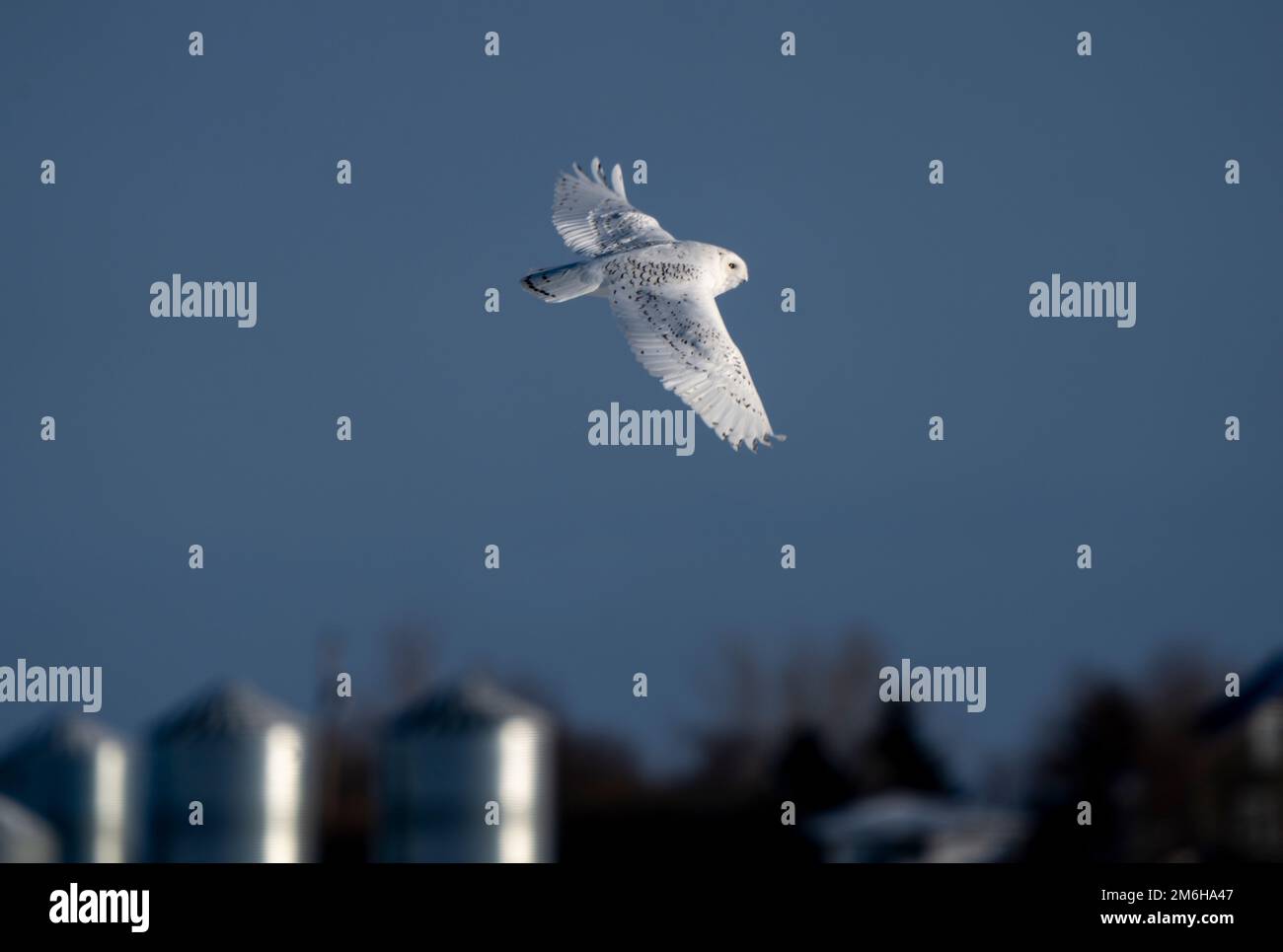
The snowy owl, a regal specter of the Arctic tundra, has long been a symbol of untamed wilderness. Yet, beneath its silent, feathered gaze lies a story of resilience—a tale where legal action became the shield that preserved this iconic species from the encroaching shadows of extinction. Canada, a land of vast, untamed beauty, has witnessed a quiet revolution in conservation, where the courtroom became an unlikely sanctuary for the snowy owl. This is the story of how legal battles wove a protective tapestry around a bird that has captivated hearts for centuries.
The Silent Decline: A Species on the Brink
Once, the snowy owl soared across the Canadian Arctic like a ghostly sentinel, its white plumage blending seamlessly with the endless snow. But as the climate warmed and human encroachment tightened its grip, the owl’s domain began to shrink. Habitat loss, driven by industrial expansion and shifting ecosystems, threatened to erase this majestic creature from the landscape. The silent decline was not just a loss of a species—it was the erosion of a symbol, a living emblem of the wild that once ruled the northern skies.
The snowy owl’s plight was not unique, but its vulnerability was stark. Unlike migratory birds that could adapt to changing conditions, this Arctic dweller was bound to a shrinking world. The legal system, often seen as a slow and cumbersome beast, became the unexpected guardian of its future. Through meticulous advocacy and strategic litigation, conservationists turned the tide, proving that even in the face of overwhelming odds, the law could be a force for good.
The Legal Arsenal: Strategies That Shaped Protection
Protecting the snowy owl required more than just goodwill—it demanded a legal arsenal sharp enough to pierce through bureaucratic inertia. The first line of defense was the Species at Risk Act (SARA), Canada’s legislative bulwark against extinction. Enacted in 2002, SARA provided a framework to identify and safeguard imperiled species, but its power lay dormant until tested in court. Conservation groups seized this tool, filing petitions and lawsuits to compel the government to act. Each legal maneuver was a chess move, forcing authorities to confront the urgency of the owl’s situation.
Beyond SARA, environmental lawyers wielded other legal instruments—injunctions to halt destructive projects, habitat protection orders to shield critical nesting grounds, and public interest litigation to rally public support. The courts became a stage where the snowy owl’s fate was debated, not in whispers of sympathy, but in the cold, hard language of the law. Each victory was a step toward reclaiming the owl’s right to exist, undisturbed by human hands.
The Battle for Habitat: A Fight Against the Tide
The snowy owl’s survival hinged on its habitat—a fragile mosaic of Arctic tundra and coastal wetlands. Yet, this landscape was under siege. Industrial projects, from mining operations to wind farms, carved through the owl’s domain, leaving behind a trail of ecological ruin. Conservationists fought back with a simple but powerful argument: the law demanded that these lands remain untouched. Legal challenges forced developers to pause, to reconsider, and in some cases, to abandon their plans entirely.
One landmark case saw a coalition of environmental groups sue a mining company over its plans to expand into prime snowy owl territory. The lawsuit argued that the project violated SARA’s provisions, threatening the owl’s survival. The court’s ruling was a watershed moment—it set a precedent that habitat protection was not negotiable. The snowy owl’s domain was no longer a bargaining chip; it was a sacred trust, legally enshrined. This victory rippled across the country, emboldening further legal actions to safeguard other at-risk species.
The Power of Public Outcry: When the Courtroom Meets the Street
Legal battles are often fought in the shadows of courtrooms, but the snowy owl’s story was different. Public outcry became a force multiplier, amplifying the impact of each lawsuit. Social media campaigns, documentaries, and grassroots movements turned the owl into a symbol of resistance against ecological destruction. When a legal victory was secured, it wasn’t just a win for the lawyers—it was a triumph for every Canadian who had ever marveled at the sight of a snowy owl against the winter sky.
The courts, too, were not immune to this groundswell of support. Judges, tasked with interpreting the law, found themselves swayed by the emotional weight of the owl’s plight. In one case, a judge cited the public’s attachment to the species as a factor in ruling against a development project. This intersection of legal rigor and public passion created a synergy that proved unstoppable. The snowy owl was no longer just a bird—it was a rallying cry, a living testament to the power of collective action.
The Ripple Effect: A Model for Global Conservation
The legal victories in Canada did more than protect the snowy owl—they sent a ripple across the world. Conservationists in other countries took note, adapting Canada’s strategies to their own battles against extinction. The snowy owl became a case study in how litigation could be wielded as a tool for ecological justice. International organizations, from the IUCN to the UN, began to recognize the potential of legal action in preserving biodiversity.
Yet, the story is far from over. The snowy owl’s future remains precarious, threatened by climate change and human encroachment. But the legal framework built to protect it stands as a beacon of hope. It proves that even in an era of environmental crisis, the law can be a force for renewal. The snowy owl, once a silent victim, now soars with the weight of legal protection behind it—a guardian of the wild, and a reminder that nature’s rights are worth fighting for.
The Unseen Guardians: The Lawyers and Activists Behind the Scenes
Behind every legal victory for the snowy owl were the unsung heroes—lawyers who spent sleepless nights drafting petitions, activists who chained themselves to bulldozers, and scientists who painstakingly documented the owl’s decline. These individuals were the architects of change, their tireless efforts weaving a safety net for a species on the edge. Their work was not glamorous; it was gritty, often thankless, and always urgent. Yet, without them, the snowy owl’s story might have ended in silence.
Their legacy is a testament to the power of persistence. In a world where extinction often feels inevitable, they proved that resistance is not futile. The snowy owl, with its piercing golden eyes and silent wings, became a symbol of what can be achieved when passion meets legal strategy. It is a story of hope, of battles fought not with guns or bombs, but with words and laws—a reminder that even the most fragile creatures can be protected when humanity chooses to act.