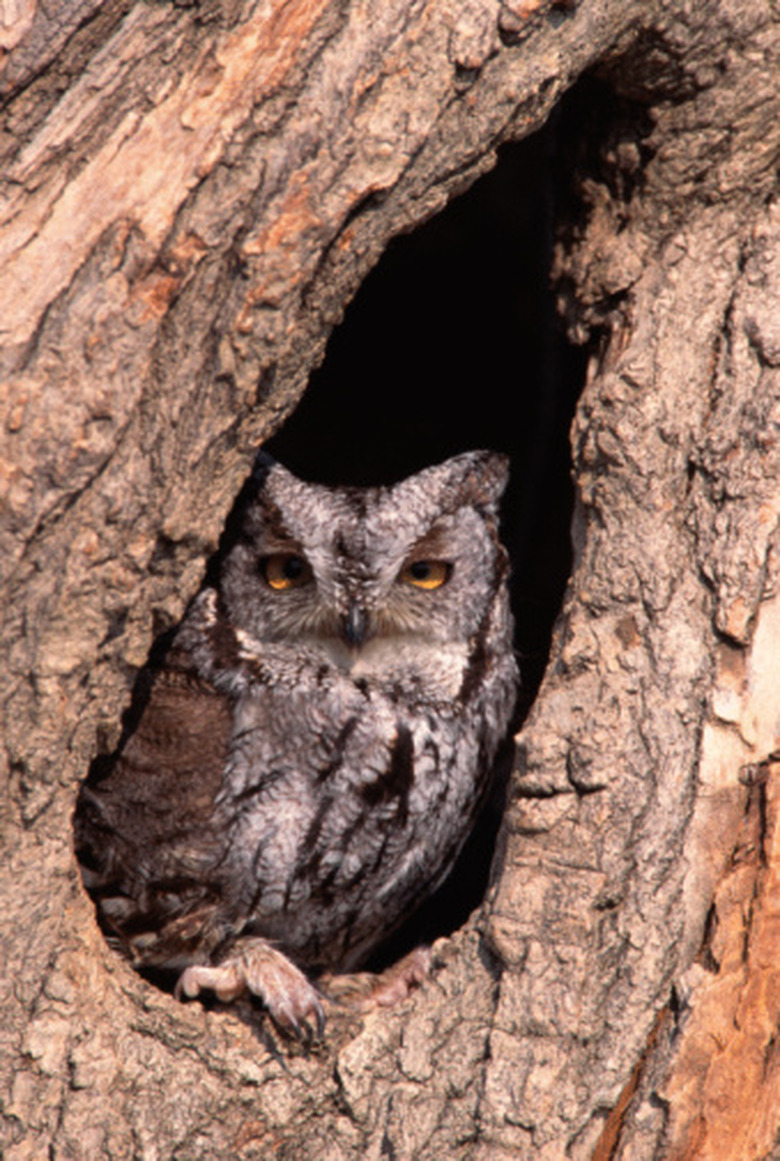
There is something almost mystical about encountering an owl in the wild—a silent sentinel perched on a gnarled branch, its golden eyes reflecting the moonlight like twin embers in the dark. These nocturnal birds have long captivated human imagination, weaving themselves into myths as symbols of wisdom, mystery, and even foreboding. Yet beyond their cultural lore, owls are remarkable creatures of precision and stealth, perfectly adapted to their habitats. For those who seek the thrill of spotting them in their natural domains, the world offers a tapestry of landscapes where these enigmatic raptors thrive. From dense boreal forests to arid deserts, each environment shapes the lives of these birds in ways that are as fascinating as they are elusive.
The Ancient Forests of the Pacific Northwest: Where Giants Roam
Stretching from northern California to British Columbia, the ancient coniferous forests of the Pacific Northwest are a haven for some of the largest owl species on Earth. Here, the towering Douglas firs and Sitka spruces form a cathedral of green, their canopies dense enough to muffle the sound of wings. It is in this verdant expanse that the Strix occidentalis, or spotted owl, makes its home—a bird so elusive that its presence is often detected more by its haunting four-note call than by sight. Conservation efforts have turned these forests into sanctuaries, where the owl’s survival hinges on the preservation of old-growth timber. To witness one of these birds, one must tread softly at dusk, listening for the telltale hoo-hoo-hoo that echoes through the mist-laden air. The deeper the forest, the more likely you are to encounter not just the spotted owl, but also the great horned owl, a formidable predator that rules these woodlands with silent authority.
The Taiga of Scandinavia: A Realm of Midnight Sun and Endless Pine
Far to the north, where the Arctic Circle kisses the horizon, the taiga stretches endlessly—a monotonous sea of pine and spruce, interrupted only by the occasional lake or bog. This is the domain of the Strix uralensis, the Ural owl, a bird of quiet intensity that thrives in the long, dark winters of Scandinavia. Here, the sun barely rises during the winter solstice, and the landscape is painted in shades of silver and indigo. The Ural owl, with its piercing yellow eyes and ghostly white facial disc, is a master of camouflage, blending seamlessly into the snow-dusted branches. Birdwatchers often report sightings near the edges of frozen lakes, where the owl hunts voles and lemmings beneath the ice. The silence of this wilderness is profound, broken only by the occasional crack of a branch or the distant call of a raven. To stand in such a place is to feel the pulse of a world untouched by time, where owls are not just creatures, but guardians of an ancient rhythm.
The Cerrado of Brazil: A Savannah of Whispers and Shadows
While owls are often associated with cold, dark forests, the tropical savannahs of Brazil’s Cerrado offer a different kind of magic. This vast, biodiverse expanse is home to the Megascops choliba, a small but fierce screech owl that thrives in the dry, open woodlands. Unlike their forest-dwelling cousins, these owls are adapted to a landscape where visibility is high, and silence is a necessity. Their plumage, mottled in earthy browns and tans, makes them nearly invisible against the bark of the cerrado trees. The best time to spot them is during the dry season, when the lack of foliage makes them easier to detect. Listen for their trilling calls at dusk, a sound that seems to rise from the very earth itself. The Cerrado is a place of contrasts—lush during the wet season, parched and golden in the dry—where owls become part of the landscape’s fleeting beauty.
The Deserts of the Southwest: Owls of the Sun-Baked Sands
In the arid expanses of the American Southwest, where the sun bleaches the rocks and the wind sculpts the dunes, owls have carved out a niche in one of the harshest environments on Earth. The burrowing owl, Athene cunicularia, is a marvel of adaptation, nesting in abandoned prairie dog burrows and standing sentinel on fence posts like a tiny, feathered sentinel. Unlike their nocturnal kin, these owls are often active during the day, their long legs carrying them across the desert floor in search of insects and small reptiles. Their presence is a reminder that life persists even in the most inhospitable places. To find them, look for small mounds of dirt outside burrow entrances, or listen for their sharp, whinnying calls. The desert owl is a symbol of resilience, a creature that thrives where others would wither.
The Moorlands of the British Isles: Where Legends Take Flight
There is a particular kind of magic in the mist-shrouded moorlands of the British Isles, where the wind howls across the heather and the peat bogs glisten under a perpetually overcast sky. Here, the tawny owl, Strix aluco, reigns supreme—a bird whose call, a soft tu-whit, tu-whoo, has echoed through folklore for centuries. These owls are most active at dusk, their rounded bodies perched on low branches as they scan the ground for prey. The best places to spot them are in old woodlands or parklands, where mature trees provide ample hunting grounds. The tawny owl’s presence is often felt before it is seen, its call a haunting melody that seems to belong to the very landscape. To walk through such a place at night is to step into a story, where every rustle of leaves could be the wingbeat of an owl taking flight.
The Alpine Meadows of the Himalayas: Owls Among the Clouds
High above the tree line, where the air is thin and the peaks pierce the heavens, the alpine meadows of the Himalayas offer a rare glimpse of owls in one of the most extreme environments on Earth. The Bubo bubo, or Eurasian eagle-owl, is a formidable presence here, its massive wingspan allowing it to soar effortlessly above the rugged terrain. These owls are often found near cliffs or rocky outcrops, where they nest in crevices and hunt marmots and pikas. The Himalayas are a place of stark beauty, where the silence is broken only by the cry of a lammergeier or the distant rumble of an avalanche. To see an eagle-owl in such a setting is to witness a creature perfectly attuned to the harshness of its surroundings—a true monarch of the mountains.
The Mangroves of Southeast Asia: A Hidden World of Nocturnal Hunters
Beneath the tangled roots of the mangroves, where the tide ebbs and flows like a living thing, a different kind of owl thrives. The Ketupa ketupu, or buffy fish owl, is a master of the water’s edge, its talons adapted for catching slippery prey. These owls are most active at night, their calls a series of deep, resonant hoots that resonate through the humid air. The mangroves are a world of shadows and reflections, where the boundary between land and water blurs. To spot a buffy fish owl is to glimpse a creature that has mastered the art of ambiguity, where survival depends on stealth and adaptability. The mangroves are not just a habitat; they are a labyrinth, and the owl is its silent guide.
Owls are more than just birds; they are emblems of the wild, symbols of a world that exists just beyond the edge of human perception. To seek them out is to embark on a journey into the unknown, where every rustle of leaves could be the whisper of wings. Whether in the ancient forests of the Pacific Northwest or the sun-baked deserts of the Southwest, these birds remind us that nature’s mysteries are not just to be observed, but to be felt. And in that feeling, we find a connection to something far greater than ourselves—a reminder that the wild still has secrets to share.