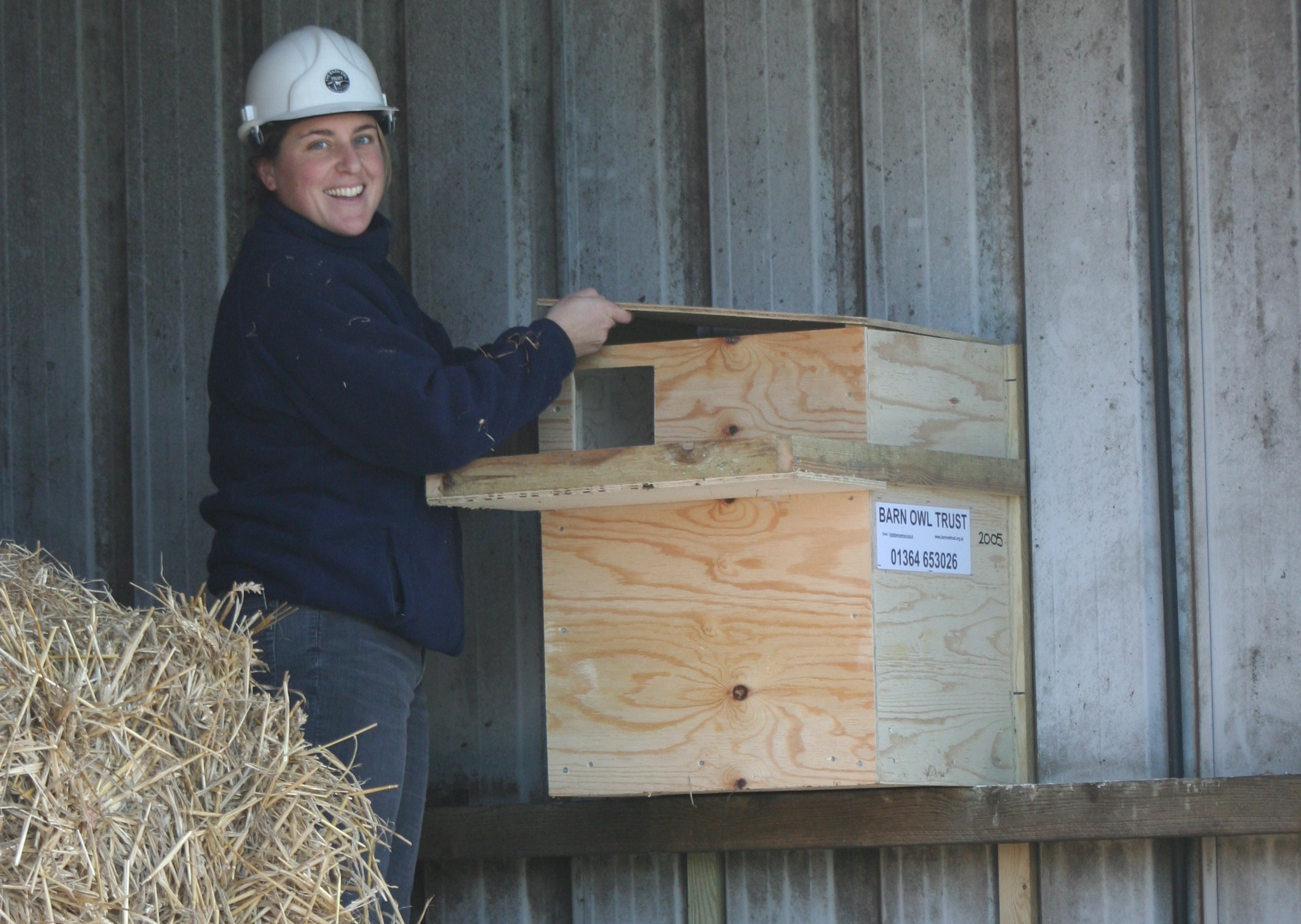
There is a quiet magic in watching an owl take flight—its silent wings cutting through the twilight, eyes like twin moons reflecting the fading light. Yet, for many of these enigmatic birds, the quest for a safe haven begins not in the sky, but in the careful crafting of a nest box. For decades, well-meaning conservationists and curious homeowners alike have installed these wooden sanctuaries, hoping to offer owls a sanctuary in a world increasingly dominated by human activity. But do these nest boxes truly work? And if so, how can we refine them to better serve their intended inhabitants? The answers lie not just in the design of wood and screws, but in an understanding of owl behavior, habitat loss, and the subtle art of creating spaces that feel less like human gifts and more like natural invitations.
The Allure of the Nest Box: A Human Gesture with Wild Intentions
Nest boxes are more than mere wooden cubes affixed to trees or barns—they are symbols of human empathy, tangible offerings to creatures we rarely see but deeply admire. Owls, with their piercing gaze and nocturnal habits, occupy a mythic space in our collective imagination. They are guardians of secrets, keepers of wisdom, and silent witnesses to the unseen rhythms of the night. When we hang a nest box, we are not just providing shelter; we are participating in a silent dialogue with the wild, a gesture that whispers, “We see you. We want you here.” Yet this gesture is not without its ironies. Owls did not evolve to nest in human-made structures. Their natural cavities—rotting trees, abandoned burrows, cliff crevices—are the result of millennia of evolutionary fine-tuning. So when a nest box is accepted, it is not merely a sign of success—it is a testament to adaptability, to the resilience of nature in the face of change.
Do Nest Boxes Actually Work? Evidence from the Field
Research paints a nuanced picture. In areas where natural nesting sites have dwindled—whether due to deforestation, urban sprawl, or intensive agriculture—nest boxes can serve as vital lifelines. Studies on barn owls, tawny owls, and even kestrels have shown that when properly sited and designed, nest boxes are used readily, often with high breeding success. A well-placed box can become the cornerstone of a local owl population, offering refuge from predators like pine martens or competing species. Yet, not all boxes are created equal. Poorly constructed boxes may trap moisture, invite parasites, or lack adequate ventilation, turning a potential sanctuary into a death trap. The key lies in mimicking natural conditions: rough interior surfaces for grip, a deep enough chamber to insulate against temperature swings, and an entrance hole just large enough to deter larger intruders but small enough to keep out unwanted guests.
The Psychology of the Owl: Why Some Boxes Are Ignored
Despite our best efforts, some nest boxes remain stubbornly empty. This is not a failure of design, but a reflection of owl psychology. Owls are creatures of habit and instinct. A box placed in an area with no established owl territory may be ignored simply because it falls outside the bird’s mental map of its domain. Similarly, a box that is too exposed or too close to human disturbance may be perceived as unsafe. Owls rely heavily on scent and memory when selecting nesting sites. A box that smells of fresh paint or human handling may be instinctively avoided. Even the angle of the entrance can matter—some species prefer downward-facing openings to avoid rain, while others favor side entrances that mimic natural cavities. Understanding these subtleties is not just about engineering; it’s about empathy. We must learn to think like an owl, to see the world through eyes that measure safety in shadows and judge distance by the whisper of wings.
Design Innovations: Beyond the Basic Wooden Box
The traditional nest box, with its rectangular silhouette and single entrance, is a relic of a bygone era of conservation. Today, innovators are reimagining these structures with a blend of science and artistry. Some designs incorporate recycled materials, reducing environmental impact while adding structural integrity. Others feature modular components, allowing for easy cleaning—a critical factor in preventing the buildup of parasites like fleas and mites. There are even “smart” nest boxes equipped with motion sensors and cameras, offering real-time insights into owl behavior without disturbing their privacy. One particularly ingenious design uses a sloped roof to deflect rain and a raised floor to prevent flooding, addressing two of the most common flaws in traditional boxes. Yet, innovation must be balanced with practicality. A nest box that is too complex to assemble or maintain will ultimately do more harm than good if it ends up abandoned in a garage.
Location, Location, Location: The Invisible Art of Siting a Nest Box
Even the most meticulously crafted nest box will fail if placed in the wrong location. Owls are not indiscriminate in their habitat choices. A box mounted on a lone tree in a windswept field may be exposed to predators and harsh weather, while one hidden deep in a dense woodland might lack the open hunting grounds owls require. Ideal sites balance shelter with visibility—edges of woodlands, near hedgerows, or adjacent to open fields where prey is abundant. The height of the box also matters. Some species, like barn owls, prefer boxes mounted high on barns or silos, while others, such as little owls, favor lower, more concealed locations. Microclimates play a role too. A box on the north side of a tree may stay cooler in summer but colder in winter, while a south-facing box might bake in the afternoon sun. The art of siting a nest box is not just about following guidelines—it’s about reading the land, understanding the invisible currents of wind and light, and placing the box where it feels less like an imposition and more like an extension of the natural world.
The Deeper Why: Why We Care So Deeply About Owl Nest Boxes
Our fascination with owl nest boxes transcends practical conservation. It speaks to a longing to reconnect with the wild, to participate in a cycle of giving and receiving that feels ancient and pure. In a world where nature often feels distant and untouchable, a nest box is a tangible act of stewardship. It transforms passive admiration into active care. Yet, there is also a melancholic undercurrent to this gesture. The very need for nest boxes is a reminder of how much we have altered the landscape. When we install a box, we are not just helping owls—we are acknowledging our role in their decline. This duality—hope and humility—is what makes the act so powerful. It is a quiet rebellion against the idea that nature is something we observe from afar, rather than something we are part of. And perhaps, in the end, that is the true magic of the nest box: it is not just a home for an owl, but a mirror reflecting our own humanity.