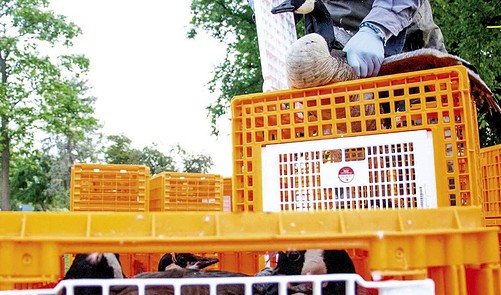
In the grand tapestry of life, every thread is woven with purpose—yet some threads fray under the weight of human intervention. The question lingers, stark and unyielding: When is it morally permissible to extinguish one species to preserve another? This dilemma sits at the nexus of conservation biology and ethical philosophy, where the cold calculus of survival collides with the warmth of moral intuition. It is not merely a debate for academics; it is a reckoning for humanity, forced to confront the consequences of its own dominion over the natural world.
The Moral Weight of Sacrifice: Why the Question Even Exists
At first glance, the idea of sacrificing one life-form for another feels antithetical to the sanctity of existence. Yet, the natural world is not a benevolent realm where harmony reigns unchallenged. Predators hunt. Parasites thrive. Ecosystems teeter on the edge of collapse when invasive species uproot native balances. The ethical dilemma arises when human agency amplifies these natural conflicts, forcing us to play the role of reluctant arbiters. We are not gods, but we are not mere spectators either. The moment we intervene—whether through culling, relocation, or habitat restoration—we assume responsibility for the outcomes. And responsibility, unchecked, curdles into guilt.
Consider the case of the gray wolf in Yellowstone. Once eradicated, its reintroduction sent ripples through the ecosystem, restoring riverside willows and curbing overgrazing by elk. The wolves did not ask to be saved; they were saved by a calculated act of ecological triage. But what of the elk that starved in the wolves’ absence? What of the coyotes displaced by the returning apex predator? The calculus of conservation is never simple—it is a ledger of unintended consequences, where every entry demands a moral reckoning.
The Slippery Slope of Human Exceptionalism
We humans have a habit of placing ourselves above the fray, as if our intellect grants us immunity from the moral laws governing the rest of life. Yet, this exceptionalism is a dangerous illusion. When we decide which species lives and which dies, we are not acting as impartial judges but as flawed architects of a world we barely comprehend. The slippery slope begins with the most utilitarian of arguments: This species is keystone; its loss would unravel the ecosystem. But who defines “keystone”? And by what measure do we determine which species is dispensable?
Take the example of the smallpox virus. Eradicated in the wild, it now exists only in laboratories—a grim testament to humanity’s capacity to play god. Yet, the virus was once a scourge, a predator of human life. Its destruction was celebrated as a triumph of medical intervention. But if we can justify the annihilation of a pathogen, why not a rat on an island, whose presence dooms a flightless bird to extinction? The line between salvation and slaughter blurs when we assume the right to decide.
The Illusion of Control: When Conservation Backfires
There is a cruel irony in conservation: the more we interfere, the more we risk losing control. The introduction of the cane toad to Australia was meant to curb sugar cane pests. Instead, it became a biological plague, poisoning native predators and spreading unchecked. The toad was not the villain; it was the unintended consequence of human hubris. Similarly, the culling of badgers in the UK to protect cattle from bovine tuberculosis has yielded mixed results—some studies suggest it exacerbates the spread, as surviving badgers compensate by increasing their range.
These failures underscore a fundamental truth: ecosystems are not machines with predictable gears and levers. They are living, breathing entities, governed by chaos as much as order. When we intervene, we are not engineers but gamblers, betting on outcomes we can barely predict. The ethical question then becomes not just whether we should act, but how much we dare to wager on our own competence.
The Ethics of Necessity: When Sacrifice Becomes Inevitable
Yet, to dismiss all intervention as folly is to ignore the stark realities of a planet hemorrhaging biodiversity. Some sacrifices are not choices but inevitabilities. The case of the black-footed ferret, nearly extinct due to habitat loss and disease, required captive breeding and reintroduction—an act of artificial salvation that saved the species from oblivion. But what of the prairie dogs whose burrows were fumigated to protect the ferrets? Were their lives less valuable? The necessity of such actions does not absolve us of guilt; it merely forces us to confront the cost of survival.
There are moments when the moral calculus tilts decisively toward action. When a species teeters on the brink due to an invasive predator, when a disease threatens to wipe out an entire ecosystem, when the alternative is total collapse—then, perhaps, the sacrifice of one becomes the salvation of many. But even then, the question lingers: Who gets to decide which life is expendable? Is it the scientist, the policymaker, the public? And by what authority do they wield this power?
The Role of Empathy in a Non-Human World
Empathy, that most human of traits, is both our greatest tool and our most treacherous liability. We mourn the loss of a charismatic megafauna like the northern white rhino, yet we barely register the extinction of a thousand lesser-known insects. Our empathy is selective, shaped by beauty, utility, and proximity. A wolf inspires awe; a rat inspires revulsion. But is the wolf’s life inherently more valuable? Or do we simply prefer its gaze?
To navigate the ethics of species management, we must expand our empathy beyond the anthropocentric. We must ask not just which species deserves to live, but what does it mean to deserve life in the first place? The answer may lie not in the cold logic of conservation biology, but in the quiet humility of acknowledging that we are not the sole arbiters of value in this world. The soil, the water, the mycorrhizal networks beneath our feet—all are threads in the same tapestry. To sever one is to risk unraveling the whole.
The Future: A World of Hard Choices
The 21st century will be defined by hard choices. Climate change, habitat destruction, and invasive species will force us to confront the limits of our compassion. We will be called upon to make decisions that feel morally indefensible, even as we justify them as necessary. The question is not whether we will sacrifice one species for another, but how we will do so with the least amount of regret.
Perhaps the answer lies not in seeking absolution, but in embracing the discomfort of uncertainty. Perhaps it lies in recognizing that every act of conservation is also an act of hubris—a gamble that we, flawed and finite, can play god without consequence. And perhaps, in that recognition, we find a sliver of humility, a reminder that we are not the authors of life, but merely its temporary stewards.
In the end, the ethics of species management is not a puzzle to be solved, but a tension to be endured. It is the price of our dominion over the natural world—a dominion we did not ask for, but which we cannot abdicate. The question remains: When is it okay to kill one species to save another? The answer, if there is one, lies not in the cold calculus of survival, but in the quiet, unyielding echo of our own conscience.