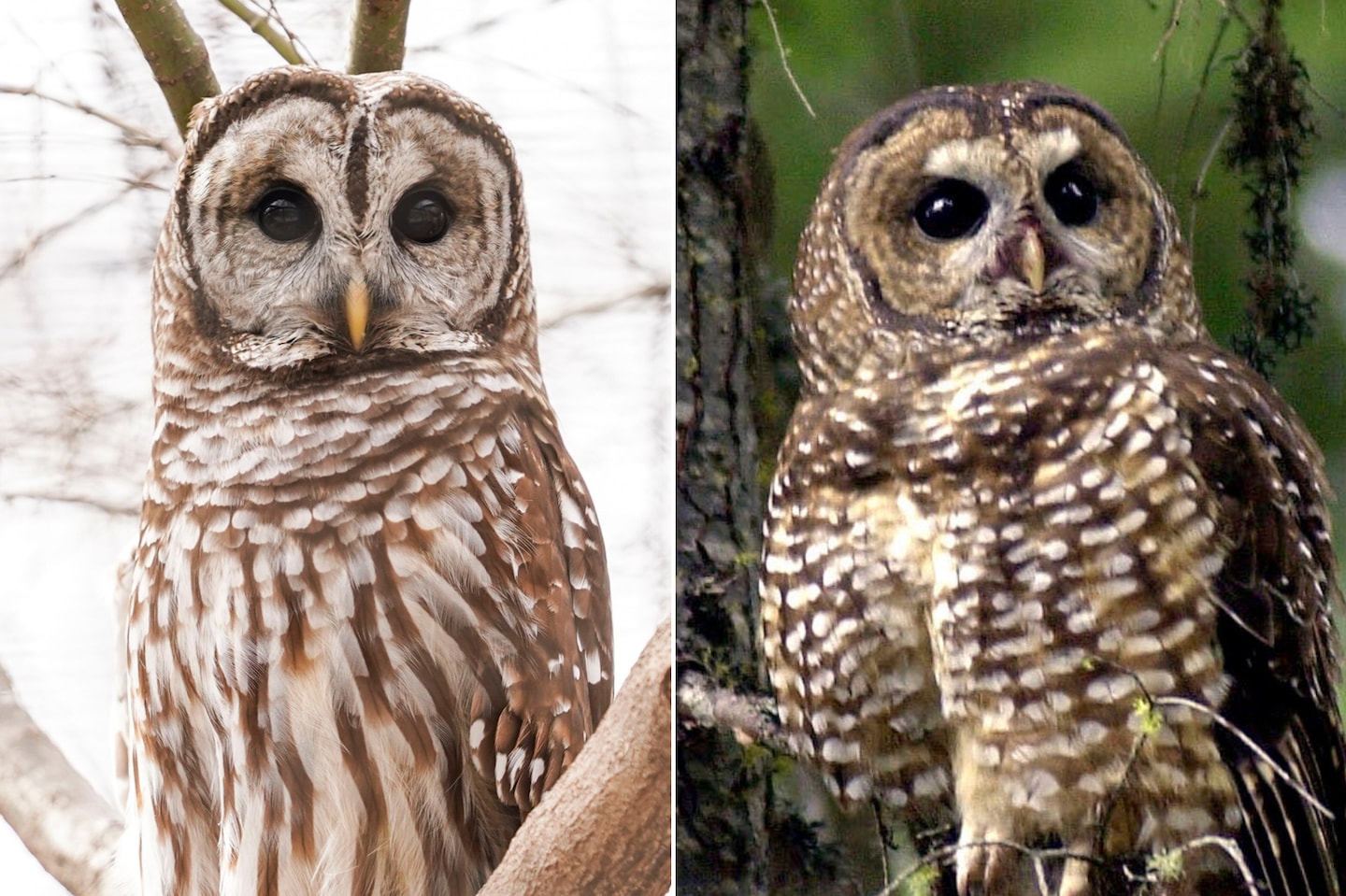
The haunting echoes of owls in the twilight forests evoke a profound curiosity among birdwatchers and nature enthusiasts alike. Among these nocturnal singers, barred owls and spotted owls vocalize with a mesmerizing complexity that invites closer scrutiny. Many have noticed the stark contrast between the barred owl’s bold, resonant calls and the subtler, more elusive notes of the spotted owl. This auditory dichotomy not only marks their distinct identities but also unveils intricate ecological narratives hidden within their vocalizations. Delving into the barred owl’s calls reveals much more than mere sound—it offers a window into behavior, territory, and the delicate balance of forest ecosystems.
The Acoustic Arsenal of the Barred Owl
The barred owl possesses one of the most recognizable and sonorous calls in the avian world. Its primary vocalization, often described as a rhythmic “Who cooks for you? Who cooks for you-all?” is a canonical phrase that resonates deeply across damp woodlands and mist-laden groves. This call is not just distinctive but remarkably versatile, serving multiple communicative functions—from establishing territory to signaling mating readiness. The phrasing, punctuated by stentorian hoots, carries a dual cadence that is both commanding and melodic, invoking a sense of ancient forest whispers.
Beyond this iconic call, barred owls employ an array of vocal expressions encompassing trills, cackles, and swooping whistles. These complex utterances can vary regionally, with dialectical differences that suggest nuanced social interactions. Their calls are loud, far-reaching, and unrelenting during the breeding season, asserting their presence emphatically amid acoustic competition. This vocal dominance arguably confers evolutionary advantages, reinforcing territorial claims and deterring rivals with undeniable auditory authority.
Spotted Owls: The Subtle Artists of Night Song
In contrast, the spotted owl’s vocalizations unfold with understated elegance. Their calls are softer, more plaintive, and considerably less conspicuous than those of the barred owl. The signature call is typically a series of low-pitched hoots connected with a sense of reserved mystery—often described as a subdued series of “who” notes, less structured but deeply evocative.
Spotted owls’ vocal performances are marked by prolonged pauses and irregular cadences, contributing to a furtive, ghostly ambiance. This reticence in vocal volume and rhythm correlates with their vulnerability and highly selective habitat preferences. Their quieter calls might represent an evolutionary strategy to minimize detection by predators or competitors. This subtle sonic palette invites a different kind of listener—those vigilant and patient enough to decipher the whispered language of the night forest.
Ecological Implications of Vocal Differences
The marked disparity in vocal power and style between barred and spotted owls is emblematic of their ecological divergence. Barred owls are generalists, thriving in varied environments, and their robust hooting supports expansive territorial claims across fragmented landscapes. Their vociferous presence reverberates as a proclamation of dominance, often overshadowing the more delicate, specialist nature of spotted owls.
Spotted owls inhabit old-growth forests with dense canopies, ecosystems that inherently muffle sound. Their quiet calls may be tailor-made for this acoustically insulated habitat, where stealth and subtlety are survival assets. The acoustic adaptations between these species highlight evolutionary trade-offs—barred owls rely on volume and clarity, whereas spotted owls depend on nuance and discretion. This dynamic also underpins the growing concerns about barred owls encroaching upon spotted owl territories, as the potent vocalizations of barred owls may disrupt the spotted owl’s breeding and foraging patterns.
Behavioral Insights Through Vocalization Analysis
Examining the vocal interactions between these two owls opens a window into behavioral ecology rarely visible through observation alone. Barred owl calls exhibit a territorial assertiveness, often delivered in duet-like exchanges between mates, reinforcing pair bonds and spatial boundaries. These vocal exchanges can escalate into confrontational duels of sound, a phenomenon that shapes the social landscapes of barred owl populations.
Spotted owls, on the other hand, employ vocalizations primarily during specific periods such as dusk and dawn, reflecting a more conservative communication strategy. Their less frequent calls may correspond to a reliance on stealth and concealment, minimizing risks from both predators and competitors. Vocalization patterns thus mirror fundamental behavioral strategies and survival tactics inherent to each species.
Human Fascination with Owl Calls: Myth and Reality
The enigmatic calls of owls have long captivated human imagination, often steeped in folklore and mystery. The barred owl’s assertive “Who cooks for you?” phrase has transcended its natural origins to become a cultural icon—symbolizing wilderness, wisdom, and sometimes, an eerie portent. This human fascination is partly explained by the call’s rhythmic and poetic nature, easily interpreted as a question to the unseen forest.
Meanwhile, the spotted owl’s quieter, more spectral calls elicit a different kind of allure—a siren song of fragility and rarity. The challenge of hearing these subtle hoots in dense twilight forests nurtures a reverence and urgency among conservationists and bird enthusiasts alike. The vocal contrasts between these species fuel a broader narrative about coexistence, competition, and environmental stewardship that resonates deeply in human hearts.
Conservation Challenges Linked to Vocal Competition
As barred owls expand their range westward, encroaching on spotted owl habitats, their vocal dominance has tangible conservation consequences. The louder, more insistent calls of barred owls may drown out the subtler vocal expressions of spotted owls, interfering with mating calls and territorial declarations critical for reproductive success. This acoustic interference exacerbates competitive pressure, contributing to the decline of already vulnerable spotted owl populations.
Understanding the acoustic ecology of these species underscores the urgency for innovative conservation strategies that consider not only habitat but also the sonic environment. Protecting the delicate chorus of the spotted owl necessitates addressing the invasive vocal presence of the barred owl, a challenge that requires a blend of ecological insight and humane management.
The Science Behind Vocalization: Anatomy and Physiology
The distinct tonal qualities of barred and spotted owl calls can be traced back to differences in their vocal anatomy. Barred owls possess a larger syrinx—the avian vocal organ—allowing for richer, more forceful resonance. This anatomical advantage facilitates greater volume and complexity in their calls, orchestrating their commanding presence in the nocturnal soundscape.
Spotted owls, comparatively smaller with more delicate syrinx structures, produce softer sounds tuned to their specialized forest environments. The muscular control and cartilage configuration within their syrinx enable subtle pitch modulation but limit the intensity of their calls. These physiological characteristics intertwine intricately with evolutionary pressures, crafting the vocal signatures we hear echoing through the night.
Conclusion: The Symphony of the Night and Our Role in Its Preservation
The vocalizations of barred and spotted owls form a rich, multilayered tapestry that transcends mere communication. They carry stories of adaptation, survival, and the eternal dance of coexistence within the forest’s cathedral. Each call is a vital thread in the ecosystem’s intricate web, signaling presence, power, and vulnerability.
Our fascination with these nocturnal voices is more than an aesthetic appreciation—it is a call to awareness, urging stewardship of the habitats that nurture such diversity. Recognizing and respecting the auditory realms of barred and spotted owls enriches our connection to nature and emboldens efforts to preserve the delicate balance that sustains them. In listening closely, we become part of the night’s symphony, guardians of its echoes for generations to come.