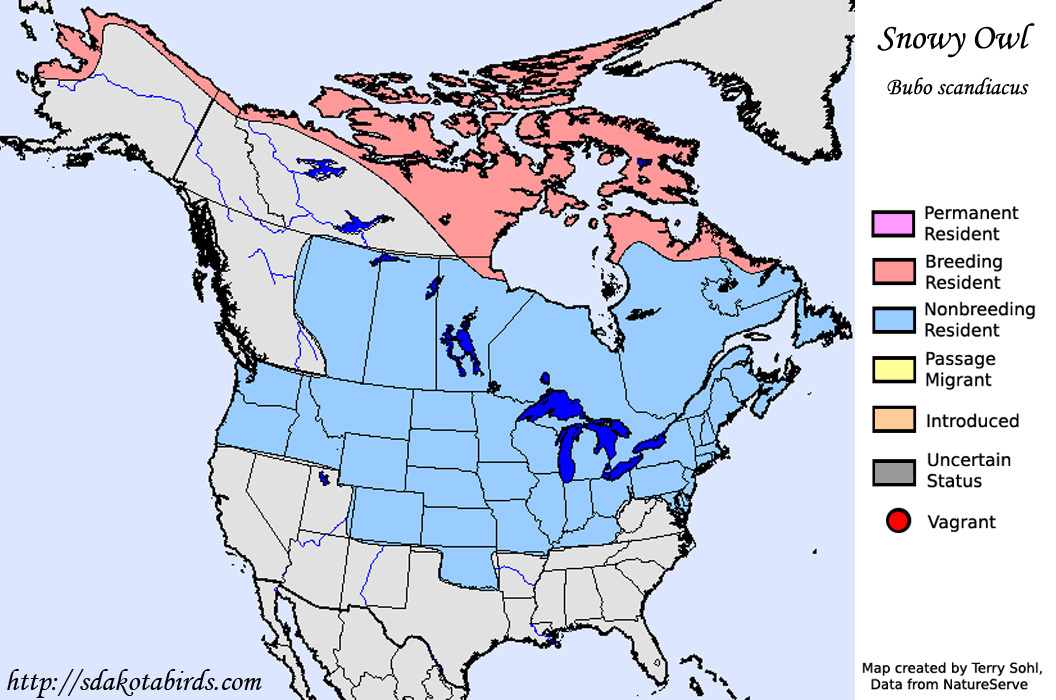
The Snowy Owl, with its dazzling white plumage and piercing golden eyes, is a creature of stark contrasts—both a symbol of Arctic resilience and a wanderer of unpredictable migrations. To the casual observer, these owls appear as silent sentinels of the tundra, their presence a fleeting yet unforgettable spectacle. Yet beneath their ethereal beauty lies a story of ecological fragility, one that demands our attention as their habitats shift and their populations face mounting pressures. Conservation of the Snowy Owl is not merely about protecting a species; it’s about safeguarding the delicate balance of an ecosystem in flux, where the rhythms of nature are being rewritten by forces both ancient and modern.
The Enigmatic Wanderer: Why Snowy Owls Captivate Us
There is something almost mythic about the Snowy Owl’s presence beyond its frozen homeland. These birds, which spend most of their lives in the Arctic’s harsh embrace, occasionally embark on irruptive migrations—sudden, mass movements southward that leave birdwatchers in awe and scientists scratching their heads. What compels these owls to abandon their familiar haunts? The answer lies in a complex interplay of food scarcity, population pressures, and the unpredictable whims of climate. Yet, it is this very unpredictability that fuels our fascination. A Snowy Owl perched on a fence post in a Midwestern field or a coastal dune is a living paradox—a creature of the extreme, yet adaptable enough to survive, if only temporarily, in landscapes far removed from its ancestral home.
The Arctic’s Fragile Fortress: Habitat Under Siege
The Snowy Owl’s primary domain is the Arctic tundra, a vast, windswept expanse where life clings to existence in a delicate equilibrium. Here, the owls rely on lemmings and other small mammals, whose populations fluctuate in dramatic cycles. But the tundra is not the static wilderness it once was. Rising global temperatures are thawing permafrost, altering vegetation patterns, and disrupting the prey base that sustains these owls. The Arctic is warming at more than twice the rate of the global average, a phenomenon known as Arctic amplification. As the ice recedes and the landscape greens, the Snowy Owl’s habitat is being reshaped in ways that could render it unrecognizable within decades. Conservation efforts must therefore extend beyond the species itself to the very ecosystems that define its existence.
Climate Change: The Invisible Hand Reshaping Survival
Climate change is the invisible hand guiding the Snowy Owl’s fate, its influence felt in both subtle and seismic ways. Warmer winters can lead to unseasonal thaws, causing lemming burrows to collapse and leaving owls without their primary food source. Meanwhile, the melting of Arctic sea ice—critical for hunting and breeding—disrupts the delicate timing of the owls’ life cycle. Female Snowy Owls, for instance, time their nesting to coincide with the peak abundance of lemmings. If these cycles fall out of sync due to erratic weather, reproduction rates plummet. The owls’ irruptive migrations, once a natural survival strategy, may now be a desperate response to a habitat in decline. Conservationists are racing to understand these shifts, deploying satellite tracking and citizen science to map the owls’ movements and predict their next moves.
Human Encroachment: The Double-Edged Sword of Modernity
As the Arctic thaws, it is not just the climate that is changing—it is also becoming more accessible. Industrial activities, from oil drilling to shipping routes, are encroaching upon the tundra, fragmenting habitats and introducing new threats. Snowy Owls, already stressed by ecological upheaval, now face collisions with vehicles, electrocution from power lines, and disturbances from human activity. Even well-intentioned efforts, such as wind farms, can pose risks if sited improperly. The irony is palpable: the same forces driving the owls’ decline are also making their habitat more navigable for humans. Conservation in this context requires not just protecting the owls but also advocating for sustainable development that respects the Arctic’s fragile ecosystems.
The Power of Community Science: How Birdwatchers Are Changing the Game
One of the most heartening developments in Snowy Owl conservation is the rise of community science. Programs like eBird and Project SNOWstorm have transformed casual birdwatchers into invaluable allies in the fight to protect these owls. By reporting sightings, documenting behaviors, and even tracking individual birds via GPS tags, volunteers provide data that would be impossible to collect otherwise. These efforts have revealed surprising insights, such as the owls’ preference for agricultural fields over natural habitats during irruptions or their ability to adapt to urban environments. The Snowy Owl’s story is no longer confined to the pages of scientific journals; it is a living narrative, shaped by the observations of people across continents who share a common awe for these birds.
Policy and Protection: The Role of Governance in Conservation
While grassroots efforts are vital, they must be complemented by robust policy frameworks. International agreements, such as the Migratory Bird Treaty Act in the United States and Canada’s Species at Risk Act, provide legal protections for Snowy Owls. However, enforcement is often challenging, particularly in remote Arctic regions. Conservationists are pushing for stronger regulations on industrial activities in critical habitats and greater funding for research. There is also a growing recognition that Indigenous knowledge must be integrated into conservation strategies. For generations, Arctic Indigenous communities have coexisted with Snowy Owls, their traditions offering insights into the owls’ behavior and ecological needs. Collaborative approaches that honor these perspectives are essential for long-term success.
The Future of the Snowy Owl: Hope in the Face of Uncertainty
The path forward for Snowy Owl conservation is fraught with challenges, but it is not without hope. Advances in technology, from drones to genetic studies, are equipping scientists with new tools to understand and protect these birds. Public awareness is growing, fueled by viral sightings and social media campaigns that celebrate the owls’ beauty and resilience. Yet the ultimate test will be our ability to address the root causes of their decline—climate change, habitat loss, and human encroachment. The Snowy Owl is more than a charismatic species; it is a barometer of the Arctic’s health, a harbinger of the changes unfolding in one of the planet’s most vulnerable regions. By protecting these owls, we are not just saving a bird—we are preserving a piece of the wild, a reminder of nature’s capacity to inspire and endure, even in the face of adversity.