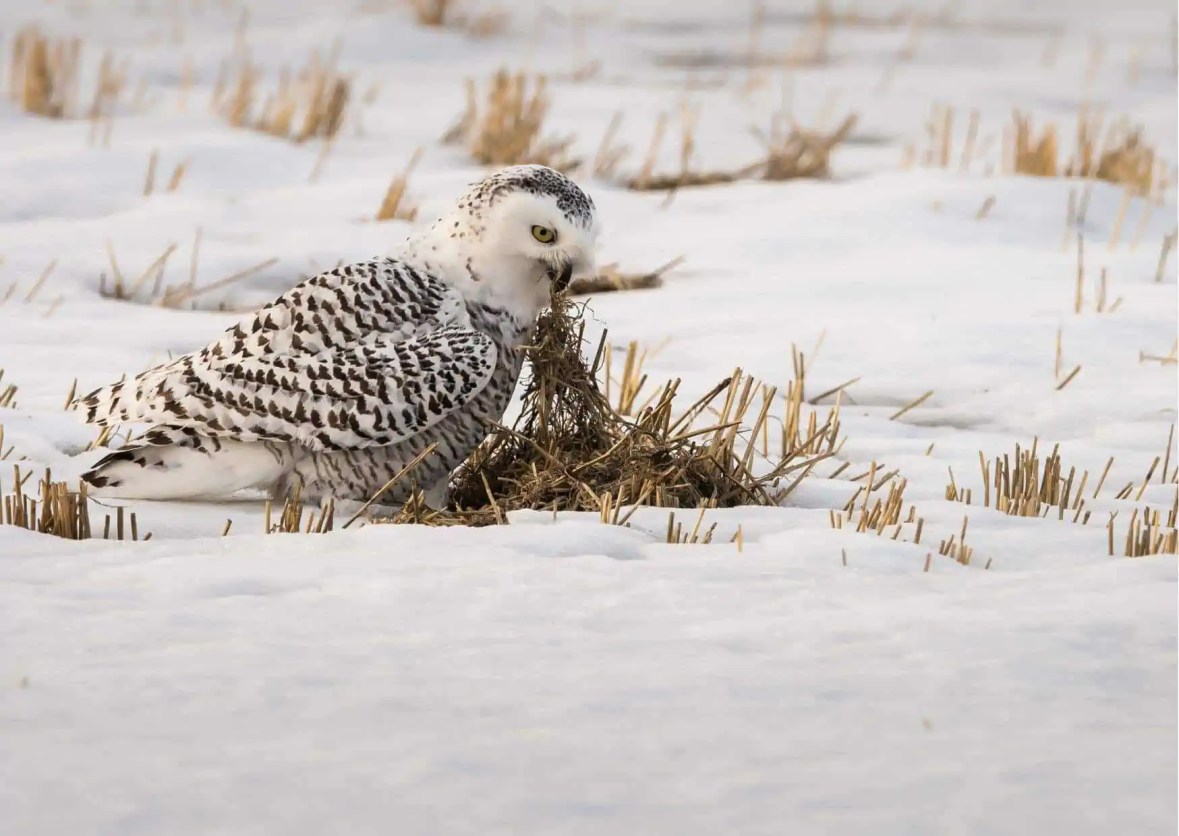
In the vast, windswept tundras of the Arctic, the snowy owl reigns as a silent sovereign, its snowy plumage blending seamlessly with the frozen expanse. Yet, in recent years, a curious phenomenon has unfolded: these majestic birds are venturing far beyond their ancestral haunts, appearing in landscapes where the ground never freezes, where trees stand tall against the horizon, and where the air hums with the whispers of a changing world. What compels these Arctic wanderers to abandon their icy dominion? The answer lies not in a single thread but in a tapestry of ecological upheaval, survival instinct, and the relentless march of time.
The Great Migration: When Snowy Owls Defy Their Boundaries
For centuries, snowy owls have been creatures of the far north, their lives dictated by the ebb and flow of Arctic seasons. Their range, once a predictable circle of ice and snow, now feels less like a boundary and more like a suggestion. Each winter, a growing number of these owls are spotted in regions where they were once rare—rolling farmlands, coastal marshes, and even urban peripheries. This isn’t mere wanderlust; it’s a survival strategy etched into their DNA by the unrelenting pressures of a warming planet.
Their migration patterns, once a predictable cycle, have become erratic. Some years, they vanish entirely from their traditional haunts, only to reappear in droves in places like the Canadian Prairies or the American Midwest. Ornithologists speculate that these shifts are tied to the availability of their primary prey: lemmings. When lemming populations crash in the Arctic, snowy owls are forced to seek sustenance elsewhere. The result? A grand, unplanned exodus that leaves scientists and laypeople alike marveling at nature’s adaptability—and its desperation.

The Prey Paradox: Why the Arctic’s Bounty Fails Them
At the heart of the snowy owl’s dilemma lies a paradox. The Arctic, once a land of plenty, is now a place where abundance is no longer guaranteed. Lemmings, those small, unassuming rodents that form the backbone of the snowy owl’s diet, are declining in numbers due to shrinking sea ice and erratic weather patterns. A single snowy owl may consume over 1,600 lemmings in a year, but when the lemming population dwindles, the owls face a grim choice: starve or adapt.
This is where the snowy owl’s remarkable intelligence comes into play. Unlike many birds that rigidly adhere to instinct, snowy owls exhibit a rare flexibility. They switch from lemmings to rabbits, waterfowl, or even seabirds when necessary. In some cases, they’ve been observed hunting in agricultural fields, preying on mice and voles that thrive in human-altered landscapes. This dietary versatility is a testament to their resilience, but it also hints at a deeper truth: the Arctic is no longer a reliable provider, and survival now demands innovation.
Climate Change: The Invisible Hand Reshaping Their World
No discussion of snowy owl range expansion would be complete without addressing the elephant in the room—climate change. The Arctic is warming at a rate nearly four times faster than the global average, a phenomenon known as Arctic amplification. This rapid transformation disrupts the delicate balance of the ecosystem. Sea ice, which once provided a stable platform for hunting seals, is vanishing. Permafrost, the frozen ground that supports countless species, is thawing. The result? A cascade of ecological disruptions that ripple outward, affecting even the most adaptable creatures.
For snowy owls, the consequences are twofold. First, the loss of sea ice reduces the availability of seals, a secondary food source. Second, the warming temperatures alter the timing of prey reproduction. Lemmings, for instance, may breed earlier or later than usual, leaving owls without their primary food source when they need it most. In response, the owls are forced to expand their range, seeking out regions where prey remains abundant despite the shifting climate. It’s a desperate gamble, but one that underscores the urgency of their plight.
The Urban Encroachment: When Wilderness Meets Concrete
Perhaps the most striking sight of all is the snowy owl perched on a telephone pole or gliding over a suburban backyard. These encounters, once unthinkable, are becoming increasingly common. Urban environments, with their artificial lights and warm microclimates, can mimic the conditions of the Arctic in unexpected ways. Rodents thrive in these altered landscapes, providing a ready-made buffet for hungry owls. Meanwhile, the absence of natural predators in cities gives the owls a temporary reprieve from threats like foxes and larger raptors.
Yet, this urban sanctuary comes with its own set of challenges. Collisions with vehicles, electrocution from power lines, and exposure to toxins are just a few of the hazards that snowy owls face in these unfamiliar territories. Conservationists have documented cases of owls nesting in abandoned buildings or on rooftops, behaviors that speak to their adaptability but also highlight the fragility of their new existence. The city, for all its artificial abundance, is not a true replacement for the Arctic’s wild expanse—it’s a stopgap, a temporary refuge in a world that no longer offers the stability they once knew.
The Cultural Fascination: Why We’re Drawn to Their Story
There’s something deeply moving about the sight of a snowy owl in a place it doesn’t belong. It’s a visual paradox—a creature of ice and snow thriving in a landscape of concrete and steel. This juxtaposition stirs something primal within us, a reminder of nature’s ability to endure even when the odds are stacked against it. Artists, poets, and filmmakers have long been captivated by the snowy owl’s mystique, casting it as a symbol of resilience, mystery, and the untamed spirit of the wild.
But our fascination runs deeper than aesthetics. The snowy owl’s story is a microcosm of the broader ecological crisis unfolding across the planet. It forces us to confront uncomfortable truths about our role in shaping the natural world. Are we witnessing the death of a species, or merely the beginning of its evolution? The answer may lie in the owl’s own adaptability. If snowy owls can rewrite the rules of survival, perhaps there’s hope for other species facing similar challenges. Or perhaps their story is a cautionary tale, a warning of the consequences of unchecked environmental change.
The Future: A World Without Boundaries
As the snowy owl continues to push the limits of its range, one thing becomes clear: the boundaries between ecosystems are blurring. The Arctic is no longer an isolated fortress of ice; it’s a dynamic, ever-changing landscape where survival depends on adaptability. For snowy owls, this means a future that is uncertain but not without possibility. They may become permanent residents of new territories, evolving into a distinct subspecies over time. Or they may struggle to keep pace with the relentless pace of change, their numbers dwindling as the world around them transforms.
What is certain is that their story is far from over. The snowy owl’s journey is a testament to the resilience of life in the face of adversity, but it’s also a call to action. If we are to preserve the wildness that defines these magnificent birds, we must confront the root causes of their displacement—climate change, habitat loss, and the unchecked expansion of human influence. The Arctic may be changing, but so too must our relationship with the natural world. The snowy owl’s survival depends on it, and so does ours.