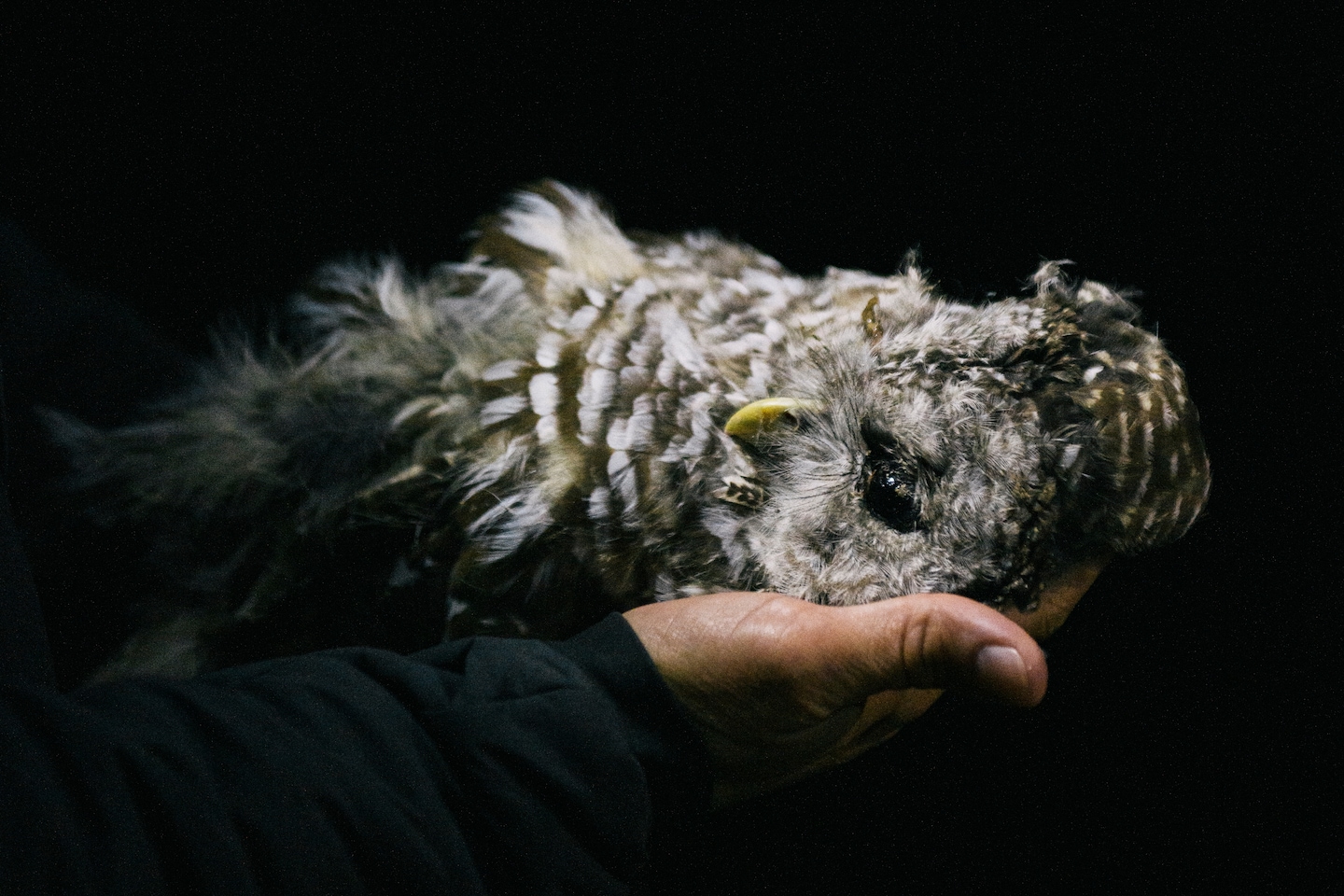
In the dense, shadowed canopies of North America’s old-growth forests, a silent struggle unfolds. It’s a story where one species’ survival imperatively hinges on the decline of another, yet the full scope of this interaction remains obscured beneath layers of ecological complexity. The barred owl, a formidable and adaptable predator once confined to the eastern regions, now roams the western wilds with a voracious appetite, driving significant changes in the local ecosystems. Intriguingly, its presence has had profound, often overlooked consequences on the prey populations of the iconic spotted owl—a species already teetering on the edge. Delving into the nuanced role barred owls play in the decline of spotted owl prey unveils a compelling narrative that challenges conventional conservation paradigms and promises to redefine our understanding of interspecies dynamics within threatened habitats.
A Complex Predatory Overlap: Barred Owls Enter the West
The barred owl’s encroachment into the western evergreen forests is no trivial displacement. Originally native to the woodlands of the eastern United States, the barred owl has expanded its range westward over the past century, facilitated by changing landscapes and human activities. This geographic shift has thrust these owls into direct competition with the spotted owl, whose preferred habitats—mature coniferous forests rich in biodiversity—overlap with the barred owl’s newly extended domain.
What emerges is a tangled web of predation and competition, but importantly, the barred owl’s influence extends beyond mere habitat contestation. It rewrites the trophic structure of these forests, altering the abundance and distribution of prey species in ways that radiate through the ecosystem. This unexpected complexity often escapes notice in discussions fixated solely on inter-owl competition.
Divergence in Dietary Preferences and Foraging Strategies
One might assume that two owl species with overlapping territories would share similar diets, yet barred owls exhibit diverse and adaptable feeding habits that distinguish them sharply from spotted owls. Barred owls exploit a broader range of prey types—including small mammals, amphibians, reptiles, and invertebrates—with an adeptness that allows them to capitalize on fluctuating prey populations.
Spotted owls, conversely, exhibit a marked preference for certain small mammals, particularly northern flying squirrels and woodrats, which depend heavily on old-growth forest structures. The barred owl’s predatory breadth places novel pressures on these species, often reducing prey populations below thresholds vital for spotted owl survival. The invasive barred owl does not simply outcompete spotted owls for territory; it imposes a cascading predation effect, diminishing the prey base essential for spotted owl reproduction and longevity.
Barred Owls as Ecological Engineers of Prey Decline
Ecological engineering typically conjures images of beavers or elephants dramatically reshaping landscapes. Yet, barred owls serve as subtle engineers in these forested realms, recalibrating prey populations and thereby indirectly sculpting the ecological balance. Their insatiable predation can depress populations of certain small mammals, not only through direct consumption but also by inciting behavioral changes that alter prey species’ habitat use and reproductive success.
This predation pressure intensifies especially in fragmented habitats—forest remnants beleaguered by logging, fire, and human development—where prey refugia are scarce. Consequently, species that once thrived in the shadowed understory find themselves imperiled, depriving spotted owls of their nutritional lifeline and forcing them into a perilous ecological bottleneck.
The Ripple Effects on Forest Biodiversity
When prey populations wane under the dual assault of habitat loss and barred owl predation, the repercussions echo throughout the forest’s biodiversity. Small mammals and birds serve critical roles: seed dispersers, insect population regulators, and integral components of nutrient cycling. Their decline precipitates alterations in plant regeneration, insect outbreaks, and altered food web structures.
Therefore, the barred owl’s role in prey suppression indirectly influences ecosystem resilience and the very fabric of biodiversity that defines these ancient woodland sanctuaries. Recognizing this nuanced influence prompts a reevaluation of conservation priorities, highlighting that protecting spotted owls is inseparable from managing broader prey and predator dynamics.
Conservation Paradigms: Beyond Predator Removal
Historically, efforts to conserve the spotted owl have focused on habitat preservation and, controversially, barred owl removal. Yet, such interventions often oversimplify the underlying ecological intricacies. The barred owl’s impact on prey populations reveals that mere competition is not the sole factor jeopardizing spotted owls; a multifaceted approach addressing food web integrity is indispensable.
Innovative strategies now consider ways to bolster prey availability—such as forest restoration to enhance habitat complexity—and foster coexistence rather than eradication. Understanding barred owls as both competitors and ecosystem engineers enables a paradigm shift toward holistic management that honors the interconnectedness of species and the subtle balances sustaining them.
The Intriguing Prospect of Ecological Coevolution
Could the presence of barred owls catalyze long-term evolutionary shifts within these forest communities? The heightened predation pressure and altered prey dynamics may force adaptive responses in both prey and spotted owls. Behavioral plasticity, shifts in diet, and niche partitioning might emerge as survival imperatives, shaping future forest ecosystems in ways not yet fully understood.
This perspective invites curiosity—are barred owls inadvertently spurring a new chapter of evolutionary history, or are they heralding a grim decline in biodiversity? The answers lie intertwined in ongoing research and the persistent mysteries of nature’s ceaseless dance of survival.
Conclusion: Embracing Complexity to Foster Resilience
The narrative of barred owls driving the decline of spotted owl prey transcends simple predator-prey dynamics; it is a testament to ecological interdependence framed within an era of environmental uncertainty. This story encourages embracing complexity—a recognition that species interactions ripple far beyond immediate competition, influencing the architecture of ecosystems and trajectories of survival.
As conservationists and citizens contemplate the future of these majestic owls and their forest homes, expanding our vision to incorporate these intricate relationships is paramount. Only through such enlightened understanding can we hope to craft strategies that nurture resilience, preserve biodiversity, and honor the profound interconnectedness that defines the natural world.