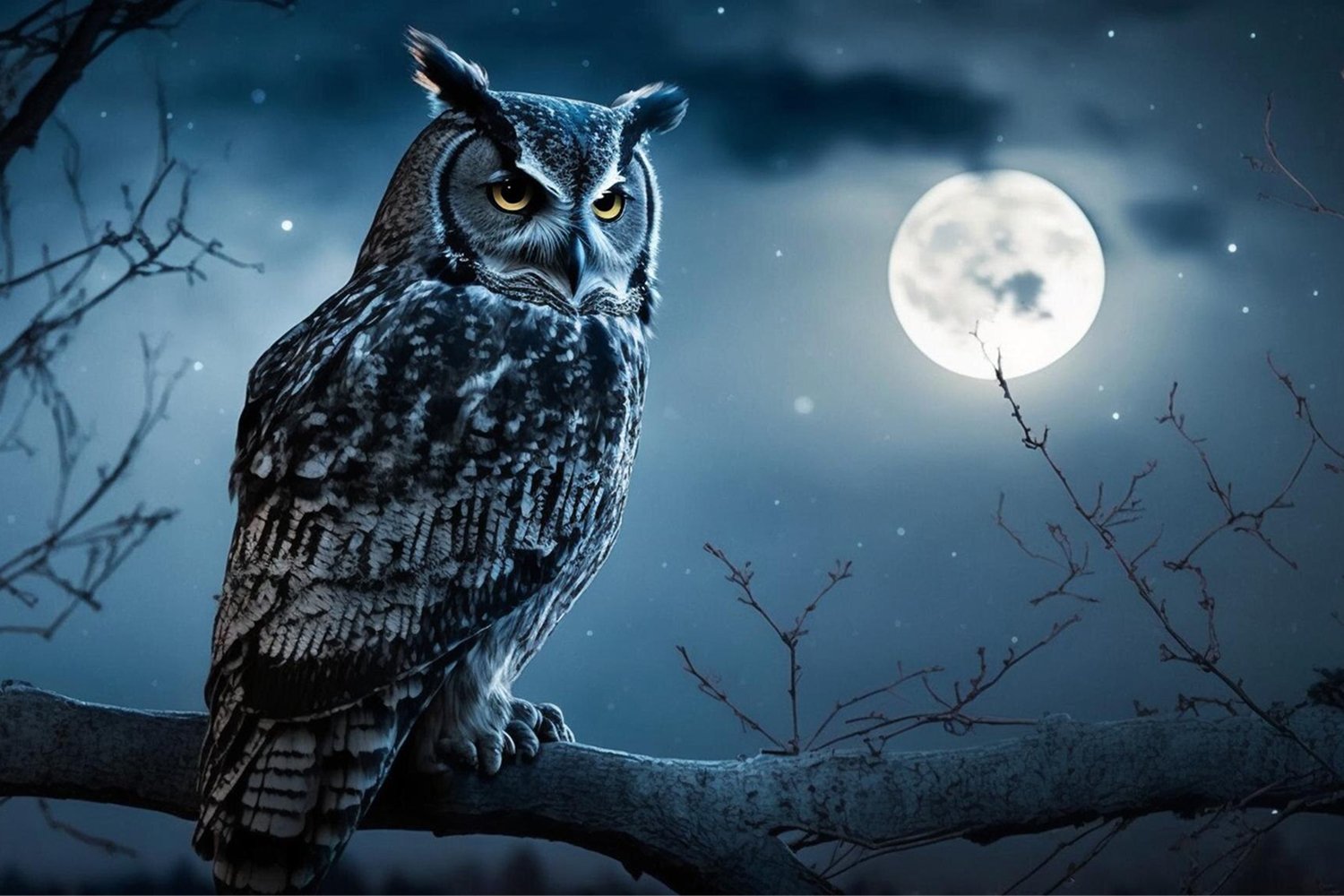
The night is a vast, whispering canvas where shadows dance and secrets unfurl. Among its most enigmatic inhabitants are the owls—silent sentinels of the dark, wielding a mystique that has captivated humanity for millennia. These nocturnal predators are not merely birds; they are living paradoxes, embodying both fragility and ferocity, wisdom and whimsy. Their existence is a testament to nature’s ingenuity, a symphony of adaptations that allow them to thrive in the cloak of darkness. To understand owls is to peer into the heart of the night itself, where every flap of their wings and every piercing gaze tells a story of survival, strategy, and ecological harmony.
The Silent Symphony: How Owls Master the Art of Stealth
Owls are the maestros of the night’s orchestra, conducting a performance of near-perfect silence. Their flight is a marvel of evolutionary engineering, a ballet of feathers and physics that renders them virtually undetectable. Unlike other birds, owls possess a unique wing structure—soft, fringed edges that muffle the turbulence of air, and a velvety plumage that absorbs sound. This stealth is not merely for predation; it is a survival tactic, allowing them to evade both prey and predators alike. The barn owl, for instance, can detect the faintest rustle of a mouse beneath a blanket of snow, its hearing so acute it can pinpoint the location of its next meal with the precision of a surgeon. In the language of the night, owls speak in whispers, their presence felt more than heard.
The Eyes of the Night: Vision That Defies Darkness
To gaze into the eyes of an owl is to look into the abyss of the unknown. Their vision is a marvel of adaptation, a biological telescope that pierces the veil of darkness. Unlike humans, owls possess large, tubular eyes that are fixed in their sockets, granting them exceptional depth perception. Their retinas are densely packed with rod cells, the photoreceptors that excel in low-light conditions. But the true magic lies in their tapetum lucidum—a reflective layer behind the retina that amplifies available light, turning even the faintest moonlight into a navigational beacon. This adaptation, however, comes at a cost: owls cannot move their eyes. Instead, they compensate with a neck that can rotate a staggering 270 degrees, granting them a panoramic view of their domain. In the language of the night, their eyes are the lanterns that light the way.
The Hunt: A Ballet of Precision and Patience
The hunt of an owl is a masterclass in patience and precision, a slow-burning drama where every second counts. Unlike the swift, aerial pursuits of hawks or falcons, owls rely on a strategy of ambush. They perch, motionless, their bodies fused to the branches like living sculptures, their gaze fixed on the horizon. When prey ventures too close, the owl strikes with a suddenness that belies its stillness. Its talons, curved like scythes, close around its victim in a vise-like grip, delivering a fatal blow with unerring accuracy. The snowy owl, a denizen of the Arctic tundra, exemplifies this strategy, its white plumage blending seamlessly with the snow as it waits for lemmings to betray their presence with a careless step. In the language of the night, the hunt is a poem of stillness and sudden violence.
The Ecological Tapestry: Owls as Keystone Predators
Owls are not merely predators; they are the weavers of an ecological tapestry, their presence shaping the very fabric of their habitats. As keystone species, they play a pivotal role in maintaining the balance of nature. By preying on rodents and insects, they control populations that might otherwise spiral out of control, preventing overgrazing and the spread of disease. The great horned owl, for example, is a fearsome hunter of rabbits and skunks, its appetite acting as a natural check on these populations. In doing so, owls indirectly protect vegetation and other wildlife, ensuring the health of entire ecosystems. Their role extends beyond the physical; they are also indicators of environmental health. A decline in owl populations often signals broader ecological distress, from habitat loss to pesticide contamination. In the language of the night, owls are the silent guardians of the wild.
The Myth and the Mystery: Owls in Human Culture
Throughout history, owls have been woven into the fabric of human culture, their enigmatic nature inspiring both reverence and fear. In ancient Greece, the owl was the sacred companion of Athena, goddess of wisdom, its image emblazoned on coins and temples. Yet in medieval Europe, owls were cast as omens of doom, their hoots interpreted as harbingers of death. This duality persists today, with owls embodying both the wisdom of the sage and the eerie allure of the unknown. Native American traditions often revere owls as messengers between the spirit world and the living, while Japanese folklore casts them as protectors against evil spirits. In literature, from Shakespeare’s *Macbeth* to J.K. Rowling’s *Harry Potter*, owls are symbols of mystery and hidden knowledge. In the language of the night, owls are the mirrors of our own imaginations.
The Future: Protecting the Shadows
Despite their resilience, owls face a growing array of threats in an increasingly human-dominated world. Habitat destruction, climate change, and the indiscriminate use of pesticides have taken a toll on their populations. The loss of old-growth forests, for instance, displaces species like the barred owl, forcing them into urban areas where they struggle to find suitable nesting sites. Conservation efforts are critical, from establishing protected habitats to promoting sustainable agriculture that minimizes the use of chemicals. Citizen science initiatives, such as owl monitoring programs, empower communities to play an active role in safeguarding these nocturnal guardians. The future of owls depends on our ability to recognize their ecological value and the irreplaceable role they play in the natural world. In the language of the night, protecting owls is a pledge to preserve the magic of the wild.
The night is not merely a time of darkness; it is a realm of possibility, where owls reign as its most captivating inhabitants. Their lives are a testament to the beauty of adaptation, the elegance of survival, and the intricate web of connections that bind all living things. To understand owls is to understand the night itself—a world of whispers, shadows, and secrets waiting to be uncovered. As we venture into the twilight, let us remember that these silent predators are not just creatures of the dark; they are the guardians of its mysteries, the keepers of its balance, and the living embodiment of nature’s enduring magic.