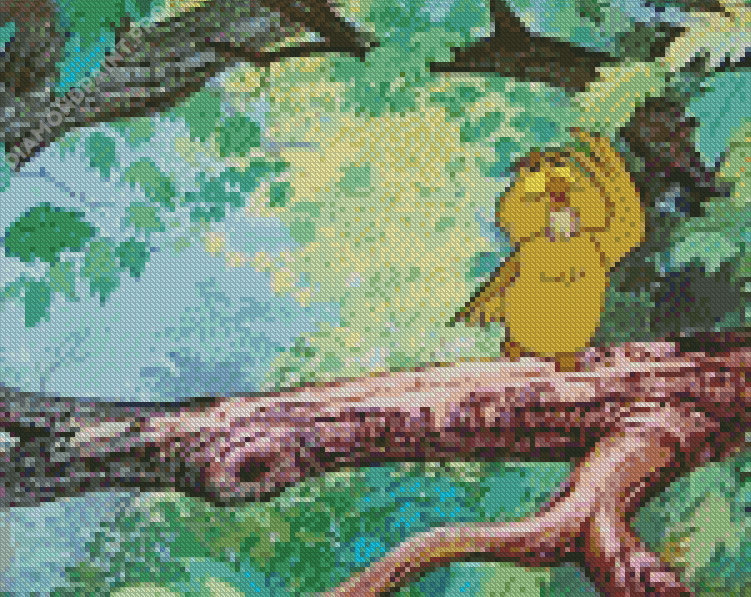
The owl, that enigmatic creature of the night, has long been a symbol of wisdom, mystery, and silent observation. Yet, in the realm of animation, it has transcended its nocturnal reputation to become a dynamic force—a character that evolves, challenges, and captivates. From the stern yet sagacious Archimedes in Disney’s *The Sword in the Stone* to the modern, multifaceted avian protagonists of today, the owl’s journey in animation is a testament to the medium’s power to redefine archetypes. This evolution is not merely about aesthetics; it’s a cultural metamorphosis, one that mirrors society’s shifting perceptions of intelligence, authority, and even feminism. As we trace the owl’s flight through the annals of animated history, we uncover a narrative far richer than mere feathered companionship—it’s a story of transformation, rebellion, and the quiet revolution of perspective.
The Sage’s Shadow: Archimedes and the Birth of the Animated Owl
In the golden age of animation, owls were often relegated to the role of wise, often stern mentors—figures who dispensed knowledge with an air of unassailable authority. Disney’s Archimedes, with his sharp beak and sharper tongue, embodied this archetype. Clad in the robes of a scholar, he was the quintessential pedagogue, his every admonishment laced with the weight of centuries. Yet, beneath this veneer of wisdom lay a subtle subversion: Archimedes was not merely a vessel of wisdom but a gatekeeper, one who controlled the flow of knowledge with a mix of paternalism and impatience.
This portrayal, while groundbreaking for its time, was not without its limitations. Archimedes’ wisdom was unquestionable, his authority absolute. He existed in a world where knowledge was power, and power was a male preserve. The owl, in this context, was a symbol of patriarchal enlightenment—a figure who bestowed wisdom upon the deserving but rarely questioned the structures that defined “deserving.” Yet, even here, there was a flicker of potential. Archimedes’ stern demeanor masked a deep care for his charge, Arthur, hinting at a nurturing side beneath the gruff exterior. This duality would later become a cornerstone of the owl’s evolution in animation.
Beyond the Beak: The Owl’s Flight from Stereotype
The late 20th and early 21st centuries witnessed a seismic shift in how owls were depicted in animation. No longer confined to the role of the wise old sage, these birds began to take on roles that defied convention. They became tricksters, rebels, even antiheroes. Take, for instance, the owls of *Legend of the Guardians: The Owls of Ga’Hoole*, who led a revolution against tyranny. Here, the owl was not a passive dispenser of wisdom but an active agent of change, wielding both intellect and combat prowess. This transformation was not merely a stylistic choice but a cultural one—a reflection of a world increasingly skeptical of unquestioned authority.
The owl’s newfound agency extended beyond the battlefield. In *Hilda*, the titular character’s owl companion, Twig, was a creature of boundless curiosity and emotional depth. Twig’s role was not to teach but to explore, to stumble, and to grow alongside Hilda. This dynamic subverted the traditional mentor-student relationship, presenting the owl as a peer rather than a superior. The shift was subtle but profound: the owl was no longer the keeper of secrets but a seeker of them, a partner in discovery rather than a distant oracle.
The Feminine Feather: Owls and the Reclamation of Narrative Space
Perhaps the most radical transformation of the animated owl has been its association with femininity. Traditionally, owls were linked to masculine wisdom, their hoots echoing through the halls of academia and mythology as symbols of male intellect. Yet, in modern animation, owls have become emblems of feminine strength, intuition, and resilience. Consider the owls of *Over the Garden Wall*, where the Woodsman’s daughter, Beatrice, is accompanied by a spectral owl that embodies both guidance and mystery. Here, the owl is neither male nor female but a genderless guide, its wisdom accessible to all who seek it.
This gender fluidity is not confined to secondary characters. In *The Owl House*, the protagonist Luz is a human girl who discovers a world where owls are not just creatures but deities, rulers, and warriors. The series’ titular owl, Hooty, is a chaotic, gender-ambiguous force of nature, embodying the unpredictability and creativity often associated with femininity. The show’s creator, Dana Terrace, has spoken about the importance of subverting traditional gender roles, and the owl’s role in the narrative is a perfect example of this. Hooty is neither wise nor foolish, neither nurturing nor distant—it is simply itself, a being of boundless potential.
The reclamation of the owl as a feminine symbol is more than a narrative choice; it’s a cultural corrective. For centuries, owls were tied to the witchy, the otherworldly, and the feminine—only to be stripped of agency and reduced to caricatures. Modern animation is reclaiming this legacy, presenting owls as complex, multifaceted beings who defy easy categorization. They are no longer the silent observers of the night but the architects of their own destinies.
The Silent Revolution: Owls as Agents of Change
Animation has always been a medium of revolution, a space where the impossible becomes tangible and the marginalized find a voice. The owl, with its piercing gaze and nocturnal habits, is the perfect vessel for this revolution. In *Wolfwalkers*, the owls are not just creatures but symbols of the wild, untamed spirit that exists beyond the confines of human society. They are neither good nor evil but forces of nature, their presence a reminder of the world’s inherent unpredictability.
This theme of the owl as an agent of change is perhaps most evident in *Moomins on the Riviera*, where the owls are not just background characters but catalysts for the story’s emotional core. Their presence is subtle, their influence profound. They do not lecture or command; they exist, and in their existence, they challenge the characters—and the audience—to see the world differently. This is the silent revolution of the animated owl: it does not shout its message but whispers it, leaving the viewer to ponder long after the screen fades to black.
The Future of the Feathered Muse
As animation continues to evolve, so too will the role of the owl. We are already seeing glimpses of this future in works like *Kipo and the Age of Wonderbeasts*, where owls are not just characters but symbols of a post-apocalyptic world’s resilience. These owls are survivors, adaptors, and innovators—creatures who thrive in a world that has been reshaped by human folly. Their stories are not about wisdom bestowed but wisdom earned, a testament to the owl’s enduring relevance in an ever-changing world.
The owl’s journey in animation is far from over. It is a story of reinvention, of breaking free from the shackles of tradition to embrace a future where owls are not just symbols but living, breathing entities with their own dreams, fears, and aspirations. This is the promise of the animated owl: a shift in perspective, a piquing of curiosity, and a reminder that even the most ancient of creatures can soar to new heights.