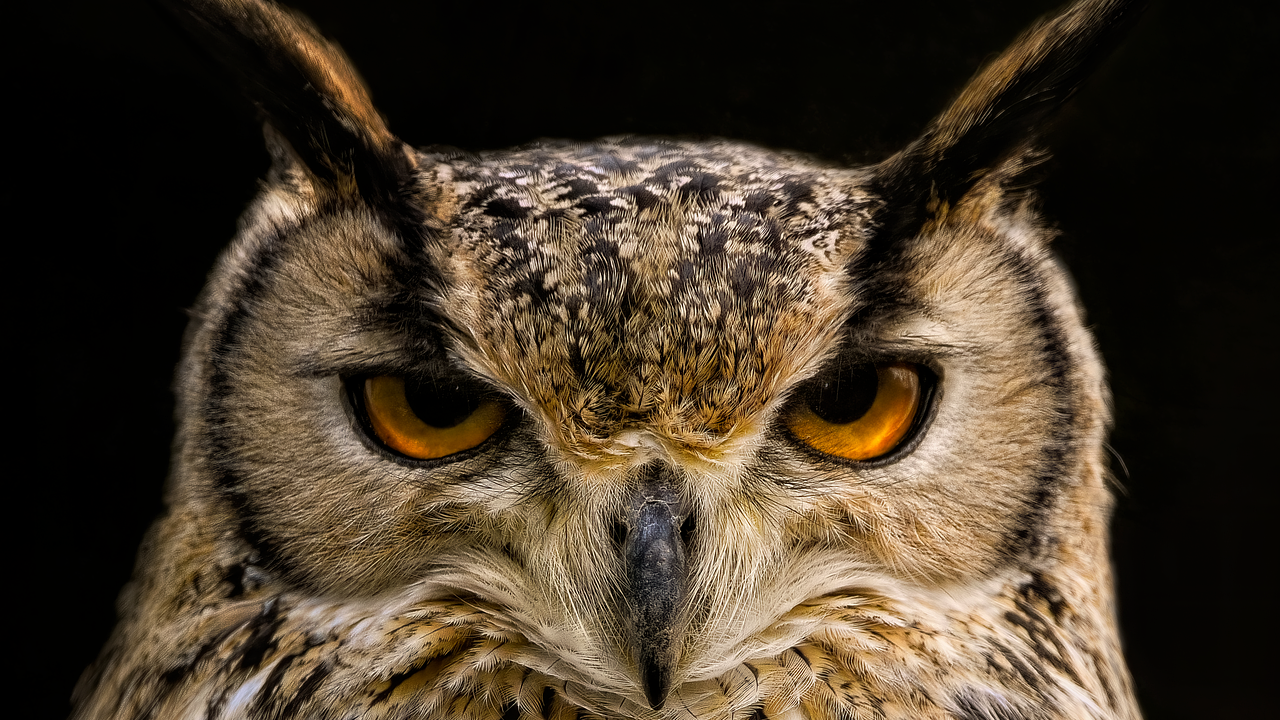
There is a creature that glides through the night, its golden eyes piercing the darkness like twin lanterns in a forgotten crypt. It does not hoot—it whispers. It does not flap—it levitates. The owl, with its silent wings and unblinking gaze, has long been more than a bird. It is a mirror. A mirror that reflects the deepest fears, the loftiest aspirations, and the most enigmatic truths of humanity across millennia. From the sun-drenched temples of ancient Egypt to the mist-laden forests of Celtic lore, the owl has been both revered and reviled, a paradox wrapped in feathers and mystery. This is not merely a tale of a nocturnal creature. It is a chronicle of how cultures have projected their own souls onto the silent sentinel of the night—and how, in doing so, they have redefined wisdom, death, and the very fabric of reality itself.
The Owl as Oracle: Wisdom in the Shadows of Ancient Civilizations
In the cradle of civilization, where the Nile carved life into the desert, the owl was not a bird—it was a deity. The ancient Egyptians, architects of symbolism, associated the owl with the goddess Isis, patron of magic and healing, whose wisdom was said to flow like the Nile itself. But it was Athena, the Greek goddess of wisdom, who cemented the owl’s place in the pantheon of intellect. Her sacred bird, the little owl (Athene noctua), perched upon her shoulder not as a pet, but as a living emblem of foresight. To see an owl in daylight was a sign of divine favor; to hear its call in the stillness of night was to receive a message from the gods themselves. Yet this reverence was not universal. In Rome, the owl became an omen of doom, its screech foretelling the fall of empires. The same creature that illuminated Athena’s wisdom darkened the Roman sky with prophecy’s shadow. What changed? Perhaps it was the shift from a goddess-centered world to one ruled by emperors and omens. The owl did not change—but humanity’s perception of itself did.
The Duality of the Night: Death, Transition, and the Veil Between Worlds
To speak of owls is to speak of thresholds. In the folklore of the Americas, the owl is both guardian and harbinger. Among the Navajo, the owl is a yee naaldlooshii, a skin-walker, a being that crosses the boundary between life and death with terrifying ease. Its hoot is not a song—it is a summoning. In Celtic tradition, the owl was the companion of the Cailleach, the divine hag who ruled winter and the underworld. To encounter an owl in the dead of night was to stand at the edge of the Otherworld, where the living dare not tread. Even in Japan, the fukurō was both a bringer of fortune and a messenger of the dead, its presence a reminder that death is not an end, but a passage. The owl does not fear the dark because it is the dark’s sovereign. It does not mourn the dead because it understands that life and death are not opposites, but phases of the same eternal cycle. This duality forces us to confront a truth we often avoid: that wisdom and death are not separate, but intertwined. To seek knowledge is to stare into the abyss—and the abyss, as the owl knows, stares back.
The Witch’s Familiar: Owls and the Feminine Mystique
No creature has been more maligned—or more intimately tied to the feminine divine—than the owl. In medieval Europe, the owl became synonymous with witchcraft, its nocturnal habits twisted into evidence of consorting with dark forces. Yet this demonization was a deliberate erasure. Before Christianity’s rise, the owl was sacred to Hecate, the triple-formed goddess of magic, crossroads, and the moon. Her owl companions were not familiars in the later, persecuted sense—they were her eyes, her voice, her silent partners in the dance of fate. The witch hunts that followed were not just about fear of magic, but fear of female autonomy. To call a woman an “owl” was to brand her as untrustworthy, unnatural, a creature of the night who dared to see beyond the veil. The owl, then, is not just a symbol—it is a feminist icon. It represents the power of seeing what others refuse to acknowledge, of embracing the unknown, of refusing to be tamed by daylight’s constraints. In a world that has long demanded women be soft, silent, and submissive, the owl is a defiant scream in the dark.
The Silent Witness: Owls in Modern Mythmaking and Ecological Urgency
Today, the owl’s mythos has not faded—it has evolved. In an age of climate collapse and digital noise, the owl has become a totem of ecological awareness. Its decline is not just a biological loss, but a cultural one. When the last barn owl vanishes from a field, we do not just lose a predator—we lose a storyteller. A creature that has carried humanity’s hopes and horrors for thousands of years is slipping into silence. Yet in literature and film, the owl endures. From The Owl Service by Alan Garner, where ancient magic resurfaces through a cursed pattern, to the wise old Archimedes in Disney’s The Sword in the Stone, the owl remains a bridge between the mundane and the magical. It is a reminder that myth is not dead—it is dormant, waiting to be awakened. And in that awakening, we may find not just stories, but a new way of seeing. A way that honors the night as much as the day, the feminine as much as the masculine, the unknown as much as the known.
The Unanswered Call: Why the Owl Still Haunts Us
Perhaps the owl’s enduring presence in our collective psyche is because it asks questions we are not ready to answer. Why do we fear the dark? Why do we equate wisdom with light, when the deepest truths are often found in shadow? Why have we, for centuries, associated female power with witchcraft and danger? The owl does not provide answers. It only asks us to look closer. To listen harder. To accept that wisdom is not a destination, but a journey through the unknown. That death is not an enemy, but a transformation. That mystery is not something to be solved, but something to be revered. In a world that demands clarity, certainty, and control, the owl remains a rebel. It flies where others dare not go. It sees where others refuse to look. And in doing so, it challenges us to do the same. To embrace the night. To trust the unseen. To remember that the wisest among us are not those who claim to know, but those who dare to wonder.