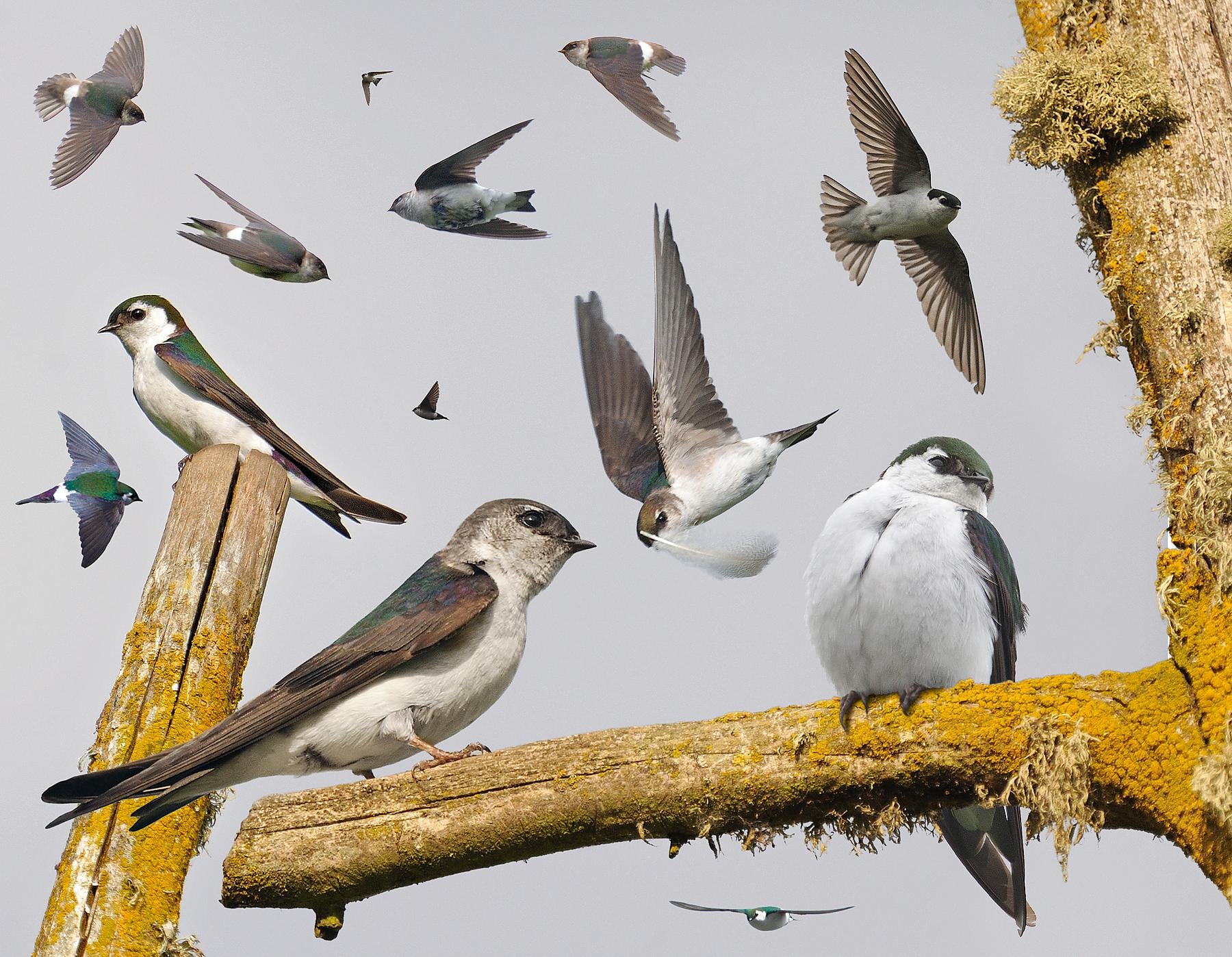
The silent sentinels of the night, owls, are far more than mere nocturnal predators. Their presence weaves an intricate tapestry through the fabric of avian communities, shaping the very essence of bird diversity in ways both overt and subtle. To witness an owl perched on a gnarled branch, its golden eyes gleaming like twin moons, is to glimpse an architect of ecological balance—one whose influence extends far beyond the confines of its hunting grounds. These enigmatic birds of prey do not merely coexist with their feathered counterparts; they orchestrate a symphony of survival, competition, and adaptation that reverberates through the treetops and across the open skies.
The Predatory Paradox: How Owls Drive Avian Diversity
At first glance, the idea that a predator could enhance diversity might seem counterintuitive. After all, owls are consummate hunters, their talons and beaks designed to cull the weak and the unwary. Yet, this very predation pressure acts as a crucible, refining the gene pool of prey species. Birds that survive the nightly gauntlet of an owl’s presence are not merely lucky—they are better adapted, more vigilant, and often more resourceful. This selective culling prevents any single species from monopolizing resources, fostering a mosaic of avian life where niche specialization thrives.
Consider the humble sparrow. In regions where owls are abundant, sparrows exhibit heightened wariness, nesting in denser thickets and adopting more cryptic coloration. Their fledglings learn to freeze at the slightest rustle of leaves, a behavioral adaptation that reduces predation but also alters their interactions with other species. The result? A proliferation of sparrow subspecies, each finely tuned to the ecological pressures imposed by their nocturnal nemesis. Owls, in this sense, are the unseen sculptors of avian evolution, their shadow looming large over the survival strategies of countless bird species.
The Nocturnal Niche: Owls as Architects of Spatial Segregation
The division of the diurnal and nocturnal realms is not merely a matter of light and dark—it is a battleground of evolutionary trade-offs. Owls, as the undisputed monarchs of the night, carve out a domain where diurnal birds dare not tread without consequence. This spatial segregation reduces direct competition for food and nesting sites, allowing a greater number of species to coexist in the same ecosystem. The barn owl, for instance, preys heavily on small mammals, but its presence alone alters the foraging patterns of insectivorous birds like swallows and swifts, which shift their hunting grounds to daylight hours.
This temporal partitioning is not without its tensions. Diurnal birds must navigate the psychological toll of nocturnal predators, a phenomenon known as the “landscape of fear.” Studies have shown that even in the absence of direct predation, the mere knowledge of an owl’s presence can induce stress responses in birds, altering their feeding behaviors and reproductive success. Yet, this fear is not a mere burden—it is a catalyst. It forces birds to diversify their diets, explore new habitats, and innovate in their nesting strategies. The result is a richer, more resilient avian community, one that thrives on the edge of uncertainty.
Owls and the Cascade of Trophic Interactions
The influence of owls extends beyond their immediate prey, cascading through the food web in ways that are both profound and often overlooked. When owls suppress populations of small mammals, for example, they indirectly benefit ground-nesting birds by reducing competition for seeds and insects. Conversely, the decline of owl populations can lead to rodent explosions, which in turn devastate the nests of songbirds. This trophic cascade illustrates the delicate balance that owls maintain—a balance that is easily disrupted by human intervention, habitat loss, or climate change.
Take the case of the burrowing owl, a species that thrives in open grasslands. By preying on insects and small vertebrates, it prevents overgrazing by herbivores, which in turn preserves the structural diversity of the habitat. This, in turn, supports a wider array of bird species, from grassland sparrows to aerial insectivores like swallows. The owl’s role is not that of a lone predator but of a keystone species, its presence or absence reshaping the entire ecological stage. To remove owls from this equation is to unravel the intricate web of life that has evolved over millennia.
The Cultural and Ecological Fascination with Owls
Why do owls captivate us so? Is it their haunting calls that echo through the night, or the way their feathers blend seamlessly with the bark of ancient trees? Perhaps it is the paradox of their existence—creatures of both light and shadow, wisdom and mystery. In many cultures, owls are symbols of knowledge, their wide eyes representing the pursuit of truth. Yet, they are also harbingers of death, their silent flight a reminder of nature’s indifference to human sentiment.
This duality mirrors their ecological role. Owls are neither benevolent nor malevolent; they are simply existing, their presence a testament to the raw, unfiltered power of nature. Their impact on avian diversity is a reminder that life is not a static tableau but a dynamic interplay of forces, where every species, no matter how small or seemingly insignificant, plays a part. To study owls is to study the hidden currents that shape the natural world—a world where fear and fascination are two sides of the same coin.
The Future of Avian Communities in an Owl-Dependent World
The fate of owls—and by extension, the avian communities they shape—hangs in a precarious balance. Climate change, habitat fragmentation, and the indiscriminate use of pesticides threaten to unravel the delicate threads that bind these nocturnal hunters to their ecosystems. As forests shrink and grasslands disappear, owls face a dwindling supply of prey, forcing them into closer proximity with human settlements. This urban encroachment often leads to conflict, as owls are persecuted for preying on poultry or seen as omens of bad luck.
Yet, there is hope. Conservation efforts that focus on preserving old-growth forests, reducing pesticide use, and creating owl-friendly nesting sites can help restore the balance. The reintroduction of owls into degraded habitats has been shown to revitalize bird communities, proving that these enigmatic birds are not just survivors but restorers of ecological harmony. The challenge lies in recognizing that owls are not merely survivors of the night—they are the architects of a richer, more diverse world, one where every species, from the tiniest warbler to the grandest eagle, has a place.
The role of owls in shaping bird communities is a story of resilience, adaptation, and the unseen forces that govern life on Earth. To understand this story is to glimpse the intricate dance of predator and prey, a dance that has played out for millions of years and will continue long after we are gone. The owls will watch, silent and unyielding, as the world changes around them—and in their quiet presence, they remind us that diversity is not a luxury but a necessity.