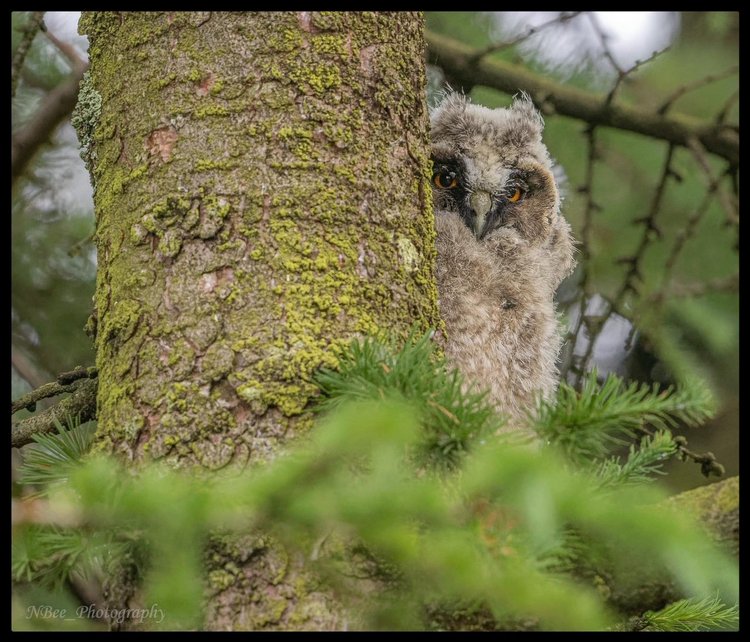
In the quiet hush of twilight, when the world slows its frenetic pace, the owl emerges—not as a mere specter of the night, but as a sentinel of ecological balance. These birds, draped in feathers of dusk and dawn, have long captivated human imagination, their silent flight and piercing gaze evoking both reverence and mystery. Yet beyond their mythic allure lies a pressing reality: the survival of owl species is increasingly imperiled by habitat fragmentation, climate volatility, and anthropogenic pressures. Enter big data—a transformative force reshaping conservation strategies, turning raw information into actionable wisdom. No longer confined to the realm of abstract algorithms, data has become the lifeblood of modern owl conservation, illuminating unseen patterns and guiding policies with unprecedented precision.
The Silent Symphony of Data: Mapping Owl Habitats with Precision
Imagine, if you will, a vast, invisible tapestry woven across forests, grasslands, and urban peripheries—each thread representing a microhabitat, each knot a nesting site. Big data allows conservationists to map this tapestry with breathtaking detail. Satellite imagery, coupled with LiDAR technology, reveals the three-dimensional structure of ecosystems, exposing how tree canopy density or the presence of water sources correlates with owl occupancy. Machine learning models, trained on decades of field observations, can now predict where owls are likely to thrive—or vanish—before human eyes even register the change.
This isn’t mere cartography; it’s a form of ecological clairvoyance. By integrating acoustic monitoring—devices that capture the haunting calls of owls in real time—researchers can track population dynamics across vast landscapes without disturbing a single feather. The data reveals not just *where* owls live, but *how* they move, their territorial ranges shifting with seasonal rhythms or human encroachment. Such insights are invaluable for designing wildlife corridors, ensuring that these nocturnal wanderers aren’t marooned in isolated pockets of wilderness.
From Noise to Narrative: Decoding the Language of Owl Behavior
Owls communicate in a language of hoots, screeches, and trills, a symphony that has baffled humans for centuries. Yet within this cacophony lies a treasure trove of behavioral data. Big data analytics, applied to audio recordings, can distinguish between mating calls, territorial warnings, and juvenile distress signals. Algorithms parse these vocalizations with a sensitivity that rivals the keenest ornithologist’s ear, identifying subtle changes in frequency or duration that may signal stress, disease, or environmental degradation.
Consider the barn owl, a species whose white, heart-shaped face has adorned countless folklore. Recent studies using audio pattern recognition have uncovered that their calls vary subtly depending on the health of their habitat—shorter, more erratic hoots in degraded environments, longer, melodic phrases in thriving ones. This isn’t just academic trivia; it’s an early warning system. By correlating vocal patterns with satellite data on land use, conservationists can pinpoint areas where human activity is disrupting owl communication, long before populations collapse.
Even the timing of their calls tells a story. Owls, creatures of habit, often vocalize in predictable patterns linked to lunar cycles or prey availability. Disruptions in these rhythms—detected through long-term acoustic monitoring—can reveal the creeping tendrils of climate change, such as earlier springs or erratic prey migrations. In this way, big data transforms the owl’s voice into a living archive of environmental health.
The Invisible Hand: How Data Exposes Human Impact on Owl Populations
To study owls is to study humanity’s footprint. Big data strips away the veneer of progress, exposing the collateral damage of industrialization, agriculture, and urban sprawl. Traffic patterns, for instance, when overlaid with owl movement data, reveal how road mortality is a silent killer—especially for ground-nesting species like the burrowing owl. Algorithms can model “roadkill hotspots,” guiding the placement of wildlife crossings or speed limits in critical zones.
Similarly, agricultural expansion is a double-edged sword. While some owl species benefit from open hunting grounds, others suffer from pesticide use, which decimates their prey base. Big data integrates pesticide sales records, crop rotation data, and owl population trends to identify high-risk regions. In one striking case, data revealed that a 20% increase in rodenticide use in a Midwestern county coincided with a 40% decline in barn owl numbers—a correlation that spurred targeted bans and farmer education programs.
The urban owl, too, is a subject of fascination. As cities expand, some owl species adapt, nesting in church steeples or industrial smokestacks. Yet their survival hinges on human tolerance. Data from citizen science projects, like eBird or iNaturalist, shows that owl sightings in urban areas spike during breeding season, suggesting that these birds are not just surviving but *thriving* in human-dominated landscapes. This challenges the notion that conservation must always mean retreat from development. Instead, it invites policies that harmonize urban growth with wildlife needs—green roofs for nesting, LED lighting to reduce light pollution, and “owl-friendly” building designs.
Policy in the Age of Algorithms: Crafting Laws with Data-Driven Compassion
Legislation, too, is being reshaped by the deluge of data. Governments and NGOs now rely on predictive models to draft conservation policies that are both ambitious and evidence-based. For example, the European Union’s Natura 2000 network, designed to protect endangered species, uses big data to identify critical owl habitats and prioritize funding for land acquisition or restoration. In Canada, data on owl migration routes has informed the creation of “no-logging zones” along boreal forest flyways, ensuring safe passage for species like the great gray owl.
Yet data alone cannot dictate policy. The challenge lies in translating raw numbers into narratives that resonate with policymakers and the public. Here, visualization tools play a crucial role. Interactive maps, animated timelines, and infographics bring owl conservation to life, showing how a single policy change—such as banning a harmful pesticide—can ripple across ecosystems. The power of data, then, is not just in its precision, but in its ability to *persuade*.
Consider the case of the snowy owl, a bird whose irruptions into southern latitudes have long puzzled scientists. Big data has revealed that these irruptions are linked to lemming population cycles in the Arctic—a relationship obscured by anecdotal observations. Armed with this knowledge, conservationists can advocate for Arctic habitat protection, not as a vague ideal, but as a necessity for species survival. The data doesn’t just inform policy; it *justifies* it.
The Future: Owls, Data, and the Unwritten Chapter
The marriage of big data and owl conservation is still in its infancy, but its potential is staggering. Emerging technologies like DNA barcoding are allowing researchers to track owl diets with unprecedented accuracy, revealing how diet shifts—driven by climate change or invasive species—affect reproductive success. Meanwhile, blockchain is being explored as a tool for transparent, decentralized monitoring of conservation efforts, ensuring that data isn’t siloed or manipulated.
Yet for all its promise, big data is not a panacea. It cannot replace boots on the ground or the wisdom of Indigenous knowledge holders who have stewarded these lands for millennia. Instead, it must be a bridge—a way to amplify voices that have too often been ignored. The owl, with its silent wings and watchful gaze, reminds us that conservation is not just about saving species, but about preserving the intricate web of life that sustains us all.
As we stand on the precipice of an ecological crisis, big data offers a glimmer of hope. It turns the abstract into the actionable, the invisible into the undeniable. And perhaps, in the process, it helps us remember why we fell in love with owls in the first place—not just as symbols of wisdom, but as living, breathing testaments to the resilience of nature. The question is no longer whether we can save them, but whether we will choose to listen.