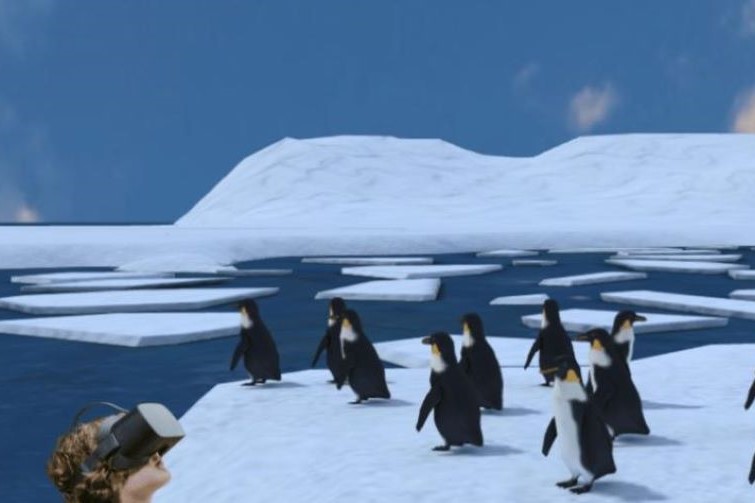
What if you could step into the emerald canopy of an ancient forest, where the air hums with the whispers of unseen creatures and the dappled sunlight paints the mossy ground in shifting patterns? Now, imagine doing so without ever leaving your living room. Virtual reality (VR) isn’t just a playground for gamers—it’s a revolutionary tool for conservation, education, and empathy. And when it comes to the elusive and endangered spotted owl, VR could be the key to unlocking a deeper connection between humans and these enigmatic birds of prey. But how do we harness this technology to not just inform, but truly inspire? Let’s dive into the untamed world of VR and discover how it can transform the way we perceive, protect, and celebrate spotted owl habitats.
The Power of Immersion: Why VR is a Game-Changer for Conservation
Traditional education relies on textbooks, documentaries, and lectures—tools that engage the mind but often leave the heart untouched. VR, however, plunges users into an experience so vivid it bypasses the cerebral and speaks directly to the soul. For the spotted owl, a species teetering on the edge of habitat loss due to logging and urban sprawl, VR offers an unparalleled opportunity to bridge the gap between human curiosity and ecological urgency.
Picture this: a student dons a headset and suddenly finds themselves perched on a moss-covered branch, the wind rustling through Douglas fir needles. Below them, the forest floor teems with life—lichen-clad rocks, ferns unfurling like green lace, and the occasional scuttle of a Douglas squirrel. The owl, camouflaged against the bark, watches with golden eyes. This isn’t a simulation; it’s a portal. And unlike a documentary, which might leave viewers passive, VR demands engagement. Users don’t just *see* the habitat—they *inhabit* it. They feel the weight of the forest’s silence, the urgency of its fragility. That’s the magic of immersion: it turns abstract concepts into visceral realities.
Designing the Experience: Crafting a Habitat That Feels Alive
Creating a VR experience that does justice to the spotted owl’s world is no small feat. It requires more than just stunning visuals—it demands authenticity, interactivity, and a touch of whimsy to keep users hooked. The first step? Research. Developers must collaborate with ecologists, ornithologists, and Indigenous knowledge keepers to ensure every pine needle, every rustle of leaves, is a faithful representation of the owl’s domain.
But authenticity alone isn’t enough. The experience must also be *playful*. Why? Because play disarms skepticism. Imagine a user tasked with finding a hidden nest by following the calls of a spotted owl chick. Or perhaps they’re challenged to identify the owl’s primary prey—a flying squirrel darting through the canopy—before it’s too late. These micro-games transform learning into an adventure, making complex ecological relationships feel like a treasure hunt rather than a lecture.
Yet, here’s the rub: how do we balance realism with engagement? Too much detail can overwhelm; too little can feel like a hollow simulation. The answer lies in *curated chaos*—a carefully designed environment where users can explore freely but are subtly guided toward key educational moments. Think of it as a forest trail: the path is clear, but the detours are where the magic happens.
The Challenge of Empathy: Can VR Really Change Minds?
Even the most immersive VR experience is useless if it doesn’t spark action. The real test isn’t whether users *feel* something—it’s whether they *care enough to act*. This is where the challenge lies: how do we translate virtual wonder into real-world conservation?
One approach is to pair the VR experience with tangible outcomes. Imagine a user finishing their forest journey and being presented with a call-to-action: “The owl’s habitat is shrinking at a rate of 3% per year. Would you like to sign a petition to protect old-growth forests in your region?” Or perhaps they’re directed to a local wildlife sanctuary where they can volunteer. The VR experience doesn’t end when the headset comes off—it’s the spark that ignites a fire.
But there’s another hurdle: accessibility. VR technology is still a luxury for many, and even when headsets are available, not everyone has the time or inclination to use them. To bridge this gap, developers must think beyond the headset. Could the experience be adapted into a mobile app for quick, bite-sized lessons? Could it be projected in public spaces, like museums or schools, to reach those without personal devices? The goal isn’t exclusivity—it’s democratization.
Beyond the Owl: VR as a Tool for Ecosystem Education
The spotted owl isn’t an island. Its survival depends on the health of the entire ecosystem—from the mycorrhizal fungi that nourish the trees to the barred owls that compete for territory. A truly effective VR experience should reflect this interconnectedness. Users shouldn’t just learn about the owl; they should understand its role in the forest’s symphony.
Consider the concept of *trophic cascades*—how the presence (or absence) of a top predator like the spotted owl ripples through the food web. In VR, users could witness the consequences of habitat loss firsthand: fewer owls mean more rodents, which means fewer young trees, which means a quieter forest. It’s a domino effect, and VR makes it tangible. By showing these relationships in real time, the experience transforms abstract ecology into a gripping narrative.
But why stop at the forest? The same principles apply to other endangered species and their habitats. VR could be the ultimate tool for rewilding our collective imagination—helping people see the world not as a resource to exploit, but as a living tapestry we’re all part of.
The Future of VR in Conservation: A Call to Arms
The potential of VR in conservation is vast, but it’s still in its infancy. The next frontier? *Collaborative VR*. Imagine a global network of users exploring the same forest simultaneously, each contributing to a shared mission—planting virtual trees, tracking owl sightings, or even debating conservation strategies in real time. It’s a digital campfire where strangers become stewards.
Yet, technology alone won’t save the spotted owl. It’s a tool, not a savior. The real work happens when users step out of the VR world and into the real one—when they vote for policies that protect old-growth forests, when they support sustainable logging practices, when they plant native species in their own backyards. VR can plant the seed, but it’s up to us to nurture it.
So, here’s the playful challenge we leave you with: What if the next time you put on a VR headset, you didn’t just escape reality—but helped save it? The forest is waiting. Will you answer its call?