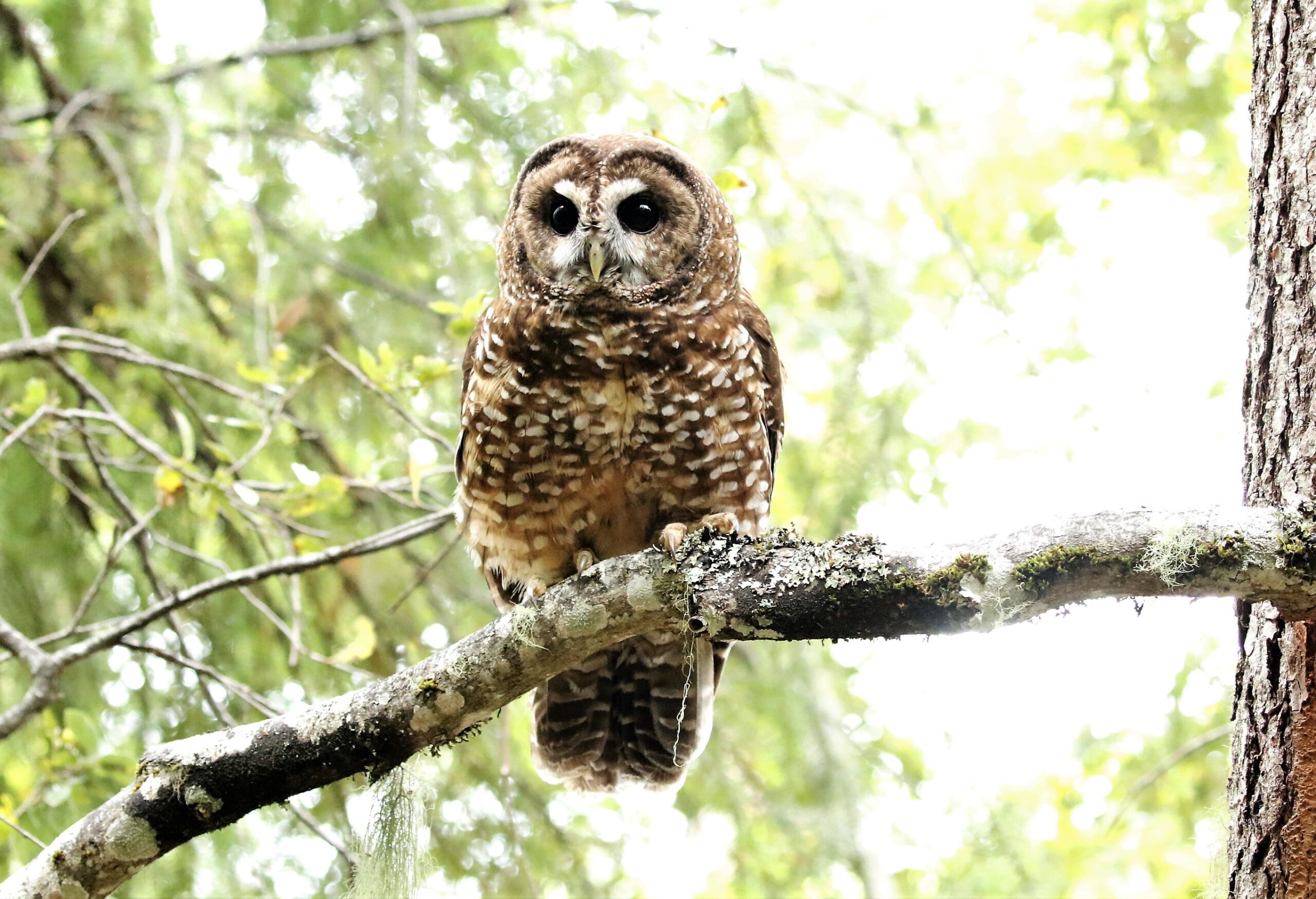
The Northern Spotted Owl, a denizen of the ancient forests of the Pacific Northwest, has long been a symbol of ecological fragility and conservation triumph. But what if this iconic bird, once teetering on the brink of extinction, could tell us a story of resilience? What if its recovery could teach us lessons about coexistence, adaptation, and the delicate balance between human progress and wilderness preservation? The tale of the Northern Spotted Owl in Oregon is not just a wildlife success story—it’s a testament to the power of dedicated conservation, the complexities of ecological management, and the enduring hope that nature can heal when given a chance.
The Vanishing Crown of the Old-Growth Canopy
Imagine a forest so ancient that its trees predate the pyramids of Egypt, where the air hums with the whispers of unseen creatures and the ground is carpeted with centuries of fallen needles. This was the domain of the Northern Spotted Owl, a bird so intricately woven into the fabric of its habitat that its very survival depended on the towering old-growth forests of Oregon. But by the late 20th century, this majestic owl faced a silent, creeping threat—not from predators, but from human hands. Logging, habitat fragmentation, and the relentless march of development carved into its domain, leaving the owl’s future hanging by a thread. By the 1990s, the Northern Spotted Owl was listed as threatened under the Endangered Species Act, a stark reminder of how quickly even the most resilient species can falter when their home is stripped away.
Conservation in the Crosshairs: A Delicate Balancing Act
The plight of the Northern Spotted Owl ignited a fierce debate that pitted loggers against environmentalists, economists against ecologists, and communities against federal agencies. The owl’s habitat became a battleground, where the stakes were nothing less than the soul of the Pacific Northwest. Could old-growth forests be saved without crippling the timber industry? Could the owl’s survival coexist with human livelihoods? The answer, as it turned out, was a resounding *maybe*—but only if drastic measures were taken. Enter the Northwest Forest Plan, a landmark conservation strategy that redefined how public lands would be managed. By designating critical habitat areas and restricting logging in old-growth zones, the plan aimed to give the Northern Spotted Owl a fighting chance. Yet, the road was fraught with contention, as stakeholders grappled with the economic and ecological trade-offs of such sweeping changes.
The Owl’s Silent Comeback: Signs of Hope in the Shadows
Years after the plan’s implementation, glimmers of hope began to emerge. Surveys revealed that Northern Spotted Owl populations in Oregon were stabilizing, and in some areas, even showing signs of slow recovery. The owls, those elusive sentinels of the forest, were adapting to the new reality—though not without struggle. Their recovery was a slow, painstaking process, marked by setbacks and small victories. Nesting pairs, once scarce, began to reclaim territories, their haunting calls echoing through the canopy once more. Yet, the owl’s resilience was not without its caveats. The encroachment of invasive barred owls, a more aggressive and adaptable cousin, posed a new and formidable challenge. Could the Northern Spotted Owl outcompete its rival, or would it be pushed further into the margins of its ancestral home?
The Barred Owl Menace: A New Threat in the Wings
Here lies a cruel twist of fate: the very adaptations that once made the Northern Spotted Owl a master of its domain now work against it. While the Spotted Owl thrives in the quiet, undisturbed expanse of old-growth forests, the barred owl—a larger, more aggressive species—has thrived in the fragmented landscapes created by human activity. With its broader diet and adaptability, the barred owl has muscled its way into the Spotted Owl’s territory, outcompeting it for food and nesting sites. Worse still, barred owls have been known to prey on their smaller relatives. Conservationists now face a heart-wrenching dilemma: should they intervene to protect the Spotted Owl, or let nature take its course? The answer is far from simple, as it forces us to confront uncomfortable questions about the role of human intervention in ecological processes.
Community-Led Conservation: The Power of Local Stewardship
Amid the policy debates and scientific studies, a quieter revolution was taking place—one led by the very communities that call the Pacific Northwest home. From Indigenous tribes who have long revered the owl as a cultural symbol to local conservation groups that monitor nesting sites, grassroots efforts have played a pivotal role in the owl’s recovery. Programs like habitat restoration, invasive species control, and community science initiatives have fostered a sense of shared responsibility. These efforts remind us that conservation is not just the domain of scientists and policymakers; it is a collective endeavor that requires the participation of all who share this land. The Northern Spotted Owl’s story is as much about the people who fought for its survival as it is about the bird itself.
The Future of the Forest: Can We Save Both Owl and Industry?
As the Northern Spotted Owl’s population inches toward stability, a new question looms: Can Oregon’s forests support both the owl and the industries that depend on them? The answer may lie in innovation—thinning overcrowded forests to reduce wildfire risks, promoting sustainable logging practices, and exploring alternative economic models that prioritize both ecological health and human prosperity. The owl’s recovery has shown that it is possible to strike a balance, but it requires a willingness to rethink our relationship with the land. The forest is not a resource to be exploited or a wilderness to be preserved in amber; it is a living, breathing ecosystem that demands our respect and adaptability.
A Call to Action: What Will We Choose to Save?
The Northern Spotted Owl’s journey is far from over. While its future looks brighter than it did decades ago, the challenges ahead are formidable. Climate change, habitat loss, and the barred owl’s relentless advance are all threats that demand our attention. Yet, the owl’s story also offers a glimmer of hope—a reminder that even the most dire situations can improve with persistence, collaboration, and a deep reverence for the natural world. So, what will we choose to save? Will we let the Northern Spotted Owl’s haunting call fade into silence, or will we stand as stewards of the forests it calls home? The choice is ours, and the time to act is now.