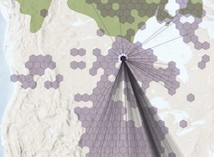
The ancient forests of the Pacific Northwest once echoed with the haunting calls of the spotted owl, a bird whose wings traced the invisible threads of migration corridors like a poet’s quill weaving through the night. These corridors, vital arteries of wilderness, pulse with life—each rustle of leaves, each gust of wind carrying the whispers of survival. But today, these pathways are being severed, not by the claws of a predator, but by the relentless march of road construction. The impact is not merely ecological; it is a fracture in the very soul of the land, a wound that bleeds biodiversity and cultural heritage alike.
The Vanishing Labyrinth: How Roads Carve Through Migration Corridors
Imagine a labyrinth, its walls not of stone but of towering conifers, their branches interlocking like the fingers of ancient guardians. This is the domain of the spotted owl, a creature of twilight and shadow, whose migration corridors are as intricate as the veins in a leaf. Roads, however, are the modern Minotaur—relentless, unyielding, carving through this labyrinth with the precision of a surgeon’s scalpel. Each new asphalt vein disrupts the flow of life, fragmenting habitats into isolated islands where survival becomes a game of chance.
The spotted owl’s migration is not a mere journey; it is a pilgrimage, a dance with the unseen forces of the forest. Roads sever these pilgrimages, leaving the owls stranded in pockets of wilderness too small to sustain them. The fragmentation doesn’t just shrink their world—it fractures their identity. A bird that once glided between ancient groves now finds itself marooned in a landscape of noise and light, where the night is no longer a sanctuary but a battleground.
The Silent Erasure: Noise, Light, and the Death of the Night
In the hush of the forest, the spotted owl listens to the whispers of the wind, the creak of branches, the distant call of its kin. But roads bring with them a cacophony—a symphony of engines, horns, and the relentless hum of human industry. This is not mere noise; it is an assault on the senses, a drowning of the natural world’s voice. The owl’s keen ears, evolved to detect the faintest rustle of prey, are now bombarded with frequencies that drown out the language of the wild.
And then there is the light. The spotted owl thrives in the cloak of darkness, where its mottled plumage blends seamlessly with the shadows. But roads are veins of artificial luminescence, casting a pall over the night. The owl’s world, once a canvas of starlit mystery, is now a stage lit by the harsh glare of headlights and streetlamps. The night is no longer a refuge but a gauntlet, where the owl must navigate a landscape of blinding glare and disorienting shadows.
The Fragmented Kingdom: When Habitat Becomes a Puzzle
Picture a jigsaw puzzle, its pieces scattered across a table. Each piece represents a fragment of the spotted owl’s habitat, a remnant of the once-vast wilderness. Roads are the hands that scatter these pieces, leaving the owl to navigate a landscape where the pieces no longer fit together. The corridors that once allowed the owl to move freely between territories are now broken, forcing the bird to take perilous detours through hostile terrain.
This fragmentation doesn’t just isolate the owls—it isolates their genes. Inbreeding becomes a silent killer, as populations shrink and the genetic diversity that once ensured resilience is lost. The spotted owl, a creature of ancient forests, is now a prisoner of its own shrinking kingdom, its wings clipped by the relentless expansion of human ambition.
The Ripple Effect: How Roads Disrupt the Web of Life
The impact of roads on the spotted owl is not confined to the bird itself. It is a ripple effect, a cascade of consequences that reverberates through the entire ecosystem. The owl is a keystone species, its presence a sign of a healthy forest. When the owl falters, the forest falters with it. Prey populations swell unchecked. Predators scavenge for scraps. The delicate balance of the ecosystem is thrown into disarray, and the forest, once a symphony of life, becomes a discordant chorus of decline.
Consider the barred owl, a more aggressive cousin of the spotted owl. As the spotted owl’s habitat fragments, the barred owl moves in, its adaptability making it a formidable competitor. The result? A silent war in the treetops, where the spotted owl, already struggling, must now contend with an invader that thrives in the broken landscapes left behind by roads.
The Cultural Wound: When Wilderness Becomes a Memory
Beyond the ecological toll, the loss of spotted owl migration corridors is a cultural wound. Indigenous peoples have long revered the owl as a symbol of wisdom and mystery. The forests it inhabits are not just ecosystems; they are sacred spaces, repositories of stories and traditions. When roads carve through these spaces, they don’t just destroy habitats—they erase cultural heritage. The owl’s call, once a beacon for those who walked the land in harmony, becomes a lament for what has been lost.
The spotted owl is more than a bird; it is a guardian of the wild, a living testament to the resilience of nature. When its corridors are severed, we don’t just lose a species—we lose a piece of our own humanity. The forests grow quieter. The nights grow dimmer. And the world becomes a little less magical.
The Path Forward: Can We Mend the Fractured Landscape?
Yet, all is not lost. The story of the spotted owl is not one of inevitable doom, but of resilience and redemption. Conservationists are fighting back, advocating for wildlife crossings that allow owls to traverse roads safely. They are restoring degraded habitats, planting corridors of ancient trees to reconnect the fragments of the owl’s kingdom. And they are challenging the narrative that progress must come at the cost of wilderness.
The spotted owl’s migration corridors are not just lines on a map; they are the lifeblood of a forest. To protect them is to protect the soul of the wild. It is a call to action, a plea to remember that we are not separate from nature but a part of it. The roads may carve through the land, but they do not have to carve through our humanity. The choice is ours: to be the architects of destruction or the stewards of healing.