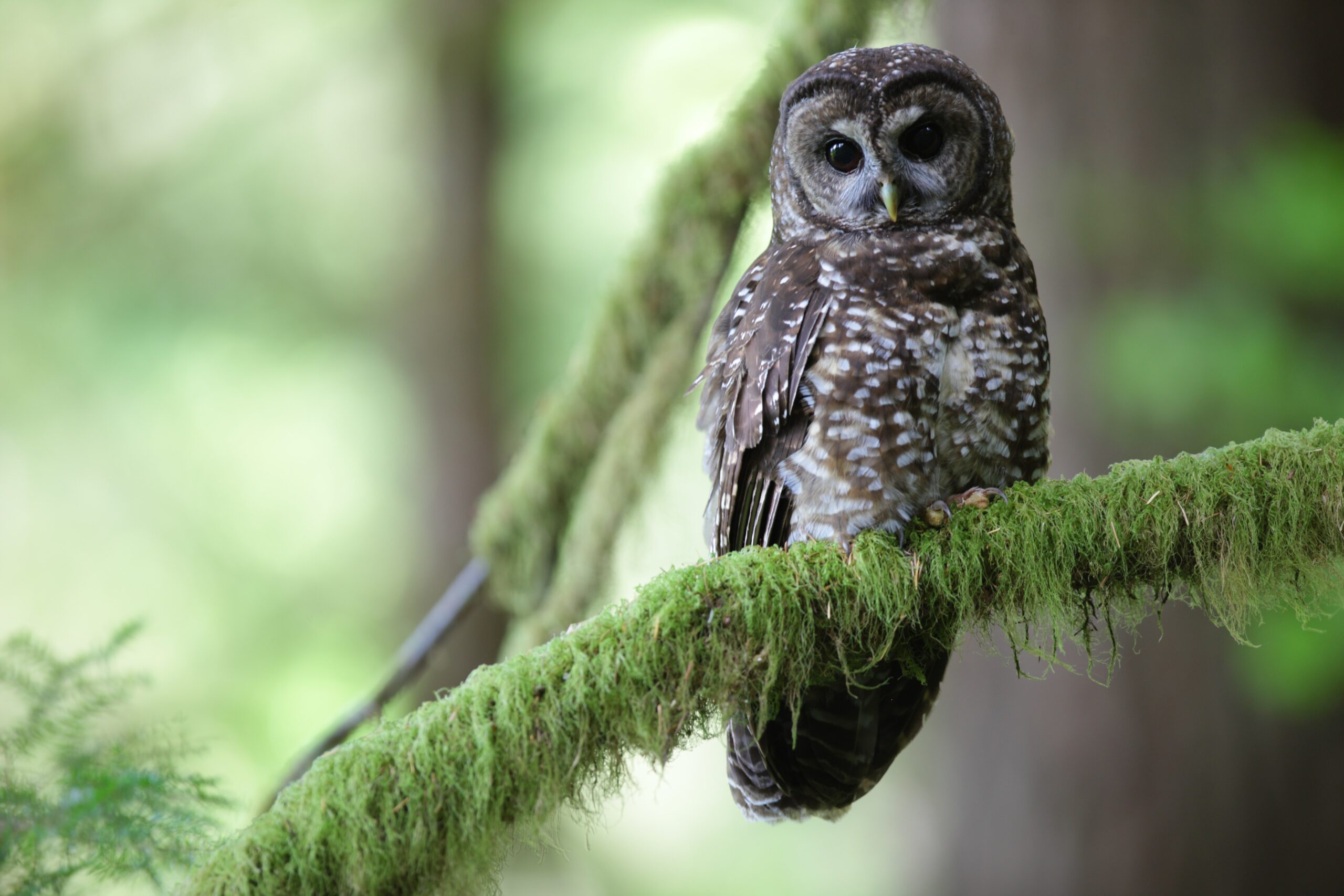
The Pacific Northwest’s ancient forests, draped in emerald moss and whispering with the secrets of centuries, once echoed with the haunting calls of the northern spotted owl. A bird of mythic endurance, its dark eyes held the weight of old-growth ecosystems, where time moved slower than the crawl of lichen across bark. But today, the owl’s haunting trill is fading—silenced not just by the relentless march of human progress, but by the scorching breath of wildfires, now fiercer and more frequent than ever before. This is not merely a tale of ecological loss; it is a story of how climate change, mismanagement, and systemic neglect have conspired to unravel the delicate tapestry of life in one of Earth’s most vital bioregions.
The Vanishing Canopy: How Fire Reshapes the Forest’s Soul
Spotted owls are creatures of the deep woods, their survival intricately tied to the towering Douglas firs and ancient redwoods that have stood since before Columbus sailed. These forests are not just collections of trees; they are living cathedrals, where every branch, every hollow, every moss-covered trunk tells a story of resilience. But wildfires, once a natural and even beneficial force, have morphed into apocalyptic events, devouring entire landscapes in hours. The heat is not just physical—it is existential. When flames lick the sky, they do more than consume oxygen; they erase the microclimates that owls rely on, the cool, damp understories where fungi thrive and prey hides. The fire’s aftermath is a graveyard of charred sentinels, their skeletal forms standing as silent witnesses to an ecosystem in collapse.
What was once a cycle of renewal—where fire cleared out underbrush, allowing new growth to flourish—has become a cycle of annihilation. The problem is not fire itself, but its unnatural intensity. Decades of fire suppression have allowed forests to become overgrown, choked with deadwood and dense thickets that act as kindling. Add to this the relentless warming of the planet, which dries out fuels faster than ever, and you have a recipe for infernos that leap from ridge to ridge, leaving no refuge for the owl’s dwindling numbers.

The Silent Victims: Why Spotted Owls Cannot Outrun the Flames
Unlike their barred owl cousins, which are adaptable and aggressive, spotted owls are specialists—bound to old-growth forests like vines to a trellis. They do not migrate. They do not adapt well to change. Their territories are vast, but their ability to flee is limited. When fire roars through, they have nowhere to go. Even if they survive the initial blaze, the aftermath is a wasteland: no prey, no nesting sites, no shelter from predators. Studies show that spotted owl populations in burned areas can plummet by 50% or more, and recovery is painfully slow, if it happens at all.
Consider the irony: the owl’s decline was first blamed on logging, and rightfully so. Clear-cutting destroyed its habitat wholesale. But now, even where forests were protected, fire is finishing what industry began. The owl is caught in a pincer movement—first squeezed by the timber industry’s greed, then choked by the climate crisis’s fury. It is a double betrayal, a reminder that conservation efforts, no matter how well-intentioned, can be undone by forces beyond local control.
The Pyrocene Age: When Fire Becomes the New Normal
We are living in the Pyrocene—a geological epoch where fire is not an exception but the rule. The Pacific Northwest, once a bastion of cool, wet forests, is now a tinderbox. Summers are longer, drier, and hotter. Lightning strikes, once rare in these latitudes, now ignite fires that burn for months. The 2020 fire season was a wake-up call: millions of acres blackened, skies choked with smoke, and entire communities evacuated. But for the spotted owl, the damage was invisible to most—until it was too late.
The Pyrocene is not just a climate phenomenon; it is a cultural one. We have treated fire as an enemy to be defeated, rather than a partner in ecological balance. Indigenous peoples understood this. They used fire as a tool to manage the land, to promote biodiversity, to keep the underbrush thin and the forests healthy. But colonialism erased that knowledge, replacing it with a doctrine of fire suppression that has backfired spectacularly. Now, we are left scrambling to relearn what was once common wisdom—while the owl pays the price.
The Barred Owl Paradox: A Rival Born of Disruption
Enter the barred owl, a relative newcomer to the Pacific Northwest. Once confined to eastern forests, it has expanded its range westward, pushed by habitat fragmentation and climate change. Barred owls are generalists—bold, adaptable, and voracious. They outcompete spotted owls for food and nesting sites, and they hybridize with them, further diluting the genetic purity of the species. Some conservationists advocate culling barred owls to save the spotted owl, a controversial but pragmatic solution in a world where human intervention is often the only recourse.
Yet this raises a troubling question: is the barred owl truly the villain here? Or is it merely a symptom of a larger disruption—a messenger of the Anthropocene, delivering news of an ecosystem pushed beyond its limits? The barred owl’s arrival is not its fault. It is ours. By altering the climate and fragmenting habitats, we have created conditions that favor the adaptable over the specialized. The spotted owl, once the undisputed monarch of these forests, is now an endangered relic in a world that no longer has room for its kind.
What Remains: The Fragile Future of the Spotted Owl
So what can be done? The answers are as complex as the problem itself. Controlled burns, carefully managed to mimic natural fire regimes, could help restore balance. But these efforts are expensive, politically fraught, and often too little, too late. Protecting remaining old-growth forests is critical, but it is not enough. We must also address the root causes: the climate crisis, the legacy of logging, the systemic failures that have left ecosystems vulnerable. This requires not just policy changes, but a fundamental shift in how we see the land—no longer as a resource to exploit, but as a living, breathing entity deserving of respect.
The spotted owl is more than a species in decline. It is a symbol—a harbinger of what awaits us if we continue to treat the natural world as disposable. Its haunting call, once a fixture of the Pacific Northwest’s nights, is now a lament for a world that is slipping away. To save it is to save ourselves, to remember that we are not separate from these forests, but a part of them—a fragile thread in the web of life.
The fire is coming. The question is whether we will let it burn everything to the ground—or whether we will finally learn to dance with the flames.