In the shrouded cloak of night, where the world slows and shadows stretch like silent sentinels, a revolution in wildlife tracking is unfolding. Thermal imaging, once the domain of military precision and high-tech espionage, has now become the nocturnal eyes of conservationists, biologists, and nature enthusiasts alike. Among its most captivating applications is the tracking of owls—those enigmatic, feathered phantoms that rule the darkness with unparalleled grace. This technology doesn’t just illuminate the hidden lives of these birds; it transforms our understanding of their behaviors, habitats, and the delicate ecosystems they inhabit. Let’s delve into how thermal imaging is rewriting the rules of nocturnal ornithology, offering insights that were once the stuff of legend.
The Silent Hunters Revealed: Thermal Imaging as the Owl’s Night Vision
Owls are the architects of stealth, their flight a whisper against the wind, their hunting tactics a masterclass in patience and precision. Yet, for all their prowess, they remain elusive, slipping through the darkness like ghosts. Traditional methods of tracking—such as mist netting or audio recordings—often fall short in capturing the full scope of their nocturnal activities. Enter thermal imaging, a technology that doesn’t just see in the dark; it *feels* the heat signatures of life itself.
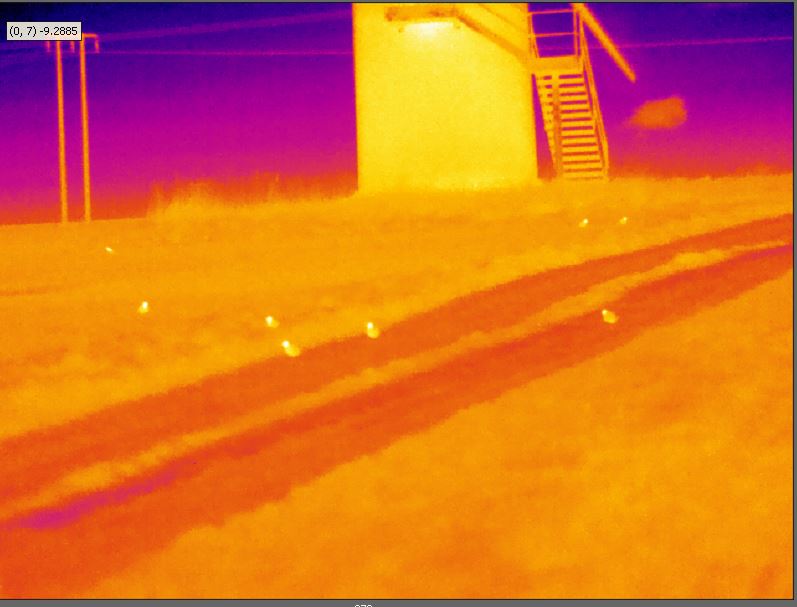
Thermal cameras detect infrared radiation, translating the subtle warmth emitted by living organisms into vivid, real-time images. For owls, this means their body heat—even when camouflaged by foliage or obscured by distance—becomes impossible to hide. Researchers can now observe hunting patterns, territorial disputes, and even courtship rituals without disturbing the birds. The once-invisible becomes visible, the silent becomes audible through the lens of a thermal camera, revealing behaviors that were previously shrouded in mystery.

From Nesting to Hunting: Mapping the Owl’s Domain
The life of an owl is a tapestry woven with threads of territory, sustenance, and survival. Thermal imaging allows scientists to map this tapestry with unprecedented clarity. Nesting sites, often hidden in dense forests or abandoned structures, can be pinpointed with thermal scans that detect the heat signatures of adult owls and their chicks. This is particularly vital for endangered species, where every breeding pair counts toward survival.
But the true magic happens when these cameras are deployed in the field during active hunts. Owls rely on their keen hearing and silent flight to ambush prey, but thermal imaging exposes the aftermath—the heat trails of small mammals as they scatter, the sudden burst of an owl’s wings as it strikes. These thermal snapshots don’t just document predation; they reveal the ecological dynamics at play. How do owls adapt their hunting strategies when prey populations fluctuate? How do they navigate urban encroachment into their habitats? The answers lie in the heat signatures left behind, offering a dynamic, data-rich narrative of owl ecology.
Conservation in the Dark: Thermal Imaging as a Guardian of Biodiversity
The decline of owl populations is often a canary in the coalmine for broader environmental issues—habitat loss, pesticide use, and climate change. Thermal imaging emerges as a powerful ally in conservation efforts, providing the tools to monitor owl populations without invasive procedures. By conducting thermal surveys across vast landscapes, researchers can identify critical habitats, track migration patterns, and assess the impact of human activities.
Consider the plight of the barn owl, a species whose fortunes are closely tied to agricultural landscapes. Thermal imaging can detect their presence in farmlands, helping farmers and conservationists strike a balance between crop protection and wildlife preservation. Similarly, in forested regions, thermal scans can reveal how logging or wildfires disrupt owl territories, enabling targeted interventions to restore balance. This technology doesn’t just observe; it empowers action, turning data into conservation strategies that protect owls and the ecosystems they anchor.
The Art of the Hunt: Thermal Imaging in Behavioral Studies
Owls are not merely predators; they are performers, their behaviors a choreography of instinct and adaptation. Thermal imaging has unlocked new dimensions in behavioral studies, allowing researchers to dissect the nuances of owl hunting techniques. For instance, the thermal camera can capture the moment an owl locks onto prey, its body tensing as it prepares to strike. The heat signature of its talons, even in mid-air, can be analyzed to understand the mechanics of capture.
Beyond hunting, thermal imaging sheds light on social behaviors. Owls are often solitary, but during mating season, their interactions become a spectacle of calls, displays, and territorial posturing. Thermal scans can document these exchanges, revealing how owls communicate through body heat and movement. Even the subtle shifts in temperature around a nesting site can indicate the health of chicks or the presence of predators. In this way, thermal imaging doesn’t just document behavior; it decodes the language of the night.
Challenges and Innovations: The Future of Thermal Tracking
Despite its transformative potential, thermal imaging is not without its challenges. The technology requires skilled operators, and the cost of high-resolution cameras can be prohibitive. Environmental factors, such as dense foliage or extreme weather, can also obscure thermal signatures, limiting the technology’s effectiveness in certain habitats. However, innovations are rapidly addressing these limitations. Portable, AI-enhanced thermal cameras are becoming more accessible, capable of filtering out noise and highlighting relevant heat signatures with machine precision.
Moreover, the integration of thermal imaging with other technologies—such as GPS tracking and acoustic monitoring—creates a multi-dimensional view of owl ecology. Imagine a system where thermal data is cross-referenced with GPS coordinates and audio recordings, painting a holistic picture of an owl’s daily life. This fusion of technologies is not just the future; it’s the present, and it’s redefining how we study and protect nocturnal wildlife.
Beyond the Lens: Engaging Communities in Owl Conservation
The story of thermal imaging and owls isn’t confined to laboratories or research papers. It’s a narrative that invites public participation, turning passive observers into active stewards of nature. Citizen science projects, powered by thermal imaging, allow volunteers to contribute to owl tracking efforts. Equipped with portable thermal cameras, communities can monitor local owl populations, report sightings, and even participate in conservation initiatives. This democratization of science fosters a deeper connection between people and the natural world, reminding us that the owls’ survival is intertwined with our own.
Educational programs leveraging thermal imaging can inspire the next generation of conservationists. Imagine a classroom where students analyze thermal footage of owls, learning about ecology, technology, and the importance of biodiversity in one fell swoop. The visual impact of thermal imaging—seeing the invisible—creates a visceral understanding of wildlife that textbooks alone cannot achieve. It’s a call to action, a reminder that every heat signature in the dark is a story waiting to be told.
The Owl’s Legacy: A Testament to Innovation and Stewardship
Thermal imaging has peeled back the layers of night, revealing the hidden lives of owls in ways that were once unimaginable. It’s more than a tool; it’s a bridge between human curiosity and the natural world, a testament to how technology can illuminate the path to conservation. As we continue to refine this technology and expand its applications, the owls’ stories will grow richer, their struggles more visible, and their futures more secure.
The night is no longer a barrier. It’s an invitation—a challenge to see, to understand, and to act. And in the glow of thermal cameras, the owls take center stage, their heat signatures painting a vivid portrait of life in the dark. This is the future of wildlife tracking: not just a glimpse into the night, but a partnership with it.