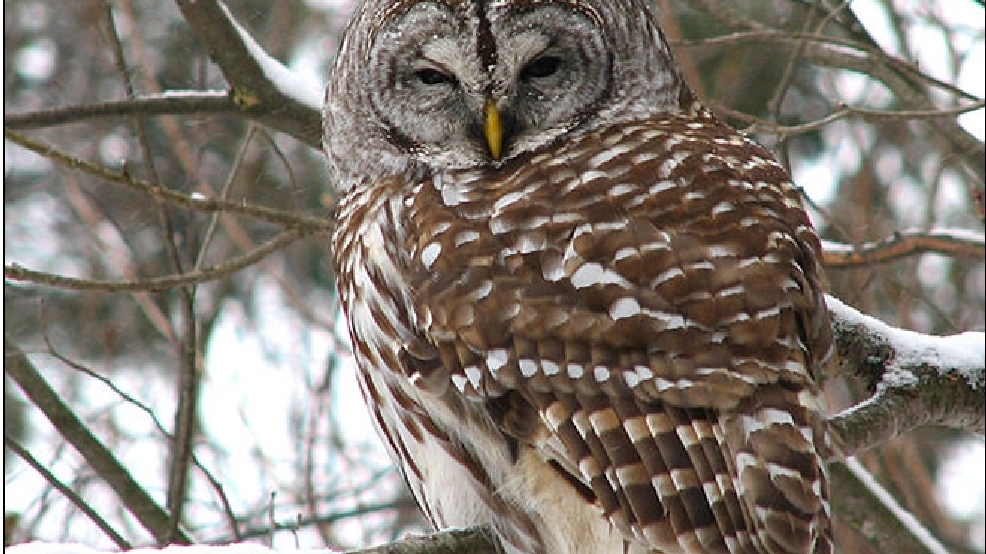
The Pacific Northwest, long celebrated for its verdant forests and rich biodiversity, is now the stage for an intricate ecological drama unfolding in real time. At the heart of this evolving narrative is the barred owl — a bird whose expanding presence is rewriting the very rules that govern the balance of wildlife in this storied region. What may seem like a simple shift in avian demographics belies a profound transformation, promising to recalibrate our understanding of what it means to coexist within these complex ecosystems. The barred owl is not merely an occupant of the landscape; it is an agent of change, stirring curiosity and challenging long-held assumptions about nature’s delicate equilibrium.
The Unforeseen Arrival: Barred Owls Beyond Their Historical Range
Originally residents of the dense woodlands of the eastern United States, barred owls have made an insidious yet spectacular foray into the Pacific Northwest over the past century. Their range expansion, while a natural phenomenon in many respects, disrupts the biogeographical norms established over millennia. This translocation isn’t just geographical — it is ecological, symbolic of an invasive tendril threading its way into ecosystems finely tuned for other species. The implications extend far beyond birdwatchers’ field notes. Barred owls have thrust themselves into existing food webs, nestled in habitats once dominated primarily by the stealthy and enigmatic northern spotted owl. The consequences of this expansion reverberate across trophic levels, precipitating shifts that ripple through forests, streams, and sky alike.
Predator Competition: A Clash of Owls Shaping Predator-Prey Dynamics
The arrival of barred owls poses a profound competitive challenge to native predators, particularly the northern spotted owl, a species emblematic of conservation struggles in the Pacific Northwest. Smaller and more elusive, the spotted owl has thrived in an ecological niche finely honed over evolutionary time. However, the barred owl, larger in stature and more versatile in diet and habitat preferences, is increasingly overshadowing the spotted owl’s presence. This is no mere rivalry; it’s a contest for survival with cascading effects on prey populations and forest ecosystem health. The barred owl’s dominance alters predation patterns, forcing a recalibration in population dynamics of small mammals, birds, and amphibians. Such shifts forecast deep ecological consequences — imagine, for instance, how changing predator pressure might alter rodent populations that in turn affect seed dispersal and forest regeneration.

Habitat Adaptability and Its Ecological Ramifications
Versatility is the hallmark of the barred owl’s success story. This species exhibits a remarkable aptitude for adapting to both pristine old-growth forests and human-modified landscapes, from suburban backyards to fragmented woodlands. While such adaptability reveals a resilience that commands awe, it also unsettles the status quo of habitat use among native species. Barred owls do not depend on specialized niches as strictly as some indigenous fauna, enabling their population to burgeon in environments where others falter. This habitat plasticity means they can exploit resources across a spectrum of conditions, potentially outcompeting more specialized species and altering patterns of species richness and ecosystem services. Their proliferation challenges conservationists to rethink habitat management strategies that traditionally rely on static models of species-habitat relationships, underscoring the fluidity of ecological boundaries in our changing world.
The Role of Human Intervention and Management Strategies
As barred owls continue to assert their presence, human responses have grown increasingly complex and fraught with ethical considerations. Wildlife managers face the daunting task of balancing species preservation with ecosystem integrity. The controversial practice of culling — the selective removal of barred owls — aims to alleviate pressure on northern spotted owls and recalibrate ecosystem dynamics. Yet, this approach invites impassioned debate about intervention in natural processes, the sanctity of life, and the long-term outcomes of such measures. These management strategies not only reflect ecological realities but expose the philosophical tensions inherent in conservation: to what extent should humans shape nature, and how do we delineate between ‘native’ and ‘invasive’ when species boundaries blur? Each decision bears significant consequences, offering a sobering reminder that stewardship requires both scientific rigor and profound humility.
Implications for Biodiversity and Ecosystem Resilience
The barred owl’s incursion into the Pacific Northwest symbolizes more than a mere shift in species presence — it offers a lens into the intricate processes that sustain, and sometimes undermine, biodiversity. Ecosystems are dynamic, their resilience contingent upon a tapestry of interactions cultivated over time. The barred owl introduces a new thread, one that tangles with existing connections and potentially rewires the web of life. This reconfiguration has nuanced implications. On one hand, increased competition and predation pressure threaten vulnerable species; on the other, they may trigger adaptive responses and diversification elsewhere in the ecosystem. Understanding these complex interactions is vital, as it challenges binary views of species introductions and urges us to perceive ecological resilience as an evolving, sometimes unpredictable, phenomenon.
Shifting Perspectives: Redefining Native and Invasive in Modern Ecology
The barred owl episode invites a more expansive discourse on what constitutes ‘native’ versus ‘invasive’ species within a shifting environmental landscape impacted by climate change and human activity. Rather than simplistic categorizations, this scenario demands a more nuanced recognition of ecological connectivity and flux. The bird’s expansion may be partly driven by anthropogenic habitat changes and climatic factors fostering conducive conditions. As such, barred owls straddle a gray zone — simultaneously a threat and a natural agent of change. This paradigm shift urges scientists, policymakers, and the broader public to rethink conservation frameworks and to embrace an adaptive approach that considers evolving ecological contexts rather than static ideals. Such a shift in perspective promises innovative pathways toward coexistence, resilience, and a deeper appreciation of nature’s intricate tapestries.
Conclusion: Embracing Complexity in the Pacific Northwest’s Ecological Future
The barred owl’s story in the Pacific Northwest is a compelling testament to the intricate dance of adaptation, competition, and survival that defines ecological communities. Far from a mere footnote, their expanding presence challenges us to look beyond conventional wisdom and to grapple with the complexities of ecosystem management in an era of rapid change. Their tale encourages a mindset that embraces uncertainty and complexity while fostering respect and stewardship for all species intertwined in this environmental saga. Ultimately, this unfolding narrative calls for a profound recalibration of our ecological ethos — one that recognizes the barred owl not only as an agent of disruption but as a catalyst for renewed understanding and potential harmony within the wild landscapes we cherish.