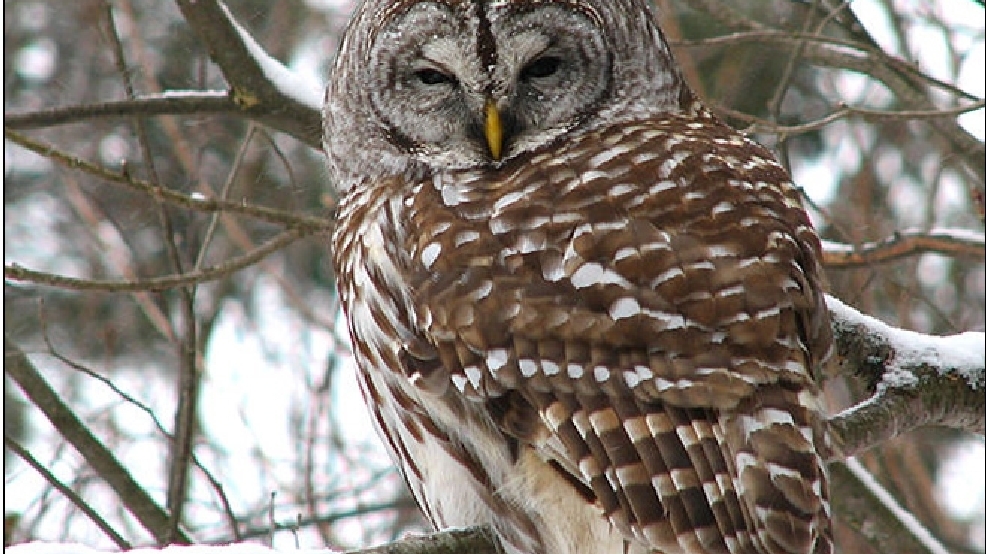
The barred owl, with its haunting, rhythmic call that echoes like a whispered secret through the ancient forests of the Pacific Northwest, has become an unwelcome yet fascinating protagonist in one of the region’s most contentious ecological dramas. Once confined to the eastern woodlands of North America, this adaptable and garrulous bird has staged a quiet invasion, reshaping the very fabric of the Pacific Northwest’s ecosystems. Its expansion is not merely a biological curiosity—it is a narrative of resilience, displacement, and the unintended consequences of human intervention. To trace the barred owl’s journey is to witness the collision of two worlds: the old-growth cathedrals of the West and the relentless march of an opportunistic species. This is the story of how a bird that once whispered in the shadows of the Appalachians now perches in the canopies of Oregon and Washington, its presence both a marvel and a menace.
The First Whispers: The Barred Owl’s Eastern Homeland
Long before barred owls (*Strix varia*) ventured west, they ruled the dense, moist forests of eastern North America with an almost regal authority. Their habitat stretched from the boreal woodlands of Canada to the swamps of the Gulf Coast, where their distinctive “Who cooks for you? Who cooks for you-all?” call became a sonic signature of the region’s wild heart. These owls thrived in old-growth forests, their mottled brown-and-white plumage blending seamlessly into the dappled light of ancient canopies. They were masters of stealth, their silent flight and keen senses making them apex predators in their domain. Yet, their very adaptability—an evolutionary gift honed over millennia—would later become their undoing in the West.
The barred owl’s domain was not static. As eastern forests faced fragmentation from logging and agriculture, these birds demonstrated a remarkable capacity for resilience. They nested in tree cavities, commandeered abandoned hawk nests, and even ventured into suburban edges, proving that they could thrive in landscapes altered by human hands. This adaptability, however, was merely the overture to a far grander migration. By the early 20th century, the barred owl’s range began to creep westward, a slow but inexorable expansion that would eventually rewrite the ecological map of the Pacific Northwest.
The Great Migration: How the Barred Owl Crossed the Continent
The barred owl’s westward expansion was not a sudden exodus but a gradual infiltration, a biological ripple effect that gathered momentum over decades. The first documented sightings in the Pacific Northwest emerged in the mid-20th century, though their presence likely predated formal records. Some ornithologists speculate that the owls followed the riparian corridors of the Great Plains, hopscotching from one riverine forest to the next. Others suggest that the birds may have been pushed westward by the relentless fragmentation of their eastern habitat, their search for territory driving them into uncharted forests.
By the 1970s and 1980s, barred owls had established a foothold in the forests of British Columbia, their calls growing louder in the valleys of the Cascade Range. Their arrival was not met with alarm at first; after all, what harm could a charismatic, wide-eyed owl pose? But as their numbers swelled, so too did their impact. Unlike the Pacific Northwest’s native spotted owl (*Strix occidentalis*), which had evolved in symphony with the region’s ancient ecosystems, the barred owl was an interloper—a generalist in a land of specialists. Its diet was broader, its nesting habits more flexible, and its competitive edge undeniable. Where the spotted owl had once reigned supreme, the barred owl now muscled in, its presence a silent usurper of ecological throne.
The Ecological Upheaval: A Species Out of Place
The barred owl’s expansion has been nothing short of a biological earthquake, its tremors felt most acutely in the dwindling habitats of the spotted owl. The two species, though closely related, occupy different ecological niches. The spotted owl, a denizen of old-growth forests, is a creature of patience and precision, its survival tied to the slow, deliberate rhythms of ancient woodlands. The barred owl, by contrast, is a harbinger of change—a bird that thrives in younger forests, in disturbed landscapes, and in the interstices of human-altered environments. Where the spotted owl once hunted in the quietude of undisturbed canopies, the barred owl now patrols the edges of clear-cuts and suburban sprawl.
This shift has had cascading consequences. Studies have shown that barred owls outcompete spotted owls for food and nesting sites, their aggressive territoriality driving the native species to the brink of local extinction in some areas. The barred owl’s adaptability has also made it a vector for ecological homogenization, its presence diluting the unique biodiversity of the Pacific Northwest’s forests. In a cruel irony, the barred owl’s success is a testament to the very forces that have imperiled the spotted owl: habitat loss, climate change, and the relentless encroachment of human development. The barred owl did not cause these problems, but its expansion has exposed them in stark relief.
The Human Response: A Controversial Intervention
As the barred owl’s population surged, so too did the urgency of the conservation crisis it exacerbated. In 2013, the U.S. Fish and Wildlife Service authorized a controversial culling program aimed at reducing barred owl numbers in key spotted owl habitats. The decision was met with fierce debate, pitting conservationists against animal welfare advocates, and scientists against those who viewed the owls as mere victims of circumstance. The culling—conducted through lethal removal rather than indiscriminate killing—sparked ethical dilemmas that linger like the scent of pine in the forest air.
Critics argue that the culling is a misguided attempt to play ecological puppeteer, a Band-Aid solution to a wound that runs far deeper. They point to the barred owl’s intrinsic value as a species, its role in the ecosystem, and the moral weight of human intervention in natural processes. Supporters, however, contend that the barred owl’s unchecked expansion is a symptom of broader ecological imbalance, one that demands decisive action to preserve the Pacific Northwest’s native biodiversity. The debate is not just about owls—it is about the limits of human intervention, the ethics of conservation, and the uncomfortable truth that sometimes, the solutions to ecological crises are themselves fraught with moral ambiguity.
The Barred Owl’s Legacy: A Mirror to Human Folly
The barred owl’s story is, at its core, a parable of unintended consequences. It is a tale of a species that, in its quest for survival, has become an agent of disruption in a land it was never meant to inhabit. Its presence forces us to confront uncomfortable questions: What does it mean to conserve a species when its success comes at the expense of another? Can we justify intervention when the natural world itself is a tapestry of competition and predation? The barred owl’s expansion is not just an ecological phenomenon—it is a reflection of our own role in shaping the planet, a reminder that human actions, even those taken with the best intentions, can have ripple effects that echo through the ages.
Yet, for all its controversy, the barred owl remains a creature of undeniable allure. Its haunting call, a symphony of eight distinct notes, is a haunting reminder of the wildness that persists even in the most altered landscapes. Its golden eyes, framed by concentric rings of brown and white, seem to hold the secrets of two continents. And its resilience—a trait that has served it well in the East—has now become its defining characteristic in the West. Love it or loathe it, the barred owl is here to stay, a living testament to the adaptability of life in the face of change.
The Pacific Northwest’s forests will never be the same. The barred owl’s call will continue to echo through the valleys, a persistent whisper in the grand narrative of the region’s ecological history. Whether this whisper becomes a roar—or a requiem—depends on the choices we make today. The barred owl did not ask to be here. But it is here now, and its presence demands that we listen, learn, and perhaps, finally, confront the consequences of our own actions.