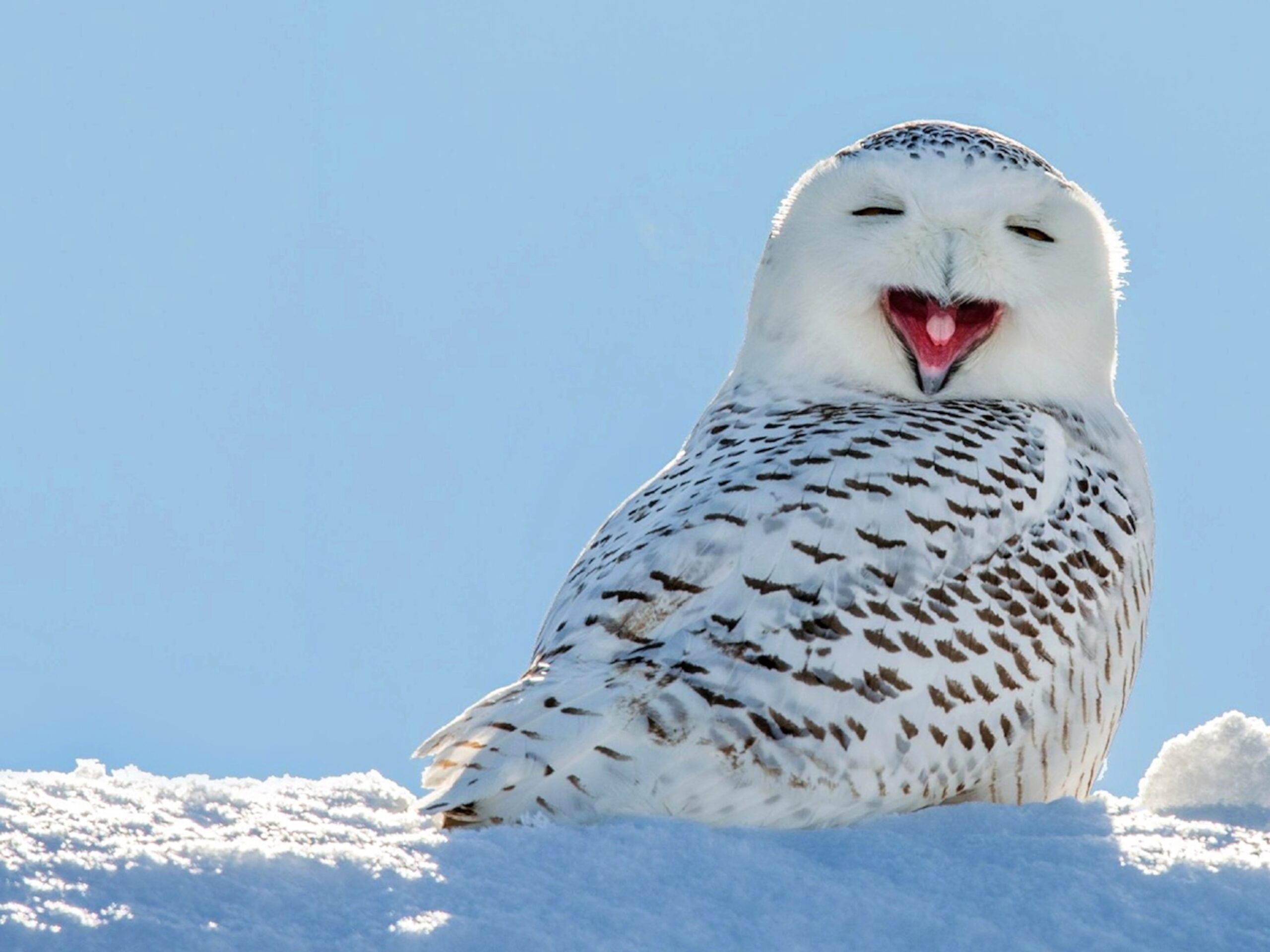
Have you ever paused to consider the unsung heroes of the Arctic tundra? While polar bears and seals often steal the spotlight, the snowy owl—with its piercing gaze and silent wings—plays a far more intricate role in this frozen ecosystem than we might imagine. Beyond their reputation as fierce predators, these magnificent birds are emerging as unlikely allies in a battle against ecological oblivion: seed dispersal. Yes, you read that correctly. The same creature that strikes fear into the hearts of lemmings and voles may be the Arctic’s secret gardener, nurturing life where the permafrost seems to suffocate it.
The Arctic’s Silent Sower: How Snowy Owls Unwittingly Cultivate Life
The snowy owl’s diet is a study in paradox. While they are voracious consumers of small mammals, their digestive systems are not entirely efficient at breaking down every part of their prey. Seeds, often ingested accidentally when owls consume herbivorous rodents, pass through their digestive tracts unharmed. This accidental seed transport is not merely a quirk of biology—it’s a lifeline for plant species struggling to take root in the harsh Arctic environment. As owls migrate across vast distances, they deposit these seeds in new locations, effectively acting as mobile nurseries for flora that might otherwise remain confined to isolated patches of fertile soil.
But here’s the twist: not all seeds survive the journey. The Arctic’s unpredictable climate means that some seeds may be deposited in conditions too harsh for germination. This introduces a tantalizing question—are snowy owls inadvertently selecting which plant species thrive in the tundra? The answer lies in the resilience of certain seeds, which have evolved to endure the rigors of an owl’s digestive system and the Arctic’s extremes. Species like the Arctic willow and saxifrage may owe their widespread presence to these feathered couriers, their seeds carried far beyond their original habitats.
The Owl’s Digestive Alchemy: A Recipe for Plant Survival
To understand how snowy owls facilitate seed dispersal, we must delve into the alchemy of their digestive process. Unlike mammals, birds lack teeth, relying instead on their gizzards to grind food. For snowy owls, this means that seeds—often swallowed whole—are subjected to a gentle yet effective tumbling action, which weakens their outer shells without destroying the embryo inside. The process is akin to a natural germination primer, preparing the seeds for the moment they encounter soil and moisture.
Yet, this alchemy is not without its risks. The Arctic’s cold temperatures slow digestion, meaning seeds may linger in the owl’s gut for extended periods. This delay could either enhance or hinder germination, depending on the seed’s resilience. Some species have evolved to exploit this lag, their seeds lying dormant until the owl’s next meal—or until the thaw arrives. It’s a delicate balance, one that highlights the owl’s role as both a predator and an unwitting botanist, shaping the tundra’s floral landscape one pellet at a time.
From Predator to Planter: The Ecological Ripple Effect
The implications of snowy owl-mediated seed dispersal extend far beyond the immediate act of planting. As seeds take root in new locations, they alter the composition of the Arctic’s plant communities, which in turn affects the entire food web. For instance, the presence of certain shrubs can provide shelter for ground-nesting birds, while others may attract pollinators that would otherwise struggle in the barren tundra. The snowy owl, in its silent way, becomes a keystone species—its actions reverberating through the ecosystem in ways we are only beginning to comprehend.
Consider the Arctic fox, a creature that relies on the same small mammals as the snowy owl. If owls inadvertently disperse seeds that support a more diverse plant base, foxes may find their prey populations more stable, their habitats richer. Conversely, if the seeds deposited by owls favor certain plant species over others, the fox’s hunting grounds could shift, altering predator-prey dynamics in unpredictable ways. The Arctic is a web of interconnected threads, and the snowy owl is one of its most unexpected weavers.
The Challenge of Uncertainty: Can We Rely on Nature’s Whims?
Yet, for all their ecological prowess, snowy owls are not infallible gardeners. Climate change looms as a formidable adversary, disrupting migration patterns and altering prey availability. As the Arctic warms, some plant species may find their seeds no longer viable after passing through an owl’s digestive system, while others might thrive in new, unexpected ways. The challenge lies in predicting which seeds will adapt and which will falter—a puzzle that grows more complex with each passing year.
Moreover, the snowy owl’s own survival is under threat. Declining lemming populations, driven by shifting snow patterns, force owls to travel farther in search of food. This increased mobility could enhance seed dispersal in some regions but leave others barren, creating a patchwork of ecological winners and losers. The Arctic is a canvas of uncertainty, and the snowy owl’s role in it is as fragile as the permafrost itself.
Conclusion: A Call to Reimagine Arctic Conservation
The snowy owl’s contribution to Arctic seed dispersal is a testament to nature’s ingenuity. In a landscape where life clings to the edge of survival, these birds perform a service that is as vital as it is overlooked. Yet, their work is not a panacea. It is a reminder that conservation efforts must look beyond the obvious, recognizing the hidden threads that bind ecosystems together. Protecting the snowy owl is not just about saving a charismatic species—it’s about preserving the intricate dance of life in one of Earth’s most unforgiving environments.
So the next time you see a snowy owl perched against the Arctic sky, remember: it is not just a hunter. It is a gardener, a wanderer, and an unsung architect of the tundra’s future. And in a world where every seed counts, that is a role worth celebrating.