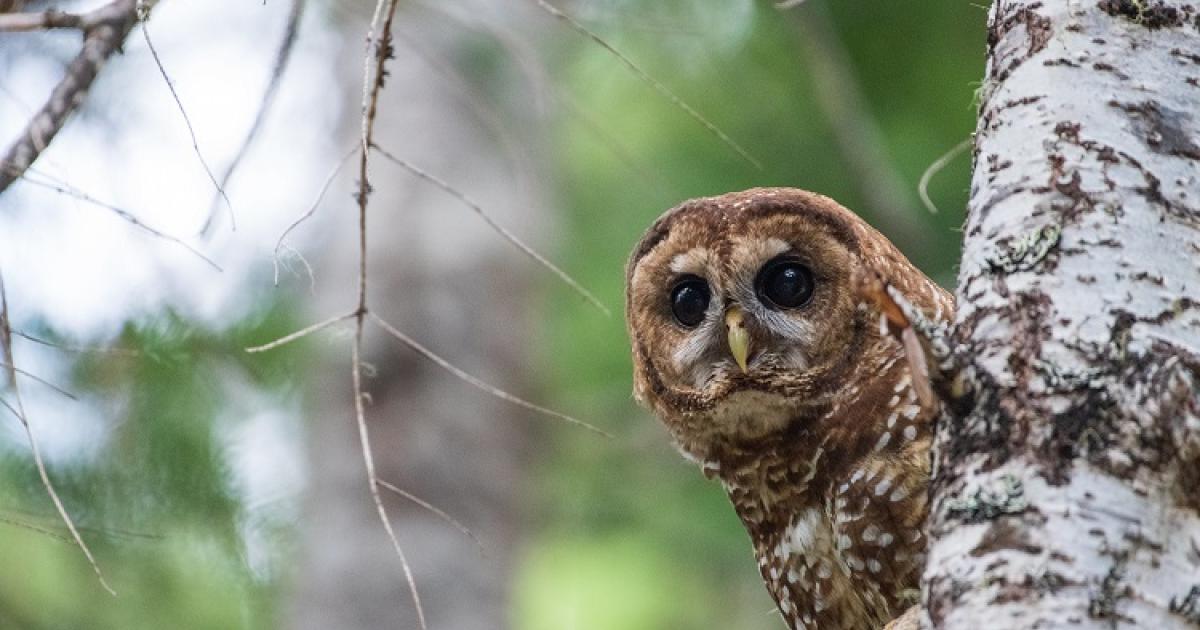
In the quiet, mist-laden forests of the Pacific Northwest, where ancient conifers stand sentinel over ecosystems teetering on the edge of imbalance, a silent war rages—not between predator and prey, but between conservationists and the unyielding march of ecological disruption. At the heart of this conflict lies the barred owl, a charismatic yet invasive species whose burgeoning presence has become a flashpoint for environmental policy, public sentiment, and the power of collective action. Petitions, those digital missives of modern activism, have emerged as a formidable tool in shaping the trajectory of barred owl management policies, offering a rare glimpse into how public will can intersect with bureaucratic inertia to forge change. Yet beneath the surface of these campaigns lies a deeper narrative—one of ecological justice, ethical dilemmas, and the uneasy dance between human intervention and natural order.
The Petition as a Catalyst: How Public Outcry Transforms Policy
Petitions are more than mere signatures on a digital scroll; they are the pulse of democratic engagement in an era where traditional avenues of influence often feel sluggish or inaccessible. When advocates rally around the plight of the northern spotted owl—a species pushed to the brink by habitat loss and competition with barred owls—they do not merely seek to raise awareness. They seek to mobilize a critical mass of voices capable of bending the arc of policy toward ecological restoration. The power of a petition lies in its ability to distill complex ecological issues into a single, resonant demand: *act now*. Whether it’s calling for the expansion of barred owl removal programs or the protection of old-growth forests, these documents serve as both a mirror and a megaphone, reflecting public concern while amplifying it to decision-makers who might otherwise dismiss it as fringe interest.
Consider the mechanics of this transformation. A well-crafted petition does not merely accumulate names; it strategically targets key stakeholders—legislators, wildlife agencies, and even corporate entities whose operations indirectly fuel habitat degradation. The sheer volume of signatures can no longer be ignored, creating a feedback loop where public sentiment becomes an inescapable variable in policy calculus. In the case of barred owl management, petitions have repeatedly forced agencies to confront uncomfortable truths: that inaction is a form of complicity, and that the status quo is a death sentence for species already clinging to survival. The shift from passive observation to active intervention is not just a policy change—it’s a cultural reckoning with humanity’s role as both steward and disruptor of the natural world.
The Psychology of the Petition: Why We Sign, Why We Care
What compels thousands of individuals to lend their names to a cause they may never directly witness? The answer lies in the psychology of collective empathy—a phenomenon where distant ecosystems and unseen species become proxies for our own anxieties about loss, displacement, and the fragility of life. The barred owl, with its piercing eyes and haunting calls, is more than a biological entity; it is a symbol of disruption, a harbinger of ecological upheaval that resonates with broader fears about climate change, biodiversity collapse, and the irreversible unraveling of natural systems. When we sign a petition to protect the northern spotted owl, we are not just advocating for a bird. We are staking a claim in a narrative about resilience, about the right of native species to exist unchallenged by human-induced invasions.
This fascination with the barred owl’s plight is also rooted in a paradox: we are drawn to its adaptability, its ability to thrive in altered landscapes, while simultaneously mourning the species it displaces. There is a poetic tension here—a reminder that nature, even in its most resilient forms, is not immune to the consequences of human action. The petition, then, becomes a cathartic outlet, a way to reconcile our admiration for the barred owl with our moral obligation to protect the ecosystems it threatens. It is no coincidence that these campaigns often gain traction in communities already grappling with environmental degradation. The barred owl is not just a bird; it is a mirror, reflecting our own complicity and our desperate hope for redemption through collective action.
The Bureaucratic Labyrinth: How Petitions Navigate Institutional Resistance
Yet for all their potency, petitions are not magic spells that instantly alter the course of policy. They operate within a labyrinth of institutional resistance, where entrenched interests, budgetary constraints, and bureaucratic inertia conspire to dilute or delay their impact. Wildlife management agencies, for instance, are often hamstrung by conflicting mandates—protecting biodiversity while also accommodating economic activities like logging or urban development. A petition demanding barred owl removal may be met with bureaucratic foot-dragging, where officials cite “lack of conclusive evidence” or “ethical concerns” as reasons to maintain the status quo. The challenge, then, is not just to gather signatures but to strategically deploy them in ways that force agencies to confront their own contradictions.
This is where the art of petitioning evolves into a game of chess with power structures. Successful campaigns often pair digital advocacy with on-the-ground pressure—lobbying, public hearings, and media campaigns that keep the issue alive long after the initial surge of signatures. The goal is to create a sense of inevitability, where decision-makers feel that inaction is no longer an option. In some cases, petitions have served as the catalyst for legislative hearings or the reallocation of funds, proving that even the most entrenched systems can be nudged toward change. Yet the process is fraught with ethical landmines. How do we balance the urgent need to save a species with the moral weight of culling another? The barred owl, in all its adaptability, forces us to ask uncomfortable questions about the limits of conservation and the price of intervention.
The Ethical Quandary: Intervention vs. Non-Interference in Conservation
The debate over barred owl management is not just a scientific or policy issue; it is a moral crucible. On one side, advocates argue that removing barred owls is a necessary, if tragic, measure to preserve the northern spotted owl—a species already decimated by habitat loss and now facing an existential threat from a more aggressive competitor. On the other, critics warn that such interventions set a dangerous precedent, normalizing the idea that humans have the right to “play god” with ecosystems, selectively favoring one species over another based on arbitrary criteria. The petition, in this context, becomes a battleground for competing ethical frameworks—utilitarianism versus preservationism, intervention versus laissez-faire.
This tension is further complicated by the fact that barred owls are not inherently “evil.” They are simply following the evolutionary script written by human activity—expanding their range due to climate change, adapting to fragmented landscapes, and outcompeting species ill-equipped to handle the new status quo. To vilify them is to ignore the deeper forces at play: deforestation, urban sprawl, and the global homogenization of ecosystems. The petition, then, is not just a call to action but a reckoning with our own role in this ecological drama. Are we willing to accept that some species must be sacrificed for the greater good? Or do we double down on the belief that every creature has an intrinsic right to exist, regardless of the consequences? These are not questions with easy answers, but they are the questions that give petitions their moral weight.
The Ripple Effect: How Petitions Shape Broader Environmental Narratives
The impact of petitions extends far beyond the immediate policy changes they seek to achieve. They are, in many ways, the canaries in the coal mine of environmental consciousness, signaling shifts in public attitudes and the evolving priorities of conservation movements. A successful petition campaign around barred owl management does not just result in the removal of a few hundred owls; it emboldens advocates to tackle larger, more systemic issues. It sends a message to policymakers that the public is no longer willing to accept incrementalism in the face of ecological collapse. It also fosters a sense of agency among participants, proving that collective action can yield tangible results, even in the face of seemingly insurmountable odds.
Moreover, these campaigns often spark broader conversations about the role of science in policy-making. When agencies resist petitions by citing “lack of data,” advocates are forced to confront the uncomfortable reality that conservation decisions are as much about values as they are about facts. The barred owl becomes a symbol of this tension—a reminder that science alone cannot dictate the moral choices we must make as a society. In this way, petitions serve as a bridge between the empirical and the ethical, forcing us to grapple with the question of what kind of world we want to leave behind.
Ultimately, the story of the barred owl and the petitions that seek to manage its impact is a microcosm of the larger struggle to reconcile human ambition with ecological integrity. It is a tale of resilience, of the power of collective action, and of the ethical dilemmas that define our relationship with the natural world. As we stand at the precipice of a biodiversity crisis, the lessons of these campaigns could not be more urgent. The barred owl may be a symbol of disruption, but it is also a call to action—a reminder that the fate of the natural world is not yet sealed, and that our voices, when united, can still bend the arc of history toward justice.