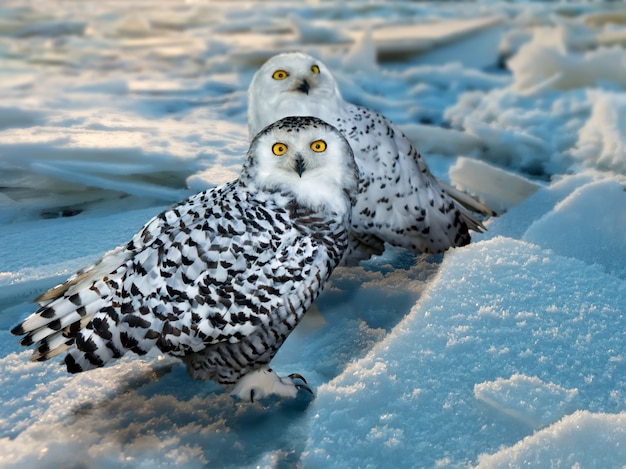
The Arctic tundra, a vast and seemingly desolate expanse, pulses with life beneath its icy veneer. Among its most enigmatic inhabitants is the snowy owl, a creature of stark beauty and relentless adaptation. Yet, as the planet’s thermostat climbs, the very foundation of this ecosystem trembles. The melting sea ice, a phenomenon once dismissed as a distant concern, now looms as a harbinger of ecological upheaval—one that threatens to unravel the delicate balance of the snowy owl’s world. To understand the gravity of this crisis, we must peer beyond the owl’s piercing gaze and into the hidden rhythms of its prey, for it is there that the true impact of climate change reveals itself in all its stark, unyielding truth.
The Vanishing Platform: How Melting Ice Disrupts the Arctic Food Web
The Arctic’s sea ice is more than a frozen landscape; it is a lifeline, a platform upon which an entire food web teeters. For the snowy owl, this ice is not merely a hunting ground but a stage where survival plays out in a relentless cycle of predation and adaptation. As the ice retreats, the lemmings and voles—primary prey for these owls—find their habitats fragmented, their burrows submerged, and their breeding cycles disrupted. The once-reliable bounty of the tundra becomes a patchwork of scarcity, forcing owls to expend precious energy in search of dwindling food sources. This domino effect ripples through the ecosystem, as predators higher up the chain—including Arctic foxes and larger raptors—are left scrambling to fill the void. The snowy owl, a sentinel of the Arctic, now faces a paradox: a landscape that was once a fortress of abundance is transforming into a labyrinth of hunger.
The Lemming Paradox: A Prey in Peril
Lemmings, those unassuming rodents of the tundra, are the linchpin of the snowy owl’s survival. Their populations boom and crash in cyclical patterns, a natural rhythm that once ensured a steady food supply for the owls. Yet, as the Arctic warms, these cycles grow erratic. Thawing permafrost and shifting vegetation alter the lemmings’ habitat, while unpredictable snowfall buries their winter nests or leaves them exposed to predators. The result? A population that can no longer sustain the owls’ voracious appetites. In some regions, snowy owls have been observed abandoning traditional nesting sites, a desperate bid to escape the specter of starvation. This is not merely a shift in behavior; it is a survival tactic born of desperation, a testament to the resilience of nature in the face of unrelenting change.
Beyond the Obvious: The Hidden Costs of a Warming Arctic
The impact of melting sea ice extends far beyond the immediate loss of hunting grounds. As the ice thins, the Arctic’s albedo effect—a critical regulator of global temperatures—diminishes, accelerating the very warming that threatens the snowy owl’s prey. The cascading consequences are manifold: altered ocean currents, disrupted marine ecosystems, and the encroachment of southern species into the tundra. These changes reshape the Arctic’s biodiversity, creating a landscape where the snowy owl’s once-familiar prey may be replaced by invasive species ill-suited to its hunting prowess. The owl, a creature of the deep Arctic, finds itself adrift in a world that no longer recognizes its rules. This is not just an ecological crisis; it is a cultural erasure, a slow-motion dismantling of a way of life that has endured for millennia.
The Snowy Owl’s Dilemma: Adaptation or Extinction?
In the face of such adversity, the snowy owl’s ability to adapt becomes a subject of both fascination and despair. Some owls have been documented venturing farther south in search of food, a perilous journey that exposes them to unfamiliar predators and human encroachment. Others turn to alternative prey, such as ptarmigans or even seabirds, though these options are often less nutritious and harder to capture. The owl’s legendary stoicism is tested as it grapples with a world that no longer aligns with its instincts. Yet, adaptation is not a guarantee of survival. The Arctic’s rapid transformation may outpace even the most resilient species, leaving the snowy owl stranded between its evolutionary legacy and an uncertain future. This is the crux of the dilemma: a creature so perfectly adapted to its environment now faces an environment that is no longer its own.
The Human Shadow: Climate Change as the Invisible Predator
While the melting sea ice may seem like a natural phenomenon, its roots trace back to human activity. The burning of fossil fuels, the relentless march of industrialization, and the unchecked consumption of resources have all contributed to the Arctic’s plight. The snowy owl, a silent witness to these changes, becomes an unwitting symbol of humanity’s impact on the natural world. The irony is stark: a species that has thrived in one of the planet’s most extreme environments now finds itself at the mercy of forces it cannot comprehend. This is not just an ecological issue; it is a moral reckoning. The Arctic’s melting ice is a mirror, reflecting back the consequences of our actions and demanding a response that transcends borders and ideologies.
The Fragile Thread: Why the Snowy Owl’s Fate Matters
The snowy owl is more than a charismatic predator; it is a keystone species, a guardian of the Arctic’s delicate balance. Its decline is not an isolated tragedy but a warning sign, a canary in the coal mine of climate change. The loss of this iconic bird would reverberate through the ecosystem, triggering a cascade of extinctions and ecological collapses. Yet, its fate also holds a mirror to our own. The Arctic, often perceived as a remote and inhospitable wilderness, is a barometer of global health. What happens there will inevitably ripple outward, affecting weather patterns, sea levels, and the very fabric of life on Earth. The snowy owl’s struggle is a microcosm of a larger crisis, one that demands our attention, our empathy, and our urgent action.
The Arctic’s ice is melting, and with it, the snowy owl’s world is unraveling. This is not a distant threat; it is a present reality, a slow-motion catastrophe unfolding in real time. The owl’s piercing gaze, once a symbol of the Arctic’s untamed spirit, now reflects a future that hangs in the balance. To ignore this crisis is to turn away from the very forces that sustain us all. The time to act is now, before the last echoes of the snowy owl’s call fade into silence.