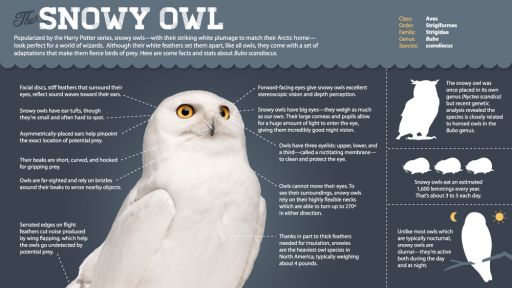
The Arctic is a realm of stark contrasts—a frozen symphony where silence hums louder than thunder, and the wind carves stories into the ice that no human tongue could ever voice. Yet, beneath this austere beauty, a crisis unfolds. The snowy owl, that ghostly sentinel of the tundra, faces an existential reckoning as the Arctic warms at an unprecedented pace. Traditional methods of tracking its populations—laborious field surveys, aerial counts—are becoming as unreliable as a compass in a magnetic storm. Enter environmental DNA, or eDNA, a revolutionary tool that reads the whispers of life hidden in the very fabric of the Arctic’s waters and soils. Like a detective unraveling a cold case, eDNA sifts through the molecular echoes of the snowy owl’s presence, offering a glimpse into a world where science and mystery entwine.
The Arctic’s Vanishing Canvas: Why Snowy Owls Are Losing Their Stage
The snowy owl, *Bubo scandiacus*, is not merely a bird; it is a living paradox—a creature of contradictions. It thrives in the endless daylight of the Arctic summer, yet its true domain is the frozen expanse where the sun barely grazes the horizon. As the Arctic warms, this canvas of ice and snow is fracturing. Permafrost thaws, sea ice retreats, and ecosystems that have stood sentinel for millennia are unraveling like a moth-eaten tapestry. The snowy owl, adapted to a world of ice and lemmings, now finds itself adrift in a landscape that no longer recognizes its rhythms.
For the owl, the stakes are existential. Its survival hinges on the delicate balance of prey availability, nesting grounds, and the unspoken language of the tundra. When the ice melts too soon, when the lemmings vanish into the thawing earth, the owl’s fate is sealed. Yet, in this precarious dance, eDNA emerges as a lifeline—a way to listen to the Arctic’s pulse before the final curtain falls.
eDNA: The Arctic’s Molecular Time Capsule
Imagine the Arctic not as a static wasteland, but as a vast, liquid library, where every droplet of water, every gust of wind, carries the genetic fingerprints of its inhabitants. This is the essence of eDNA—a silent archive of life, preserved in the detritus of existence. When a snowy owl sheds a feather, when it leaves traces of its presence in the soil or a melting snowbank, it is, in effect, signing its name in an invisible ink that only science can decipher.
Collecting eDNA is akin to dredging the depths of an ancient ocean, except the ocean is the Arctic itself. Researchers wade through thawing wetlands, scoop samples from icy streams, and filter water through fine meshes, hunting for the molecular ghosts of the snowy owl. The process is delicate, almost meditative. A single sample can contain the DNA of dozens of species—a testament to the interconnectedness of life in the Arctic. Yet, amidst this biological cacophony, the snowy owl’s signature stands out, a rare and precious note in a symphony of survival.
The Dance of Detection: How eDNA Unmasks the Snowy Owl’s Secrets
The magic of eDNA lies in its ability to detect the undetectable. Traditional surveys rely on sightings, tracks, or the fleeting calls of birds—a method as unreliable as predicting the Arctic’s weather. But eDNA does not ask for permission to reveal its secrets; it simply exists, waiting to be found. When a sample is analyzed, the DNA is extracted, sequenced, and compared against vast genetic databases. The result? A map of presence, a molecular footprint that tells the story of the snowy owl’s comings and goings.
Yet, this dance is not without its challenges. The Arctic is a harsh mistress, and eDNA degrades quickly in its unforgiving climate. A sample collected today may hold the secrets of yesterday, but tomorrow, the wind could erase all traces. Researchers must work with the urgency of a thief in the night, racing against time to capture the fleeting whispers of life before they vanish into the thaw.
But the rewards are worth the effort. eDNA can reveal not just where the snowy owl has been, but where it *might* go. As the Arctic warms, owls may shift their ranges, seeking out new hunting grounds. eDNA can trace these movements, painting a picture of adaptation—or desperation. It is a tool that does not just observe the Arctic’s decline; it documents the resilience of life in the face of annihilation.
The Lemming Paradox: eDNA and the Web of Arctic Life
The snowy owl’s fate is inextricably linked to the lemming, that small, unassuming rodent that is the engine of the Arctic’s food web. In a world where every creature is both predator and prey, the lemming is the thread that weaves the tapestry of life. When lemming populations boom, the owls thrive. When they crash, the owls starve. Yet, tracking lemming populations is a Herculean task—elusive, nomadic, and nearly impossible to count.
Here, eDNA shines. By analyzing the DNA left behind in the soil, water, and even the snow, researchers can map the presence of lemmings across vast landscapes. It is a molecular census, a way to peer into the hidden lives of creatures that leave no trace but their genetic signatures. And when the lemmings vanish, the eDNA record tells the tale—a silent scream in the Arctic’s chorus of survival.
The lemming paradox is this: in a warming Arctic, the lemming’s habitat is shrinking, yet its role in the ecosystem is expanding. As the tundra greens and shrubs encroach, new species move in, disrupting the delicate balance. eDNA becomes the detective, uncovering the ripple effects of change—how the disappearance of one species can unravel the entire web.
The Future: A Molecular Lifeline in a Melting World
The Arctic is not just warming; it is transforming. The ice that once cradled the snowy owl’s world is giving way to a landscape that is foreign, fragmented, and unforgiving. In this crucible of change, eDNA is more than a tool—it is a lifeline. It offers a way to monitor the snowy owl’s decline without disturbing its fragile existence. It provides data where once there was only guesswork. And it gives voice to the voiceless, allowing the Arctic’s creatures to speak through the language of their genes.
Yet, eDNA is not a panacea. It cannot reverse the thaw, nor can it restore the ice. But it can illuminate the path forward. By combining eDNA with traditional methods, by listening to the Arctic’s molecular whispers, we can craft a future where the snowy owl does not just survive, but thrives. It is a future where science and stewardship walk hand in hand, where every sample collected is a step toward redemption.
The Arctic’s silence is not empty. It is a canvas waiting to be painted with the colors of resilience. And in that silence, eDNA is the brushstroke that brings the snowy owl’s story to life.