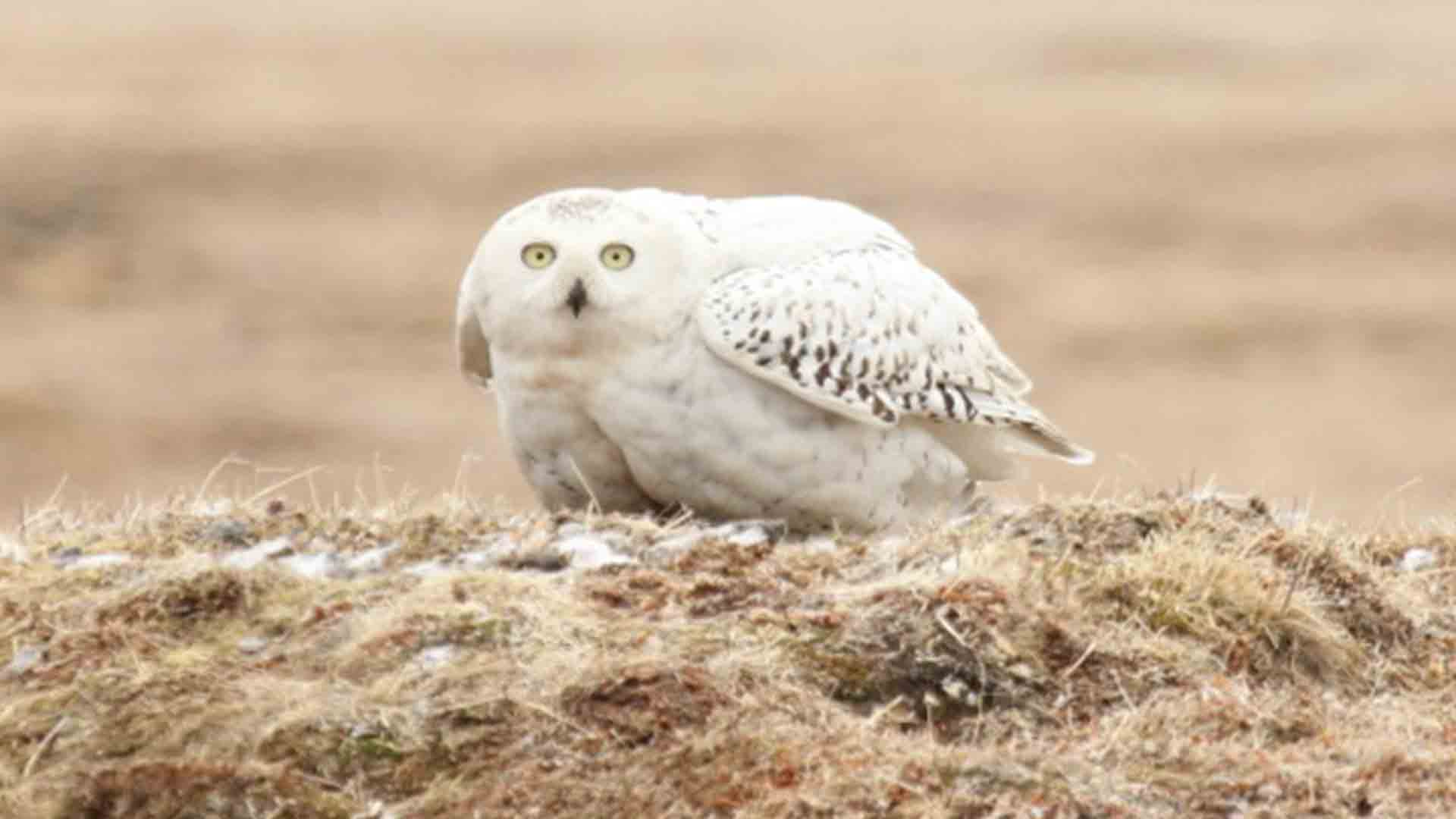
What if the Arctic, that vast, icy kingdom where the snowy owl reigns as a silent sovereign, is quietly losing its throne? What if the very essence of its existence—its nesting grounds, its frozen solitude—is being eroded not by the claws of a predator, but by the invisible hand of a warming world? The snowy owl, that ethereal creature of the tundra, is facing a crisis that transcends the boundaries of its habitat. Rising temperatures are not just altering the landscape; they are rewriting the rules of survival for one of nature’s most majestic birds.
The Arctic’s Delicate Balance: A Stage Set for Survival
The snowy owl, *Bubo scandiacus*, is a master of adaptation, a creature that thrives where few others dare to tread. Its white plumage, a camouflage against the endless snow, is a testament to millions of years of evolution. But this adaptation is a double-edged sword. The Arctic’s stability is its lifeline. For millennia, the permafrost has remained frozen, the snowfall predictable, and the lemming populations—its primary prey—fluctuating within a narrow, survivable range. Yet, as the planet warms, this delicate balance is tilting.
The Arctic is heating up at a rate twice as fast as the global average, a phenomenon known as Arctic amplification. This isn’t just a statistic; it’s a seismic shift. The permafrost thaws, the snow melts earlier, and the once-reliable rhythms of the tundra are disrupted. For the snowy owl, this means nesting grounds that were once a fortress of ice are now becoming a labyrinth of uncertainty. The ground that once provided a stable platform for its nests is turning to mud, and the early snowmelt is leaving chicks vulnerable to predators and the elements.
The Lemming Paradox: A Prey in Peril
Imagine a world where your grocery store closes without warning. For the snowy owl, that world is becoming a reality. Lemmings, those small, unassuming rodents that form the backbone of the Arctic food web, are disappearing. Not because they are hunted to extinction, but because their own survival is tied to the same frozen conditions that sustain the owl. As temperatures rise, lemming populations crash. Their burrows collapse in the thawing ground. Their breeding cycles falter. And with them, the snowy owl’s primary food source vanishes.
This isn’t just a matter of hunger. It’s a domino effect. Fewer lemmings mean fewer owls. Fewer owls mean less predation pressure on other species, which in turn can lead to overpopulation and further ecological imbalance. The snowy owl, once a keystone predator, is becoming a victim of its own specialization. Its very success in adapting to the Arctic’s extremes has left it ill-equipped to handle the chaos of a warming world.
The Nesting Grounds: From Fortress to Quicksand
Picture the snowy owl’s nest: a shallow depression scraped into the ground, lined with feathers and down. It’s a humble structure, but one that relies on the ground beneath it remaining firm and frozen. Now, imagine that ground turning to mush. The early arrival of spring, a consequence of rising temperatures, means the snow melts before the owls have even laid their eggs. The nests, once hidden in a sea of white, are now exposed to the elements—and to predators like foxes and gulls that were once kept at bay by the snow’s barrier.
Worse still, the thawing permafrost is causing the ground to sink and crack. Nests that were once secure are now collapsing, leaving eggs and chicks vulnerable to the elements. The snowy owl’s traditional nesting sites, often located on raised mounds or ridges to avoid flooding, are becoming increasingly rare. The Arctic is losing its ability to provide the stable, frozen platforms that have sustained these birds for generations.
The Silent Threat of Climate Whiplash
Climate change isn’t just about gradual warming. It’s about unpredictability. The Arctic is experiencing what scientists call “climate whiplash”—a phenomenon where extreme weather events, from sudden heatwaves to unseasonal blizzards, become the norm. For the snowy owl, this means nesting seasons that start too early or end too late. It means chicks hatching during unseasonal thaws, only to be met with a sudden freeze that can wipe out an entire brood.
Consider the irony: the snowy owl, a creature adapted to the cold, is now at the mercy of the very thing it was built to endure. Its white plumage, once a perfect camouflage against the snow, now stands out starkly against the patchy, melting landscape. Its hunting grounds, once a vast expanse of ice and snow, are fragmenting into isolated pockets of habitat. The owl is being forced to adapt—or perish.
The Human Hand: A Legacy of Disruption
We often think of climate change as an abstract force, a distant threat that will only affect future generations. But for the snowy owl, the crisis is happening now. And it’s not just the owl that’s suffering. The Arctic is a canary in the coal mine, a warning of what’s to come for ecosystems worldwide. The snowy owl’s decline is a symptom of a larger disease—a planet pushed to its limits by human activity.
From the burning of fossil fuels to the destruction of habitats, our actions are reshaping the world in ways we are only beginning to understand. The snowy owl, once a symbol of the Arctic’s untouched beauty, is now a harbinger of its fragility. Its story is a reminder that we are not separate from nature. We are part of it. And when we disrupt the delicate balance of the ecosystems we share, the consequences ripple outward in ways we cannot predict.
The Path Forward: Can the Snowy Owl Adapt?
So, what can be done? The snowy owl’s fate is not yet sealed. Conservation efforts, from habitat protection to captive breeding programs, offer a glimmer of hope. But these efforts must be paired with a fundamental shift in how we view the Arctic—not as a resource to be exploited, but as a vital ecosystem that sustains life on Earth.
The snowy owl’s story is a call to action. It’s a reminder that the natural world is not a static backdrop to our lives, but a dynamic, interconnected web of relationships. When we pull one thread, the entire fabric unravels. The question is not whether the snowy owl can survive, but whether we are willing to fight for its future—and for the future of the Arctic itself.
The owl waits. The ice melts. The clock is ticking.