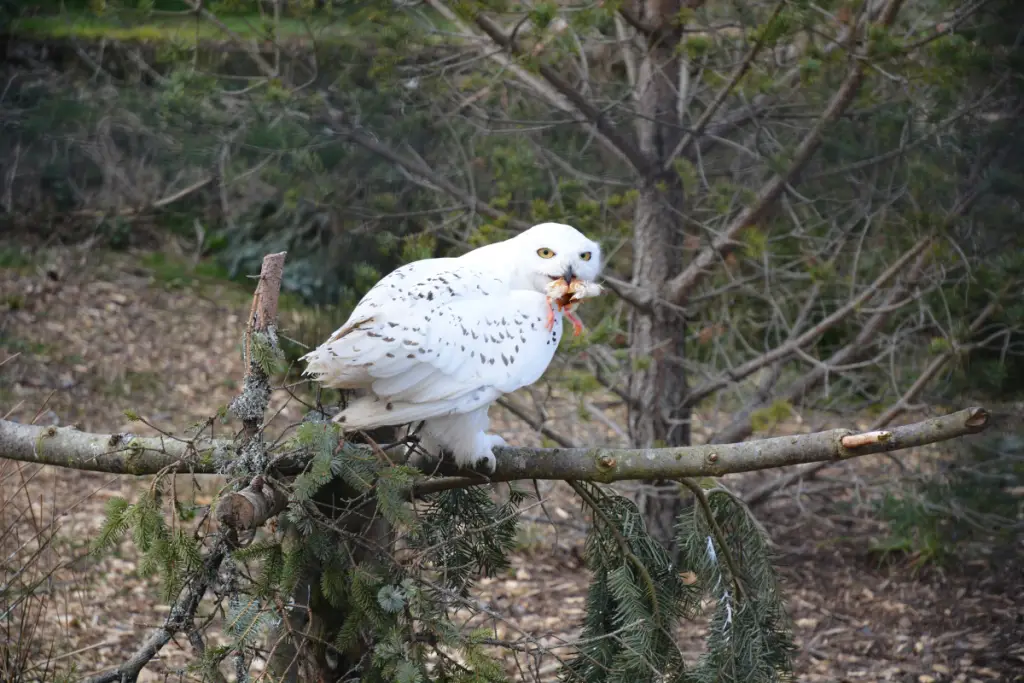
The Arctic, a realm of ice and silence, is screaming. Not with a voice we can hear, but with a shift so profound it’s rewriting the rules of survival for its most iconic inhabitants. The snowy owl, that ghostly sentinel of the tundra, is no longer a permanent fixture of its frozen kingdom. Instead, it’s becoming a reluctant wanderer, pushed southward by the relentless march of warming temperatures. This isn’t just a migration—it’s a desperate exodus, a sign that the Arctic’s heartbeat is faltering. And yet, in this crisis, there’s a strange allure, a fascination that lingers like the owl’s own silent flight.
The Arctic’s Fever: A Thaw That Won’t Cease
The Arctic is warming at a rate more than twice as fast as the global average—a phenomenon known as Arctic amplification. Ice that once blanketed the tundra year-round now retreats earlier, lingers later, and thins with each passing season. For the snowy owl, this isn’t just a change in scenery; it’s a dismantling of its entire existence. These birds are built for the cold, their feathers a masterclass in insulation, their hunting grounds a frozen expanse where lemmings thrive beneath the snow. But when the permafrost softens and the snowpack collapses, the lemmings vanish, and with them, the owls’ primary food source. The Arctic, once a self-sustaining pantry, is now a place of scarcity.
Imagine a world where your kitchen cupboards are perpetually bare. That’s the reality for snowy owls in an Arctic that’s losing its winter grip. The lemming population, already cyclical, now faces erratic crashes as their burrows flood and their winter food sources wither. Without these rodents, the owls face starvation. And so, they do what any creature must when survival is on the line: they migrate. But this isn’t the seasonal pilgrimage of songbirds or waterfowl. This is a forced exodus, a flight into the unknown, where the owls become wanderers in a world that wasn’t built for them.
The Southern Exodus: A Desperate Search for Home
As the Arctic’s icy embrace loosens, snowy owls are increasingly spotted far beyond their traditional range. Fields in the northern United States, farmlands in Canada, even coastal dunes where the salt tang of the ocean clashes with their inland instincts—these are the new frontiers for a species in flux. Some years, the southward push is subtle, a trickle of owls appearing in places they once only visited in the harshest winters. Other years, it’s a deluge, a phenomenon so striking that birders and scientists alike refer to it as an “irruption.” These irruptions aren’t just random; they’re a direct response to the Arctic’s unraveling.
The owls that venture south aren’t just lost travelers. They’re survivors, adapting in real-time to a world that’s changing faster than evolution can keep up. Some find refuge in agricultural landscapes, where rodents still scurry through the stubble of harvested fields. Others perch on fence posts, scanning the horizon with the same piercing gaze that once surveyed the endless white of the tundra. But survival here comes with its own set of challenges. Southern climates lack the owls’ natural camouflage—snow is a rare commodity in places like Minnesota or New York, leaving the birds exposed against the browns and greens of a landscape they were never meant to inhabit.
The Silent Witness: What the Owls’ Migration Reveals
There’s a poetic irony in the snowy owl’s plight. These birds, symbols of Arctic purity and resilience, are now harbingers of a planet in distress. Their migration south isn’t just a biological response; it’s a silent indictment of human-driven climate change. Every owl that arrives in the lower 48 states carries with it a message: the Arctic is sick, and its illness is spreading. Yet, in their arrival, there’s also a strange beauty—a reminder that nature, in all its adaptability, will find a way, even if it’s a way that looks nothing like what came before.
Consider the cultural weight of this migration. Indigenous communities in the Arctic have long revered the snowy owl as a messenger between worlds, a creature of prophecy and wisdom. Now, as the owls appear in unfamiliar territories, they carry that symbolism into new lands, forcing humans to confront the consequences of their actions. In the Midwest, where farmers might once have seen an owl as a pest, there’s a growing recognition that these birds are not invaders but refugees. This shift in perception is subtle but profound—it’s the first step toward empathy, toward understanding that the Arctic’s crisis is everyone’s crisis.
The Unseen Costs: What We Lose in the Thaw
The snowy owl’s migration isn’t just a spectacle; it’s a loss. With each owl that leaves the Arctic, the ecosystem loses a predator finely tuned to its environment. Lemmings overpopulate in the owl’s absence, leading to overgrazing that destabilizes the tundra. Plant species that rely on a delicate balance of herbivory and predation find themselves in upheaval. The Arctic’s food web, a delicate tapestry of interactions, begins to fray. And yet, the most devastating loss is intangible: the erosion of a world that once felt eternal.
There’s a term in ecology called “shifting baselines”—the idea that each generation perceives the natural world relative to what they’ve experienced, not what came before. For those of us who’ve never known an Arctic without melting ice, the snowy owl’s migration might seem like a curiosity, a quirk of nature. But for those who remember a time when these owls were year-round residents of the far north, their absence is a wound. It’s a reminder that we’re not just losing ice and permafrost; we’re losing a way of life, a rhythm of the planet that has existed for millennia.
The Future: Will the Owls Find a New Home?
The question isn’t whether snowy owls will survive the warming Arctic—it’s whether they can adapt to a world that’s increasingly hostile to their nature. Some may find new hunting grounds in the boreal forests, where snow still lingers in the shadows of the trees. Others might adapt to the agricultural landscapes of the south, though at a cost to their health and longevity. But adaptation has limits. The snowy owl’s migration south is a bandage on a gaping wound, not a cure. Without global action to curb emissions and protect the Arctic, these birds—and countless other species—will face an uncertain future.
Yet, there’s hope in the owl’s resilience. Their ability to traverse vast distances, to find sustenance in unexpected places, is a testament to nature’s ingenuity. If we act swiftly, we might yet preserve enough of the Arctic’s integrity to allow these birds to return to their ancestral homes. But time is running out. The Arctic’s fever won’t break on its own. It’s up to us to listen to the message the snowy owls are carrying—a message written in feathers and flight, in silence and survival.