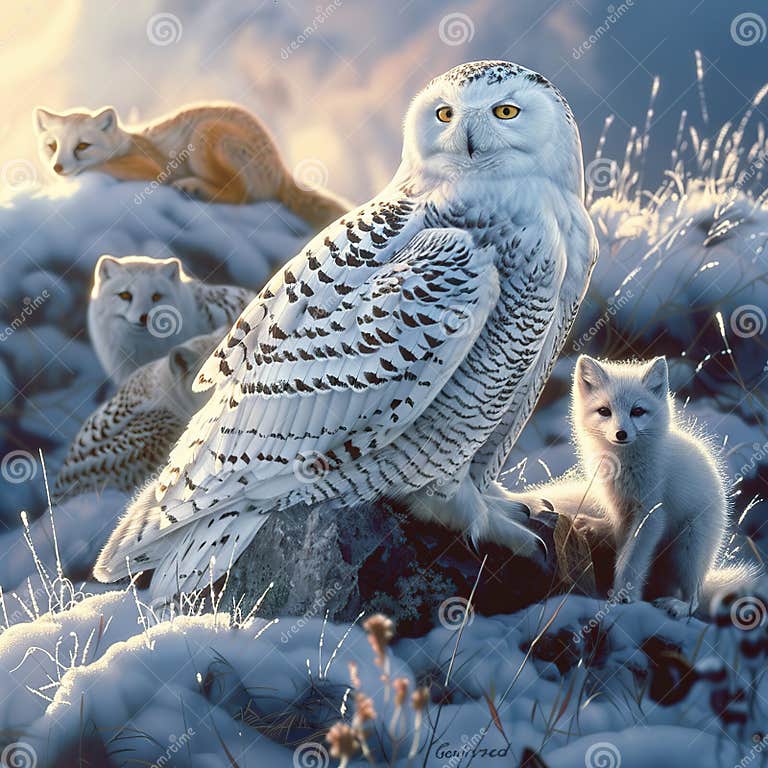
The Arctic tundra is a realm of stark beauty and relentless survival, where life thrives against the odds. Amidst the icy expanse, two creatures stand out as icons of resilience: the snowy owl and the arctic fox. But how do these species fit into the delicate web of Arctic biodiversity? What happens when their habitats shift, and their roles in the ecosystem are disrupted? Let’s embark on a journey through the frozen wilderness to uncover the secrets of these magnificent creatures and the challenges they face.
The Frozen Stage: Understanding the Arctic Ecosystem
The Arctic tundra is not just a barren wasteland of ice and snow—it is a vibrant, albeit extreme, ecosystem teeming with life. With temperatures plummeting below freezing for most of the year, this landscape might seem inhospitable, yet it supports a surprising diversity of species. From lemmings scurrying beneath the snow to muskoxen grazing on hardy shrubs, the Arctic is a stage where survival is a daily performance.
At the heart of this ecosystem lies a delicate balance. Plants like mosses and lichens cling to life, providing sustenance for herbivores, which in turn become prey for predators. The snowy owl and arctic fox are two such predators, each playing a unique role in maintaining this balance. But their presence is not just a matter of chance—it is a testament to the resilience of life in one of Earth’s most unforgiving environments.
The Snowy Owl: A Feathered Phantom of the North
With its piercing golden eyes and snowy-white plumage, the snowy owl is a master of camouflage against the Arctic’s monochrome backdrop. Unlike most owls, it is diurnal, hunting in the endless daylight of the Arctic summer. Its diet is as varied as the landscape itself—lemmings, voles, and even other birds fall prey to its silent, deadly swoops.
But the snowy owl is more than just a predator; it is a keystone species. Its presence regulates the populations of its prey, preventing overgrazing and ensuring that the tundra’s fragile vegetation remains intact. Without the snowy owl, the ecosystem could spiral into chaos, with lemmings and voles multiplying unchecked and stripping the land bare. Yet, this delicate balance is under threat as climate change alters the Arctic’s rhythms.
What happens when the snowy owl’s hunting grounds shrink, or its prey becomes scarce? The answers are not just academic—they are a warning of the fragility of life in the far north.
The Arctic Fox: A Survivor’s Cunning
Where the snowy owl soars, the arctic fox slinks—small, agile, and endlessly resourceful. This master of adaptation thrives in a world where temperatures can drop to -50°C. Its thick, insulating fur and compact body are evolutionary marvels, allowing it to endure the harshest conditions. But its true genius lies in its diet: an arctic fox will eat almost anything, from berries to bird eggs, carrion to lemmings.
This dietary flexibility is its greatest strength. While the snowy owl relies on a steady supply of small mammals, the arctic fox can pivot when food is scarce. It follows polar bears, scavenging the remains of their kills, or digs through snow to uncover hidden prey. Yet, even this adaptability has its limits. As the Arctic warms, new predators and competitors encroach on its territory, threatening its dominance in the tundra.
Can the arctic fox outwit the challenges of a changing world, or will it be pushed to the brink? The answer may determine the fate of an entire ecosystem.
The Dance of Predator and Prey: A Delicate Balance
The relationship between the snowy owl and the arctic fox is a dance of survival, where each step is a matter of life or death. The owl, a patient hunter, relies on the fox’s movements to locate prey. The fox, in turn, benefits from the owl’s ability to flush out hidden lemmings from beneath the snow. Together, they form a dynamic duo, each playing a role in the tundra’s survival story.
But this balance is not static. Climate change is rewriting the rules of the Arctic. Warmer temperatures melt the permafrost, altering the landscape and disrupting the delicate web of life. Lemmings, the primary prey for both predators, are becoming harder to find. The snowy owl’s hunting grounds are shrinking, while the arctic fox faces competition from red foxes migrating northward.
What happens when the music stops? The consequences ripple through the ecosystem, affecting not just these two species but the entire tundra. The loss of a keystone predator can unravel an entire food web, leaving behind a landscape that is forever changed.
The Looming Threat: Climate Change and Human Impact
The Arctic is warming at twice the rate of the rest of the planet. Ice that once stretched endlessly across the horizon is retreating, and the permafrost is thawing. For the snowy owl and arctic fox, these changes are more than just environmental shifts—they are existential threats. The snowy owl’s breeding grounds are vanishing, while the arctic fox’s traditional hunting grounds are being encroached upon by southern species.
Human activity exacerbates these challenges. Pollution, oil drilling, and shipping lanes carve through the Arctic’s pristine wilderness, fragmenting habitats and introducing invasive species. The once-isolated tundra is now a battleground, where survival depends on adaptability—and luck.
Can these resilient creatures keep pace with the changes, or will they become relics of a bygone era? The answer lies in our hands, as stewards of a planet in flux.
The Future of Arctic Biodiversity: A Call to Action
The Arctic is not just a remote wilderness—it is a barometer of the planet’s health. The fate of the snowy owl and arctic fox is a mirror held up to humanity, reflecting the consequences of our actions. Protecting these species is not just about saving two charismatic animals; it is about preserving an entire ecosystem that sustains life in ways we are only beginning to understand.
Conservation efforts must focus on preserving the Arctic’s integrity—reducing carbon emissions, limiting industrial activity, and safeguarding critical habitats. The snowy owl and arctic fox are not just survivors; they are symbols of nature’s tenacity. Their struggle is our struggle, a reminder that every species, no matter how small or seemingly insignificant, plays a vital role in the grand tapestry of life.
The question is not whether we can afford to protect the Arctic—it is whether we can afford not to. The frozen north is not just a landscape; it is a lifeline, a warning, and a wonder. The time to act is now.