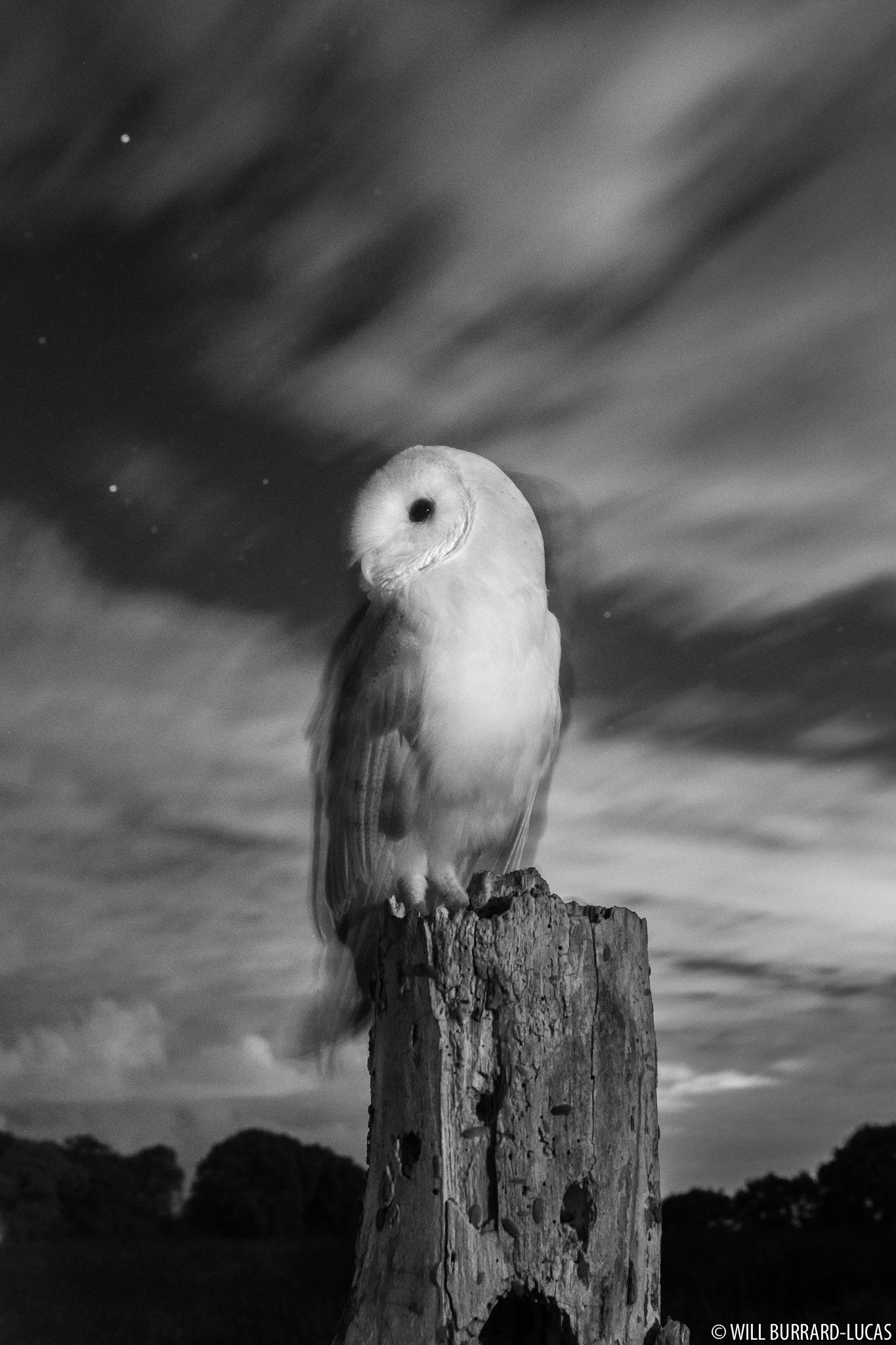
In the shadowy cathedrals of ancient forests, where dappled light filters through towering branches and silence weaves an intricate tapestry of anticipation, the elusive barred and spotted owls navigate a world both mysterious and magnificent. These nocturnal specters engage in an ancient dance of survival, competition, and coexistence, their interactions veiled in the hush of twilight. Yet, in recent years, a new kind of witness has emerged—camera traps, those mechanical sentinels of the wild—capturing moments previously lost to the nocturnal veil. These devices have become a window into the secret theater of barred and spotted owl behavior, illuminating their interplay with a clarity that intertwines science, wonder, and storytelling.
The Silent Observers: Camera Traps as Guardians of the Night
Camera traps function as the silent observers akin to invisible scribes recording every whispered exchange and furtive glance in the owls’ domain. Unobtrusive and relentless, they stand as sentinels that never tire, never turn away, and never disturb the sanctity of the nocturnal world they monitor. By deploying these devices in strategic nesting sites and hunting grounds, researchers have begun to unravel the cryptic interactions between barred owls (Strix varia) and spotted owls (Strix occidentalis), species often entangled in a complex web of territorial rivalry and ecological overlap.
The value of camera traps lies not just in their ability to capture still images or flickers of movement but in their role as unbiased chroniclers. They catch the unfiltered reality of owl behavior—dramatic territorial disputes, subtle displays of dominance, and rare moments of coexistence—offering an unvarnished portrait of a delicate balance unfolding under the cover of darkness. These electronic eyes transform forests into living archives, where each frame contributes to an understanding far richer than traditional observation could yield.
Illuminating the Crossroads: Documenting Territorial Battles
Among the most fascinating revelations facilitated by camera traps are the vivid encounters that occur at the fragile threshold between barred and spotted owl territories. Here, the forest becomes an arena where these two close relatives engage in an ongoing struggle for space and resources. The metaphor of a chess game is apt; each move is deliberate, strategic, and fraught with consequence. Through high-definition night vision, camera traps reveal moments where barred owls—larger and more aggressive—assert dominance, often displacing the more vulnerable spotted owls.
These stark confrontations have broad ecological implications, as barred owls have been expanding their range westward, encroaching on territories historically held by spotted owls. The footage exposes subtle body language—feather ruffling, eye glinting, and vocal posturing—that precede clashes, adding nuance to the understanding of interspecies dynamics. This imagery not only quantifies territorialism but also elevates it to an ethological symphony composed of visual and aural signals, meticulously cataloged by the steady gaze of camera traps.
Unveiling the Veiled: Insights Into Behavioral Ecology
Beyond mere confrontation, camera traps have laid bare the intertwined behavioral ecology of barred and spotted owls, shedding light on hunting patterns, nesting habits, and temporal activity. They capture nocturnal rituals with a cinematic intimacy, revealing the sophistication of these raptors as skilled hunters and vigilant parents. The juxtaposition of their behaviors illustrates how each species adapts to coexist or compete within overlapping habitats.
For example, camera trap footage has documented varied prey choices and hunting times, highlighting niche partitioning strategies that minimize direct competition. The nocturnal hours are mapped with surprising detail, demonstrating slight temporal shifts in activity that allow these owls to share the forest’s bounty without constant conflict. These snippets of life, invisible to the human eye, weave together a narrative of resilience and adaptation, adding layers to the ecological portrait of the forest.
The Poetic Allure: Capturing the Spirit of Nocturnal Impermanence
There is an almost poetic quality to the still and moving images recorded by camera traps, a visual poetry that captures the ephemeral essence of night and the spectral beauty of owls. Each photograph is a frozen fragment of time: a barred owl’s intense gaze illuminated by moonlight, a spotted owl perched silently beneath ancient limbs, or the fleeting encounter between rivals that echoes a primal saga of survival. The images resonate like brushstrokes of chiaroscuro, revealing the delicate interplay between shadow and substance, presence and absence.
These visual narratives tap into a deep human fascination with the wild and the unknowable. They transform scientific inquiry into art, inviting viewers to step beyond mere data and into experiencing the wilderness’s enigmatic heartbeat. In this way, camera traps serve not only science but also inspiration, stirring a reverence for nature’s intricacies and sparking a passionate desire to protect the habitats that nurture such complex lives.
Future Horizons: Camera Traps as Catalysts for Conservation
As climate change and habitat loss accelerate, understanding the precise interactions between barred and spotted owls becomes more critical than ever. Camera traps equip conservationists with the empirical evidence necessary to develop informed strategies, guiding interventions to mitigate conflict and support spotted owl populations vulnerable to displacement.
Moreover, advances in technology—such as AI-powered image recognition and real-time data transmission—promise to deepen insights and speed response times. The growing network of camera traps acts as an interconnected sensory system, an ecological nervous system feeding continuous streams of data into conservation models. This convergence of nature and technology embodies a hopeful metamorphosis, where silent machines become allies in safeguarding nature’s nocturnal secrets.
Conclusion: Witnessing the Unseen Through Invisible Eyes
The saga of barred and spotted owl interactions, once shrouded in shadows and conjecture, now unfolds with unprecedented clarity thanks to camera traps. These unblinking eyes capture the raw theater of nature’s complexity, revealing stories of rivalry, adaptation, and coexistence that resonate deeply within the soul of the forest. More than tools of observation, camera traps are bridges between human curiosity and the profound mysteries of the wild—inviting us to witness, appreciate, and ultimately protect the intricate lives that thrive beneath the veil of night.