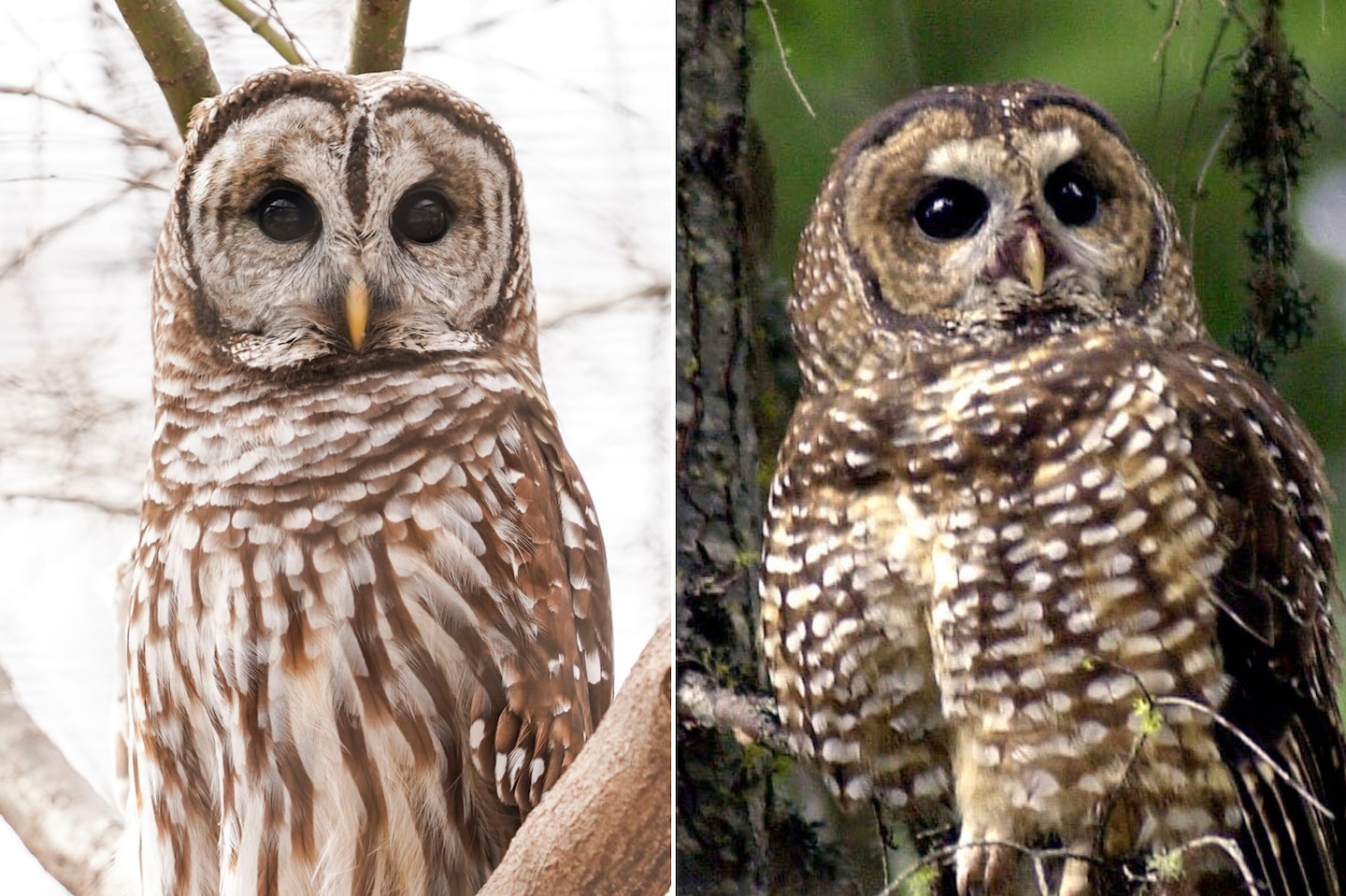
It is a common but deeply unsettling observation in the dense forests of the Pacific Northwest: the once-abundant spotted owl, a symbol of wilderness and ecological delicacy, is in precipitous decline. At the heart of this crisis lies a complicated interplay with its close cousin, the barred owl—a species whose burgeoning presence has rewritten the ecological narratives of these woodlands. This confrontation between two avian titans is more than a mere story of competition; it is a profound challenge to the survival and lifespan of the spotted owl, revealing layers of ecological imbalance and provoking urgent conservation dilemmas.
Ecological Dynamics Between Barred and Spotted Owls
The relationship between barred owls (Strix varia) and spotted owls (Strix occidentalis) unravels a compelling tale of interspecies interaction. Barred owls, originally native to eastern North America, have expanded their range westward over the past century. Their encroachment into the spotted owl’s habitat has precipitated direct competition for nesting sites, food, and territory. The barred owl’s adaptability grants it a competitive edge—it thrives in a wider variety of forest types and is more tolerant of human-altered environments.
In contrast, the spotted owl clings to mature old-growth forests, ecosystems that have themselves receded under logging and development pressures. This narrowing ecological niche not only constrains the owl’s habitat options but also magnifies the impact of the barred owl’s presence. The barred owl’s larger size and aggressive behaviors often displace spotted owls, effectively squeezing them out of prime territories.
The Influence of Barred Owls on Spotted Owl Lifespan
Research indicates that the presence of barred owls correlates strongly with a decline in the average lifespan of spotted owls. Several pathways contribute to this disturbing trend. Firstly, direct interactions between the two species frequently result in physical confrontations. Barred owls are known to be both more dominant and more aggressive, often chasing spotted owls away or even engaging in lethal encounters. These altercations not only result in injury and death but also psychologically stress spotted owls, potentially weakening their immune systems and reducing their ability to forage or care for their young.
Moreover, by usurping prime nesting and foraging sites, barred owls indirectly impact spotted owl reproductive success and juvenile survival. The displacement forces spotted owls into suboptimal habitats where food scarcity, increased predation, and exposure to environmental stressors may curtail their lifespan. The survival probabilities of younger owls, especially fledglings needing to establish territories, diminish drastically in the presence of barred owls. These cumulative pressures drive down overall population viability.
Competition and Overlapping Diets Intensifying Survival Challenges
Dietary overlap between barred and spotted owls compounds the struggle for survival. Both species are opportunistic nocturnal predators, feeding primarily on small mammals such as rodents, but the barred owl’s broader diet includes birds and amphibians, a boon in varied environments. This dietary versatility often translates into higher feeding efficiency and reproductive success for barred owls.
In contrast, spotted owls rely heavily on old-growth forests that provide abundant populations of their preferred prey, like flying squirrels and woodrats. The encroachment of barred owls exacerbates food competition, squeezing resources and forcing spotted owls to expend more energy foraging over larger or poorer quality areas. Chronic food scarcity can stunt growth, lower reproductive output, and increase mortality rates, further constricting the spotted owl populations’ survivability.
Habitat Fragmentation: The Underlying Catalyst
While barred owl invasions are a significant proximal cause, habitat fragmentation acts as the ecological backdrop intensifying these conflicts. The erosion of contiguous old-growth forests by logging, urban expansion, and climate change has created patchworks of fragmented habitats. This fragmentation facilitates barred owl invasions by opening corridors and diminishing natural barriers, allowing their population to surge into spotted owl territories.
Additionally, habitat fragmentation reduces the availability of high-quality territories for spotted owls, forcing them into smaller, isolated patches with less optimal conditions. These isolated populations are more vulnerable to stochastic events, genetic bottlenecks, and reduced resilience. The synergy of habitat loss and barred owl competition drives a downward spiral in spotted owl lifespan and survival prospects.
Consequences for Spotted Owl Population Dynamics
The ramifications of barred owl proliferation extend beyond individual lifespan to the very structure of spotted owl populations. Populations experiencing high barred owl densities show notable decreases in reproductive rates, juvenile recruitment, and adult survivorship. Population modeling reveals a grim forecast: without intervention, spotted owls face the prospect of local extirpations and possible extinction in parts of their range.
This demographic decline threatens to unravel the intricate ecological roles spotted owls play. As apex nocturnal predators, they help regulate small mammal populations, maintaining ecological balance. Their loss could cascade through food webs, amplifying ecosystem instability in already vulnerable forest landscapes.
Conservation Responses: The Controversy of Barred Owl Management
In light of these ecological realities, wildlife officials have proposed and, in some areas, implemented the controversial measure of actively managing barred owl populations to bolster spotted owl survival. Plans involving the lethal removal of hundreds of thousands of barred owls have ignited impassioned debate among conservationists, ethicists, and the public.
Supporters argue that such interventions are a regrettable necessity to rectify the invasive-like impact barred owls have had on an already imperiled species, especially given the anthropogenic components contributing to the problem. Detractors question the morality and ecological soundness of such measures, raising concerns about broader ecosystem impacts and the ethics of interspecies control.
Regardless, the situation illuminates a profound quandary: how to balance species conservation amid altered ecosystems where natural processes have been unbalanced by human influence. The plight of the spotted owl and the rise of the barred owl underscore the complexities entwined in conserving biodiversity in a changing world.
Reflection: The Fascination With This Avian Rivalry
Perhaps the enduring fascination with the barred and spotted owl rivalry transcends mere species competition. It reflects a deeper narrative of resilience, adaptation, and the often-unseen consequences of ecological change. Both owls embody contrasting archetypes: the spotted owl as a sentinel of ancient forests, fragile yet dignified; the barred owl as a symbol of adaptability and expansion, sometimes at a cost.
This interspecies drama echoes broader themes of survival in a shifting environment, inviting us to consider not only the fate of these owls but the stewardship of the wild places they inhabit. It stirs a potent mix of emotions—hope, regret, urgency—demanding our collective reflection and action.