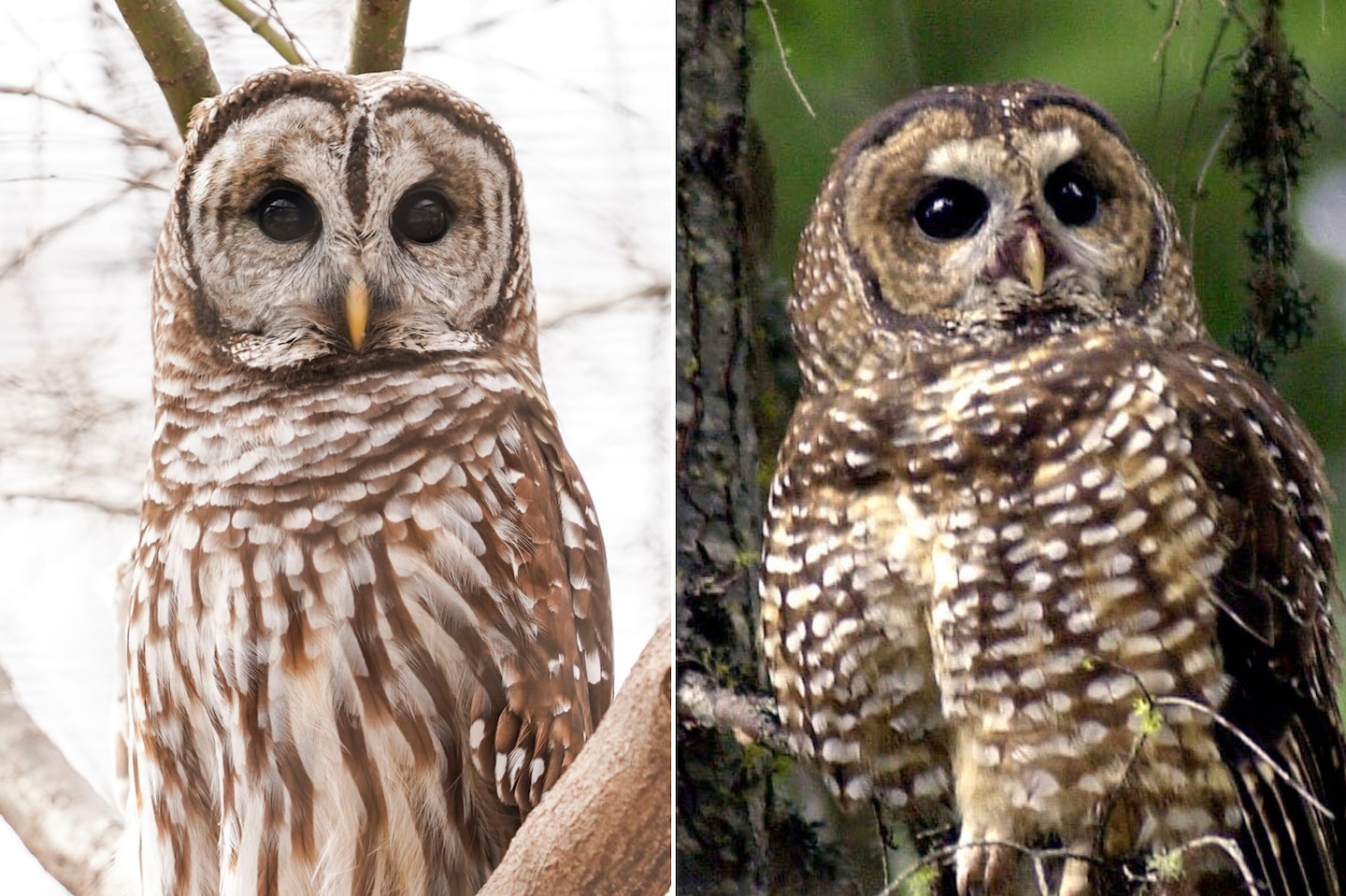
In the intricate symphony of the Pacific Northwest’s ancient forests, the spotted owl has long been the elusive soloist—a creature of shadow and mystery, weaving its existence delicately through a tapestry of towering evergreens and mist-laden groves. Yet, in recent decades, an uninvited guest has stepped onto this arboreal stage: the barred owl. Like a domineering new instrument drowning out a fragile melody, barred owls have not only disrupted the spotted owl’s habitat but have also cast profound ripples across its genetic diversity. This story is not just about two species in contention; it is a narrative of survival, identity, and the genomic tapestry that underpins the essence of a species.
The Barred Owl: A Bold Intruder in Spotted Owl Territory
The barred owl, with its robust physique and assertive call, is akin to a bold clarinet cutting through the mellow flute notes of the spotted owl’s haunting hoots. Originally native to eastern North America, barred owls began an expansion westward in the mid-20th century, encroaching into habitats traditionally held by spotted owls. Unlike their more elusive cousins, barred owls are generalists—adaptable, aggressive, and opportunistic. This adaptability has allowed them to thrive in fragmented forests and in closer proximity to human development.
As barred owls carve out their niche in the Pacific Northwest, they disrupt not only the ecological balance but also the reproductive sanctuaries critical to spotted owls. With their larger size and more assertive territorial behavior, barred owls outcompete spotted owls for prime nesting sites and food resources. This biological tug-of-war pushes spotted owls into increasingly marginal territories, where their genetic pool becomes precariously constricted.
Genetic Homogenization: The Silent Threat to Spotted Owl Diversity
Genetic diversity is the lifeblood of resilience, the hidden arsenal that enables species to adapt to changing environments and emerging threats. For spotted owls, whose evolutionary journey has been shaped by fragmented habitats and isolated populations, maintaining this diversity is paramount. However, the influx of barred owls threatens to dilute this precious genetic reservoir through direct competition and hybridization.
Hybridization—the interbreeding of barred and spotted owls—is an insidious force that blurs species boundaries. While hybrids tend to be less fit, their existence signals genetic introgression, where barred owl genes seep into spotted owl populations. This genetic homogenization erodes the unique alleles that define the spotted owl’s adaptive characteristics, potentially undermining its evolutionary distinctiveness. Over time, the gene pool of spotted owls risks becoming a shadowy reflection of its former self, stripped of variation and vitality.
The Ecological Domino Effect on Forest Biodiversity
Beyond the immediate genetic implications, the barred owl invasion triggers a cascade of ecological reverberations. Spotted owls are often considered an umbrella species—their presence indicative of the health of old-growth forest ecosystems. When their populations decline, so does the intricate web of species and processes they help sustain. The diminished genetic diversity among spotted owls could lead to weakened populations less capable of withstanding environmental perturbations such as climate change and habitat alteration.
As barred owls dominate, they also shift the dynamics of prey populations, affecting small mammals and birds in unforeseen ways. This alteration risks unbalancing the forest’s equilibrium, further endangering species that rely on stable, biodiverse environments. Thus, the genetic plight of spotted owls is entwined with broader conservation concerns, highlighting the interconnectedness of genetics and ecosystem vitality.
Conservation Efforts: Struggling to Tune the Genetic Orchestra
Conservationists are engaged in a fraught endeavor to preserve the spotted owl’s genetic distinctiveness and prevent the extinction of an iconic species. Strategies include targeted removal of barred owls in critical spotted owl territories, aiming to alleviate competitive pressures. This controversial approach underscores the complexity of intervention: it is a balancing act between ethical considerations and biological necessity.
Meanwhile, genetic monitoring advances have become indispensable tools, revealing the subtle shifts taking place within owl populations. These scientific insights guide adaptive management, ensuring that conservation strategies remain attuned to the genetic nuances of the species. Habitat restoration efforts further seek to bolster habitat connectivity, enabling fragmented spotted owl populations to interbreed and maintain genetic vigor.
The Unique Appeal of the Spotted Owl’s Genetic Legacy
The spotted owl’s genetic heritage is more than mere DNA; it is a profound chronicle of evolutionary artistry, shaped over millennia within the Pacific Northwest’s old-growth forests. Every unique allele represents a stanza in this species’ saga—an adaptation to elusive prey, to the whispering canopy, to the nuanced rhythms of a temperate rainforest. To lose this diversity would be to silence a vital voice in nature’s symphony, erasing a chapter of biodiversity and leaving an ecological void.
Preserving the spotted owl’s genetic mosaic is not simply a scientific goal—it is a moral imperative. These owls embody the wild spirit of an ancient landscape, and their genetic diversity holds irreplaceable lessons in resilience and adaptation. Protecting them from the overshadowing presence of barred owls means safeguarding an irreplaceable piece of natural heritage, maintaining a rich and vibrant living tapestry for generations yet unborn.