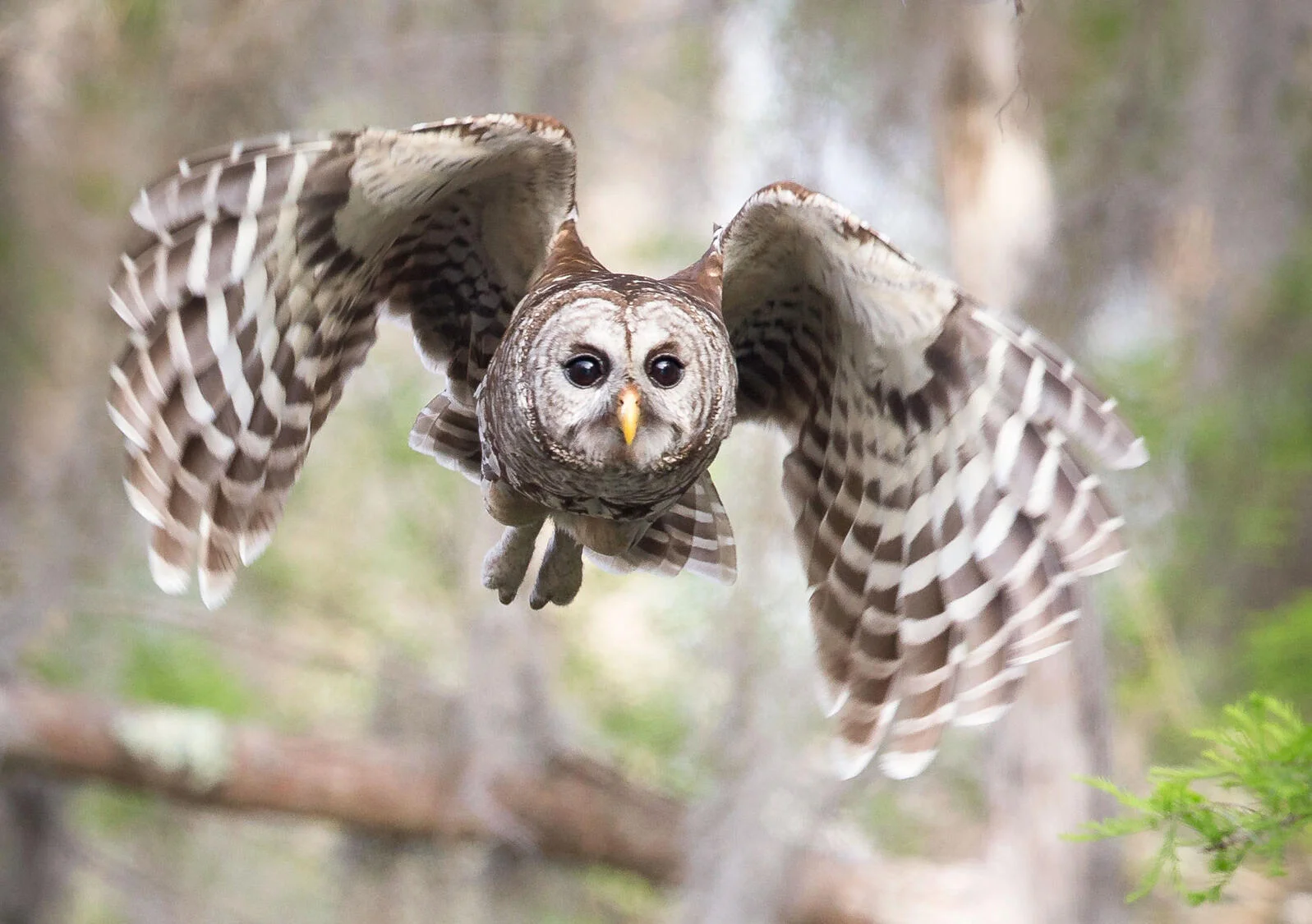
In the dense, whispering woodlands and shadowed wetlands of North America, an enigmatic presence commands silent reverence. The barred owl, with its haunting call and penetrating gaze, has long been regarded as a symbol of mystery and nocturnal majesty. Yet, beyond its ethereal allure lies a complex ecological narrative—one that complicates the very tapestry of native bird communities. The story of how barred owls are shaping, challenging, and sometimes overshadowing other native bird species promises not just a shift in perspective, but a deeper curiosity about the delicate balance of avian coexistence.
The Barred Owl’s Ecological Expansion: More Than Meets the Eye
Historically confined to the mature forests of the eastern United States and southern Canada, barred owls have embarked on a northwestern odyssey, expanding their range into the Pacific Northwest where they were once absent. This geographic migration is more than a simple tale of an owl seeking new territory; it heralds profound consequences for native wildlife. Their adaptability to different woodland habitats, combined with their opportunistic hunting prowess, facilitates an ecological invasion that reverberates through local avian populations. With their imposing size and versatile diet, barred owls are essentially rewriting the rules of territorial occupancy and resource competition.
Predation Pressure: The Silent Disruption of Native Species
At the heart of the barred owl’s influence on native birds lies its role as a formidable predator. Unlike many owls with specialized diets, barred owls exhibit remarkable dietary plasticity. They consume a diverse array of prey including small mammals, amphibians, insects, and crucially, birds. This predation pressure especially impacts smaller native owl species such as the northern spotted owl, as well as songbirds and cavity nesters. The subtle erosion of these populations through sustained predation disrupts reproductive success, alters predator-prey dynamics, and triggers cascading ecological effects. The barred owl’s hunting habits impose an invisible, yet relentless, ecological pressure that reshapes the survival landscape for many native species.
Inter-Species Competition: A Battle for Space and Resources
Beyond predation, barred owls engage in fierce competition for limited habitats. Their expansive territories can overlap with those of more specialized or vulnerable native species, triggering intense rivalries. Northern spotted owls, already endangered and reliant on old-growth forests, find their prime nesting and foraging grounds increasingly invaded. The barred owl’s ability to exploit a broader range of environmental conditions gives it a competitive edge, pushing native species into smaller, fragmented habitats. These intensified competitive encounters result in displacement, reduced breeding opportunities, and in many cases, population declines of native birds more constrained in their ecological niches.
Alterations in Avian Behavior: The Ripple Effect of Barred Owl Presence
The presence of barred owls induces subtle shifts in the behavior of other native birds. Songbirds, for example, may modify their vocalizations, timing, or nesting sites in response to heightened predation risk. Such behavioral plasticity, while a testament to their resilience, comes with costs. Energetic expenditures increase as birds become more vigilant and alter their foraging patterns, sometimes leading to lower reproductive output. In essence, the barred owl’s dominance doesn’t just reduce numbers overtly through direct predation or competition; it reshapes the very rhythms and survival strategies of the avian community, forcing native birds into a constant state of adaptation that is neither effortless nor without consequence.
Ecological Nuances: When Invasive and Native Lines Blur
What complicates the narrative further is the ambiguous status of the barred owl in the ecosystems it invades. It is a native species to North America, yet its recent range shifts have introduced it into environments where it functions ecologically as an invader. This blurring of native and non-native species roles challenges traditional conservation paradigms. Efforts to protect native birds such as the northern spotted owl must now grapple with ethical and practical dilemmas surrounding barred owl management. Should these owls be culled to safeguard more vulnerable species, or should their expanding populations be accepted as a new ecological reality? This conundrum underscores how shifting baselines and dynamic ecosystems defy simplistic categorizations, encouraging a more nuanced understanding of biodiversity stewardship.
Conservation Challenges and the Future of Avian Diversity
The intricate interplay between barred owls and other native birds presents urgent conservation challenges. Strategies to mitigate barred owl impacts include habitat restoration favoring native species, targeted removal programs, and enhanced monitoring. However, these solutions are complex and often contentious. The barred owl’s charismatic nature and its rightful place within North American fauna evoke public empathy, complicating management interventions. Moving forward, successful conservation will hinge on integrative approaches that balance ecological science with ethical considerations, community engagement, and adaptive policy-making. Protecting native avian diversity in the face of barred owl expansion demands creative, multifaceted responses that embrace ecological complexity rather than simplistic eradication campaigns.
Conclusion: A Call to See Barred Owls Differently
The barred owl challenges us to reconsider the fluidity of natural order and the interconnectedness of species within shared habitats. Far from being mere invaders or villains, barred owls are emblematic of nature’s dynamic processes—fluid boundaries, shifting dominances, and the constant negotiation of existence. Their impact on native bird species stretches beyond competition and predation; it disrupts ecological narratives and compels deeper reflection on conservation ethics. Embracing this complexity not only enriches our understanding of avian ecology but also ignites curiosity about how we define native versus intrusive species in a world where change is the only constant. The barred owl, with its haunting call echoing through forest shadows, invites us to listen closely—and to think differently—about the delicate balance of life in our woodlands.