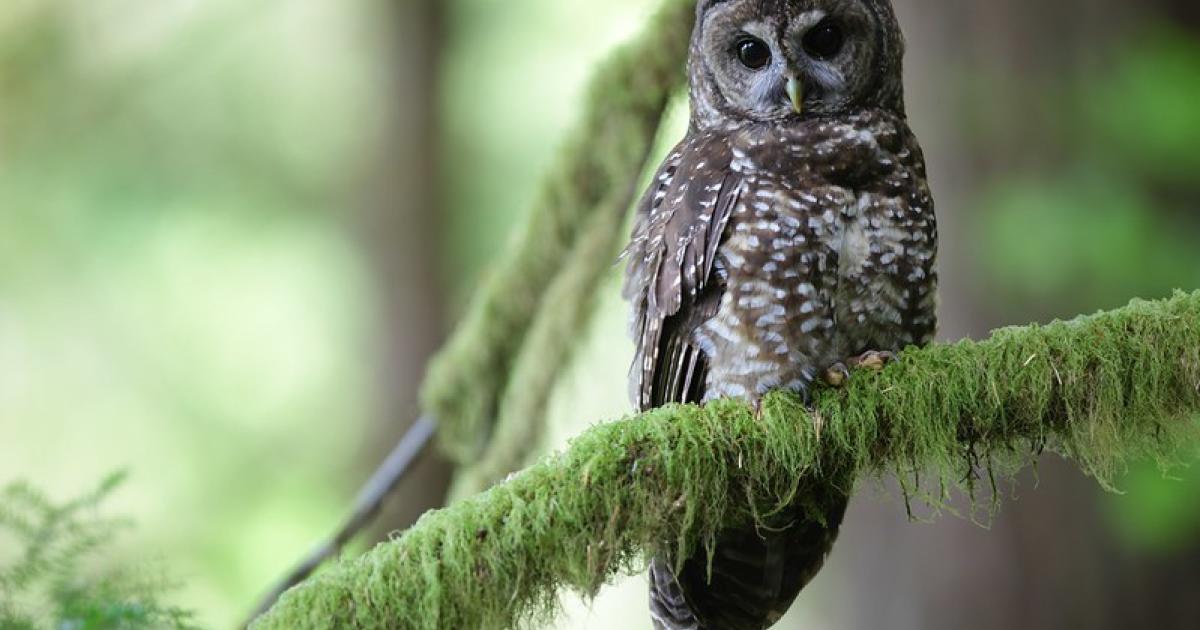
Can the haunting silhouette of a spotted owl, perched silently in an ancient forest, withstand the roaring chaos of a wildfire? The forests of the Pacific Northwest — thick with towering conifers and saturated with rich biodiversity — have long been sanctuaries for these elusive birds. Yet, as wildfires become more frequent and ferocious, the delicate balance within these ecosystems faces an unprecedented test. How do flames reshape the lives of spotted owls, and what does this mean for their survival? This exploration delves into the complex relationship between wildfires and the fate of the iconic spotted owl, revealing challenges and nuances that defy simple conclusions.
The Ancient Forests: A Mosaic of Comfort and Necessity
To comprehend how wildfires influence spotted owls, one must first appreciate the habitats they cherish. These owls thrive in mature, old-growth forests dense with layered canopies, decades-old trees, and a rich understory. These forests provide not only protection from predators but also a reliable food source, predominantly small mammals and birds that flourish in this environment. The structure of these habitats—dense foliage intertwined with fallen logs and moss-covered branches—is crucial for nesting and rearing young.
But these prime territories are neither uniformly resistant nor uniformly vulnerable to fire. The patchwork nature of the forest, with natural firebreaks and wetter microhabitats, can sometimes shield owl populations from total habitat loss. Nonetheless, the steady encroachment of more intense and widespread wildfires threatens to disrupt these sanctuaries more frequently, reshuffling the ecological cards in ways that may not favor the owls.
Wildfires: Destroyer or Sculptor?
Wildfires, with their searing heat and consuming flames, are often cast as nature’s great destroyers. To the spotted owl, a wildfire can mean the loss of precious nesting sites and a sudden scarcity of prey. Entire sections of old-growth forest can be reduced to ash in a matter of hours, leaving owls with the daunting task of finding new territories, a challenge complicated by their natural territoriality and low reproductive rates.
Yet, not all fire is synonymous with devastation. Fire ecologists note that periodic, low-intensity burns can actually rejuvenate forest ecosystems by clearing out dense underbrush, encouraging new plant growth, and diversifying habitat structures. Such mosaic burn patterns have the potential to create a more varied landscape that could paradoxically benefit the owls in the long term, by fostering a broader abundance of prey and opening up new nesting niches.
Still, the contemporary wildfire regime in the Pacific Northwest frequently veers toward high-intensity, sprawling infernos fueled by decades of fire suppression and climate change. These extreme fires can irrevocably alter habitats, sometimes reducing them to barren scrapes where recovery may span decades or longer—time scales that test the resilience of spotted owl populations.
Changing Prey Dynamics and Food Scarcity
Wildfires don’t merely diminish the physical habitats of spotted owls; they also disrupt the intricate food webs sustaining them. The small mammals that form the backbone of the owl’s diet—such as flying squirrels and woodrats—depend heavily on understory vegetation and fallen logs for shelter and foraging. When fire strips away this complexity, prey populations can collapse or migrate, triggering a domino effect on the predator dependent on them.
Moreover, the loss of forest canopy often leads to temperature spikes and moisture reductions at ground level, conditions unfavorable for many prey species. Owls, with their specialized hunting techniques—stealthy, nocturnal swoops through shadowed corridors—can find foraging more inefficient and energetically costly.
Without sufficient prey, reproductive success plummets. Nestlings may face starvation, and adult owls must expend more energy traveling between feeding sites. Over time, these cumulative stresses can reduce population densities and fragment genetic diversity, imperiling long-term survival.
Fire-Driven Habitat Fragmentation and Increased Competition
Beyond physical destruction, wildfires catalyze habitat fragmentation—a process with profound implications for spotted owls. As continuous expanses of old-growth forest break down into isolated patches, owl territories become smaller and more scattered. This spatial limitation elevates interspecies and intraspecies competition, particularly from the more aggressive barred owl, a species that has progressively invaded the Pacific Northwest.
Barred owls, adaptable and less demanding in their habitat preferences, often capitalize on fire-weakened landscapes to expand their range. They compete directly with spotted owls for nesting sites and food, frequently outcompeting them due to their broader ecological tolerance. This competitive pressure, exacerbated by fire-driven habitat alterations, accelerates the decline of spotted owl populations in certain regions.
The Challenge of Post-Fire Management and Conservation
Recovering spotted owl populations after wildfire impact poses a delicate conundrum for conservationists and land managers. Immediate interventions might include preserving unburned refuges and facilitating habitat connectivity to allow owl dispersal. Reforestation efforts sometimes prioritize planting native conifers to hasten the regeneration of canopy cover.
However, these measures must walk a fine line to avoid unintended consequences. Overzealous fire suppression in the name of protection can lead to fuel accumulation, setting the stage for even more catastrophic future fires. Conversely, allowing ecosystems to follow natural succession trajectories might lag behind the urgent needs of a vulnerable species. Integrating controlled burns, mechanical thinning, and targeted habitat restoration crafts a more nuanced approach but requires continued research, funding, and adaptive strategies.
Looking Beyond Flames: Climate Change and a Future in Flux
Wildfires do not exist in isolation from larger environmental shifts. Climate change has intensified heatwaves, altered precipitation patterns, and prolonged droughts in the Pacific Northwest, exacerbating fire risk and severity. For spotted owls, these compounded pressures create a future rife with uncertainty.
Higher temperatures and drier soils not only prime forests for catastrophic fires but also may shift the distribution of suitable habitat northward or to higher elevations. This forces spotted owls into unfamiliar territories, demanding new adaptations or migration patterns. The intertwined role of climate dynamics with wildfire frequencies underscores the urgency of addressing broader ecological resilience and species protection simultaneously.
A Testament to Tenacity: The Hope Embedded in Resilience
Despite the daunting odds, the story of the spotted owl is not solely one of loss but also of persistence. Their ability to inhabit fragmented landscapes, shift nest sites, and endure periods of scarcity speaks to a resilience deeply etched by evolutionary history. Ongoing research reveals that even in post-fire landscapes, if carefully managed, key elements of habitat can persist or recover to support owl survival.
Wildfires undeniably reshape the Pacific Northwest’s ecosystems in profound ways. Yet, by understanding the nuanced interplay between fire regimes and spotted owl ecology, conservation efforts can evolve from reactive measures to strategic, forward-looking stewardship. The question remains: can humanity rise to the challenge of balancing fire’s natural rhythm with the fragile persistence of one of its woodland guardians?