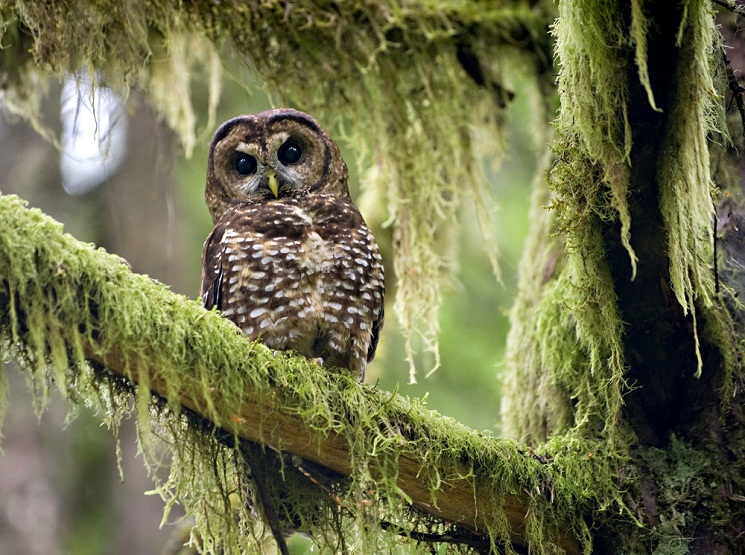
In the twilight-dappled forests of the Pacific Northwest, the Northern Spotted Owl embarks on a timeless journey of parenthood. This elusive raptor, veiled in mottled feathers and shadowed eyes, orchestrates a delicate ballet of care that ensures the survival of its next generation. Spotted Owl parenting is a profound testament to the interplay of instinct, environment, and devotion—a narrative that unfolds in dense canopies and silent nights where the echoes of fledgling calls resonate. The intricate behaviors and nurturing strategies employed by these owls reveal a world steeped in tenderness and resilience, inviting us to delve deeper into their captivating role as guardians of the forest’s future.
Nesting Habits: Foundations of Parental Care
The saga of Spotted Owl parenting commences with the meticulous selection of a nesting site. These owls favor ancient trees with complex structures—often old-growth conifers—that provide ample cover and protection. Rather than construct nests, Spotted Owls utilize natural cavities, abandoned nests from other raptors, or dense foliage as their cradle. This strategic choice reflects an evolutionary adaptation to the dense, shaded environments they inhabit, ensuring concealment from predators and environmental elements.
The female initiates incubation, which spans approximately 30 to 36 days, during which she remains nearly immobile, relying on the male’s unwavering provision of sustenance. This period epitomizes patience and sacrifice, as the female embraces vulnerability to safeguard the developing embryos within.
Incubation and Early Chick Development
Upon hatching, the altricial owlets are profoundly helpless—blind, featherless, and entirely dependent on parental care. The female’s nurturing transforms drastically; she is solely responsible for brooding, keeping the chicks warm with her plumage, and shielding them from the cold and potential threats. Meanwhile, the male undertakes the vital role of hunter and provider, navigating the labyrinthine forest under the cloak of night to deliver an unyielding stream of prey.
During these fragile early weeks, the parents exhibit ceaseless vigilance. The female rarely leaves the nest, her devotion underscored by an almost symbiotic relationship with her offspring’s survival. This critical window is marked by rapid growth and neurological development in the chicks, a period demanding impeccable parental precision.
Feeding Strategies: The Art of Provisioning
Feeding the young Spotted Owls is an arduous, dynamic process. The male’s diet primarily consists of small mammals such as northern flying squirrels, woodrats, and various small rodents, supplemented by birds and invertebrates. His hunting prowess is a vital element of the family’s survival, demanding stealth, speed, and extraordinary nocturnal eyesight.
The male delivers prey items directly to the nest, where the female adeptly dismembers and feeds the young, ensuring appropriate portion sizes and nutritional needs are met. This cooperative dynamic underscores a finely honed division of labor and mutual trust. The rhythmic exchange—male bringing food, female brooding and feeding chicks—creates a resilient bond and exemplifies the collaborative essence of Spotted Owl parenting.
Developmental Milestones: Growth from Vulnerability to Independence
As days turn to weeks, the owlets progress through transformative stages. By three to four weeks, they develop increasingly complex plumage, allowing gradual exposure beyond the nest. During this phase, parental care adapts—brooding intensity decreases while feeding frequency remains high to support rapid metabolic growth.
When the chicks reach five to six weeks, fledging prepares to begin. This critical stage involves tentative flights amidst the canopy, facilitated by parents encouraging muscular development and navigation skills. The fledglings remain dependent on food provisioning but progressively learn to forage independently. Such lessons in survival are meticulously imparted, blending instinct with parental guidance until the juvenile is capable of solitary existence.
Parental Roles and Social Dynamics
The division of labor in Spotted Owl parenting reveals a nuanced social strategy. The female’s predominant role in incubation and brooding contrasts with the male’s role as the primary hunter. However, this dichotomy is fluid; occasionally, females also hunt to supplement feeding during heavy brooding periods or when male contribution diminishes.
Moreover, the pair bond between mates is monogamous and enduring, often lasting multiple breeding seasons. This steadfast partnership enhances reproductive success through shared vigilance, resource acquisition, and defense of territory from rivals. The profound social synergy witnessed in these owls fortifies not only the immediate family unit but also the broader ecological tapestry of their habitat.
Challenges in Parenting: Environmental and Predatory Pressures
Despite their dedication, Spotted Owl parents face formidable challenges. Fragmentation of old-growth forests restricts available nesting sites and diminishes prey abundance, directly influencing reproductive success. Predators such as great horned owls and barred owls pose constant threats, necessitating heightened parental alertness and defense mechanisms.
These external pressures often shape parenting strategies, sometimes resulting in reduced clutch sizes or extended parental care to compensate for less frequent prey deliveries. The delicate balance between nurturing offspring and navigating environmental adversity epitomizes the resilience and adaptability woven into the fabric of Spotted Owl parenting.
Conclusion: The Legacy of Spotted Owl Parenting
Spotted Owl parenting is a profound exhibition of nature’s intricate choreography—where patience, devotion, and survival instincts converge beneath the looming canopies. Through careful nesting choices, a symbiotic division of labor, and relentless nurturing, these owls embody the essence of parental commitment, ensuring the continuity of their species amid increasing ecological uncertainty.
Their story is one of resilience and love, whispered nightly amidst the ancient forests, a powerful reminder of the sacred bond between parent and progeny in the wild. To witness the quiet majesty of Spotted Owl parenting is to glimpse the delicate threads that sustain life itself within the ecosystem’s grand tapestry.