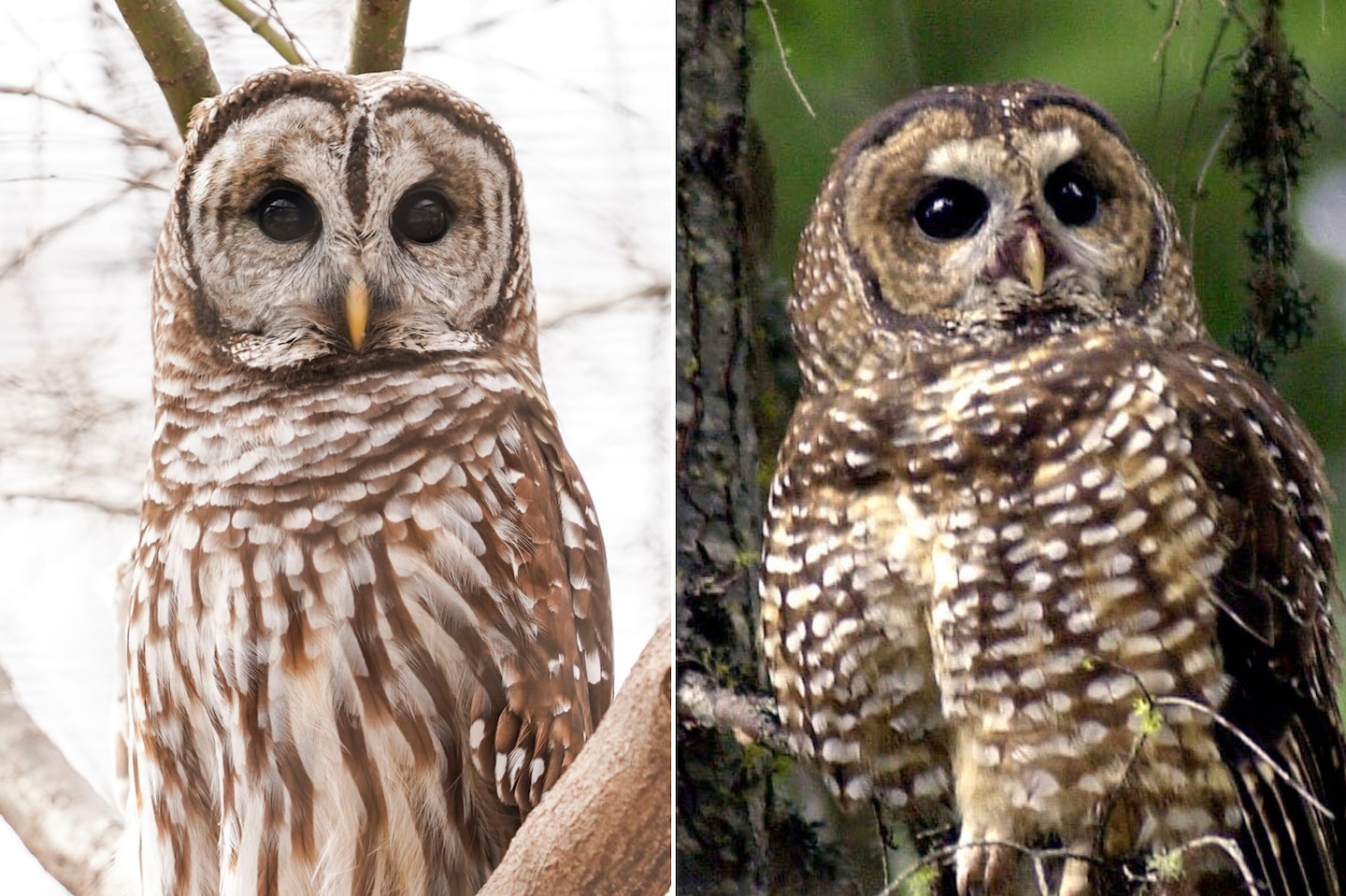
Have you ever paused in the quiet woods and wondered how a barred owl masters the art of hunting? Is it sheer ferocity that commands its prey, or a keen opportunism tuned by evolution? The barred owl’s hunting techniques strike a delicate balance between aggression and adaptability, revealing a complex predator whose methods invite both fascination and a hint of primal respect. Yet, beneath the surface of their haunting calls and shadowy silhouettes lies a narrative of survival — a nuanced tale of power, patience, and precision.
The Ambush Artist: Mastering the Element of Surprise
Barred owls are quintessential ambush predators, relying heavily on stealth and the concealment of their presence. Their mottled feathers mimic the dappled forest light, expertly camouflaging them in their arboreal habitats. This visual cloaking allows them to perch silently, waiting—sometimes for agonizing minutes or even hours—for an opportune moment. Their hunting technique is less about a frantic chase and more about calculated patience.
Their acute auditory senses play a fundamental role here. Equipped with facial discs that funnel sound to asymmetrically placed ears, barred owls can pinpoint rustling prey beneath dense leaf litter or snow with astounding precision. They often remain motionless, save for subtle head movements, as they parse the auditory landscape, decoding the hint of a vole, squirrel, or amphibian moving in the underbrush. This elemental blend of sight and sound illustrates how barred owls quietly assert dominance over their territories.
A Tapestry of Opportunism: Seizing the Unforeseen
While patience governs much of their hunting method, barred owls are also paragons of opportunism. Their diet spans a cornucopia of creatures—from small mammals and birds to reptiles and invertebrates—showing an impressive flexibility that enhances their survivability. No creature is truly safe. They exploit sudden movements and sounds, demonstrating an uncanny ability to switch tactics mid-hunt.
This opportunistic hunger means that barred owls can capitalize on moments when prey is vulnerable—perhaps a fledgling bird taking its first incriminating flight or an amphibian exposed during rainy seasons. Sometimes, this opportunism manifests through boldness; they do not hesitate to harass or displace other raptors to claim a meal, underscoring a predatorial pragmatism that is as strategic as it is instinctive. It is a calculated risk-reward dance, where aggression is wielded judiciously to maximize feeding success.
Hunting Under the Shroud of Night: Nocturnal Prowess
The nocturnal tendencies of barred owls bestow upon them another distinct hunting advantage. As darkness blankets their forest realms, many prey species settle into vulnerable rest, while others remain active but less vigilant. Barred owls emerge as spectral hunters, their large eyes adapted to low-light environments, giving them a monumental edge against their prey.
This night-time activity increases the complexity of their hunting. Darkness blurs visuals but enhances auditory and tactile cues. Owls rely on whisper-quiet flight facilitated by specialized feather structures that dampen sound while slicing through the air. Such adaptations ensure they remain undetected, a shadow amidst shadows. This stealthy approach is not merely a physical skill but a psychological one, instilling an invisible threat that shapes the behavior of countless creatures in their ecosystems.
Aggression as a Double-Edged Sword
Aggression is often a misunderstood facet of barred owl hunting. Though not typically territorial to the point of unwarranted violence, when it comes to securing food, they become remarkably assertive. This fierceness can manifest as relentless swoops, powerful talon strikes, and intimidating vocalizations designed to dissuade competitors or startle prey into movement.
Yet, aggression is not without cost. Excessive confrontations risk injury or expend valuable energy, especially in a habitat where food is not always abundant. Barred owls thus modulate their hostility, balancing the need to dominate with prudence. It’s a delicate balancing act—too much aggression and they risk unnecessary conflict, too little and they risk starvation.
Spatial Awareness and Hunting Territory
The spatial dynamics of barred owls’ hunting grounds are paramount. They establish and navigate intricate territories, often revisiting prime hunting perches with a near-sentinel commitment. Their familiarity with the landscape fosters an impressive spatial memory, enabling rapid responses to subtle environmental changes—be it the sudden flutter of wings or a faint rustling in the brush.
Within these territories, the owl’s hunting efficiency is magnified by knowledge of prey habits, seasonal movements, and even the interplay with other predators. This environmental savvy turns the barred owl into a master tactician, weaving intelligence and instinct into a seamless hunting blueprint. Such territorial insight also aids them in managing energy expenditure wisely, choosing when to hunt actively and when to conserve strength.
Adaptation and Evolutionary Significance
Barred owl hunting techniques have evolved through millennia, shaped by the pressures of survival, competition, and environmental shifts. Their blend of aggression and opportunism is not accidental but an evolutionary hallmark that allows them to thrive in diverse forests spanning vast regions.
Recent ecological changes pose new challenges, yet the barred owl’s flexible hunting strategies suggest a resilience that could persist despite adversity. As forests shift and prey populations fluctuate, the adaptability embedded in their hunting behavior may become even more cardinal, highlighting the broader narrative of predator-prey coevolution and the ever-turning wheel of life.
So, the next time you hear a barred owl’s unmistakable hooting echo through the night, consider the complexity lurking behind those haunting calls. Their hunting is a symphony of silent stalking, measured aggression, and opportunistic cunning—an ancient dance between predator and prey, performed under the watchful eyes of the moon.