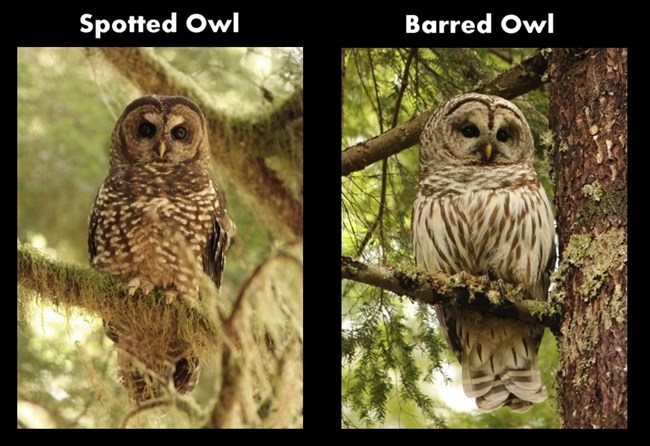
The barred owl, a relative newcomer to the Pacific Northwest’s ancient forests, has become an unwelcome guest whose presence is reshaping the ecological tapestry of the region. Once confined to eastern North America, this adaptable and aggressive raptor has expanded its range westward, encroaching upon the territories of the northern spotted owl—a species already teetering on the edge of survival due to habitat loss and fragmentation. In response, wildlife managers have turned to a controversial strategy: the removal of barred owls. But does this intervention truly benefit the spotted owl, or is it a misguided attempt to play ecological referee in a game where the rules are still being written? The data emerging from these efforts paints a complex, often contradictory picture—one that demands closer scrutiny.
The Ecological Stakes: Why Barred Owls Are More Than Just Intruders
The barred owl’s arrival in the Pacific Northwest is not merely a story of natural range expansion; it is a tale of ecological disruption fueled by human-induced climate change and forest management practices. Unlike the northern spotted owl, which evolved in the dense, old-growth forests of the region, the barred owl thrives in a broader range of habitats, from coniferous woodlands to suburban edges. Its adaptability has allowed it to outcompete the spotted owl for food and nesting sites, while its larger size and more aggressive behavior give it a distinct advantage in territorial disputes. The result? A dramatic decline in spotted owl populations in areas where barred owls have become established.
Yet, to frame this as a simple case of the “bully” displacing the “native” would be an oversimplification. The barred owl’s presence is not inherently malicious; it is merely exercising the same survival instincts that have allowed it to flourish across North America. The real tragedy lies in the fact that the spotted owl, already a symbol of conservation struggles, is now facing a double jeopardy: the loss of its habitat to logging and development, and the loss of its ecological niche to an invasive competitor. The question is not whether barred owls are “good” or “bad,” but whether their removal can restore balance—or if it merely shifts the burden of conservation onto another species.
The Science of Removal: What the Data Reveals
Since the early 2000s, wildlife agencies in Washington, Oregon, and California have conducted experimental barred owl removals in key spotted owl territories. The methodology is straightforward: trained professionals lethally remove barred owls from designated areas, then monitor the response of the spotted owl population. The results, however, are anything but clear-cut. Some studies have shown temporary increases in spotted owl occupancy and reproduction in areas where barred owls were removed, suggesting that the intervention can provide short-term relief. Others have found no significant long-term benefits, with spotted owl populations continuing to decline despite the absence of barred owls.
One of the most comprehensive analyses, spanning over a decade, revealed that while barred owl removal did lead to higher spotted owl survival rates in the immediate aftermath, the benefits diminished over time. The reason? Barred owls are highly mobile, and their removal from one area often leads to rapid recolonization by neighboring populations. This creates a Sisyphean cycle of intervention, where conservationists are forced to play an endless game of whack-a-mole with an adaptable and resilient species. The data also suggests that barred owl removals may inadvertently increase the pressure on other native predators, such as great horned owls, which can further destabilize the ecosystem.
Moreover, the ethical implications of lethal control cannot be ignored. Barred owls are intelligent, social creatures capable of forming lifelong pair bonds. Their removal disrupts not only ecological dynamics but also the intricate social structures of their species. For conservationists, this raises a profound dilemma: Is it justifiable to sacrifice one species to save another, especially when the long-term outcomes remain uncertain?
Alternative Strategies: Can Coexistence Be Achieved?
Given the limitations and ethical concerns surrounding barred owl removal, researchers have begun exploring alternative strategies to mitigate the conflict between the two owl species. One promising approach is habitat restoration—recreating the dense, old-growth forests that spotted owls rely on while reducing the fragmentation that benefits barred owls. Studies have shown that spotted owls are more likely to persist in areas with high-quality habitat, even in the presence of barred owls, provided that their core territories remain intact.
Another innovative tactic involves the use of acoustic deterrents, such as playback of spotted owl calls, to discourage barred owls from settling in critical habitats. While this method is still in its experimental stages, early results suggest that it may help reduce barred owl occupancy in key spotted owl territories without resorting to lethal measures. Additionally, some conservationists advocate for targeted habitat management, such as creating buffer zones around spotted owl nests to reduce competition and disturbance.
Yet, these alternatives are not without their challenges. Habitat restoration is a slow, expensive process that requires long-term commitment and collaboration among government agencies, private landowners, and Indigenous communities. Acoustic deterrents, while less invasive, may only provide temporary relief and could potentially disrupt other wildlife species. The reality is that no single solution will suffice; a multifaceted approach that combines habitat protection, adaptive management, and community engagement is essential for addressing the complex interplay between these two owl species.
The Human Factor: Conservation in the Age of Climate Change
The barred owl’s range expansion is not an isolated phenomenon; it is a symptom of broader ecological shifts driven by climate change. As temperatures rise and weather patterns become more erratic, species are being forced to adapt—or migrate—in ways that were previously unimaginable. For the barred owl, this has meant a steady march westward, into territories where it once had no foothold. The spotted owl, already a climate-sensitive species, is now facing the double threat of habitat loss and competitive exclusion, a combination that could push it perilously close to extinction.
This reality underscores the need for conservation strategies that look beyond the immediate conflict between the two owl species. Climate change is reshaping ecosystems at an unprecedented rate, and traditional conservation models—such as species-specific interventions—may no longer be sufficient. Instead, conservationists must adopt a more holistic approach that considers the interconnectedness of species, habitats, and climate dynamics. This could involve prioritizing the protection of climate-resilient habitats, fostering corridors for species migration, and investing in long-term monitoring to track ecological changes.
The human dimension of this crisis cannot be overlooked. Indigenous communities, who have stewarded these lands for millennia, hold invaluable knowledge about the ecological relationships between species. Their involvement in conservation efforts is not only ethical but also practical, as traditional ecological knowledge can inform more effective and culturally appropriate management strategies. Additionally, public support for conservation initiatives is crucial, particularly in an era where funding for wildlife protection is often scarce and politically contentious.
Ethics and Empathy: The Moral Cost of Conservation
At its core, the barred owl removal debate is not just a scientific or ecological issue; it is a moral one. Conservationists are tasked with making difficult decisions that balance the survival of one species against the well-being of another, all while navigating the complexities of human ethics and values. The question of whether barred owl removal is justified hinges on a fundamental tension: Is it acceptable to cause harm to one species in order to save another, especially when the long-term outcomes are uncertain?
This dilemma is further complicated by the fact that barred owls are not inherently “evil” or “invasive” in the traditional sense. They are simply doing what comes naturally—surviving and thriving in an environment that has, in many ways, been altered by human activity. To frame their removal as a necessary evil is to ignore the broader context of ecological disruption and the role that humans have played in creating these conditions. It also raises uncomfortable questions about the ethics of playing “ecological god,” deciding which species deserve to live and which do not.
For many conservationists, the answer lies not in eradication but in coexistence. This means accepting that ecosystems are dynamic and that change is inevitable. It means recognizing that the barred owl’s presence is not a failure of conservation but a reflection of the adaptability and resilience of nature itself. It also means acknowledging that the spotted owl’s survival may ultimately depend on our ability to address the root causes of its decline—habitat loss, climate change, and the fragmentation of the landscapes it depends on.
Looking Ahead: The Future of Owl Conservation
The story of the barred and spotted owl is far from over. As climate change continues to reshape the Pacific Northwest’s forests, the dynamics between these two species will evolve in unpredictable ways. Conservationists must remain vigilant, adaptive, and open to new approaches that prioritize both ecological integrity and ethical responsibility. This may involve revisiting long-held assumptions about species management, investing in innovative technologies, and fostering collaboration across disciplines and communities.
Ultimately, the fate of the spotted owl—and the barred owl—will serve as a litmus test for our ability to navigate the complexities of conservation in the 21st century. It will challenge us to think beyond simplistic narratives of “native vs. invasive” and to embrace a more nuanced understanding of the natural world. It will demand that we confront the moral implications of our actions and the unintended consequences of our interventions. And it will remind us that conservation is not just about saving species; it is about preserving the intricate web of life that connects us all.