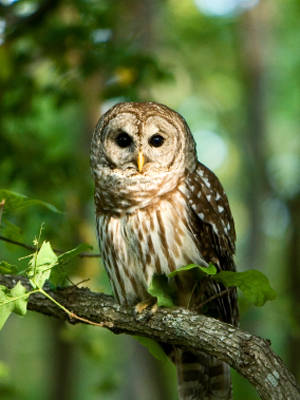
Have you ever wondered what secret survival skills transform a seemingly unassuming owl into one of the most formidable nocturnal hunters? The barred owl, with its haunting call and ghostly presence, epitomizes mastery in predation. But what exactly fuels this prowess—the very diet that sustains it? Dive into the remarkable world of the barred owl’s dietary habits to unravel the mystery behind their unmatched hunting efficiency.
An Opportunistic Feast: The Essence of Barred Owl Predation
The barred owl is, at its core, an opportunistic feeder—a cunning generalist that capitalizes on the bounty of its environment. This flexibility is more than a simple survival tactic; it is a refined evolutionary strategy. Their diet encompasses a staggering variety of prey, ranging from small mammals and birds to amphibians, reptiles, and even invertebrates. This breadth allows the barred owl to thrive in diverse habitats, where food availability fluctuates with seasons and ecosystems.
By not confining themselves to a narrow food source, barred owls exhibit a dynamic approach to foraging. Their ability to switch prey types on a dime is akin to a master chess player anticipating every move, always staying a step ahead of ecological challenges. This resourcefulness imbues them with resilience—an essential trait for a predator that navigates the densely wooded realms and shadowed wetlands they call home.
Silent Hunters of the Night: How Stealth Enhances Dietary Success
What truly differentiates the barred owl as a predator is not just what it eats but how it hunts. Their feathers, soft and fringed, grant near-silent flight, enabling them to swoop on prey undetected. This stealth is no whimsical accident but a sophisticated adaptation honed over millennia. When hunting under the cloak of darkness, every whisper-free wingbeat is a pact with patience and precision.
Coupled with exceptional night vision and acute hearing, the barred owl’s auditory and visual acuity allows it to pinpoint movement in the thickest underbrush or beneath the cover of leaves. They can hear the slight rustling of a mouse or the flutter of a bird’s wings from astonishing distances. This sensory superiority facilitates rapid and successful strikes, ensuring few opportunistic morsels escape their grasp.
Specialized Tools: Anatomy That Bolsters Predatory Efficiency
More than just stealthy flyers, barred owls are anatomically designed for hunting excellence. Their talons, curved and formidable, act as natural pincers that grasp with unyielding grip. The strength behind these claws is necessary for subduing a wide array of prey, from nimble rodents to wily amphibians.
Adding to this arsenal is their powerful beak, perfectly curved to tear flesh efficiently. Unlike other raptors that may specialize in particular prey or hunting techniques, barred owls wield a versatile “toolkit.” Their physical attributes allow them to adapt their approach depending on prey size and type, maximizing the chances of success with each hunt.
Diverse Diet Spectrum: What Preys Make the Menu?
Barred owls display a fascinating dietary spectrum, predominantly featuring small mammals such as voles, mice, and squirrels. These creatures form the staple, providing the calorie-dense fuel needed for nocturnal activity. However, their palate extends far beyond rodents. Reptiles like snakes and lizards, amphibians such as frogs and salamanders, and various bird species also grace the barred owl’s table.
Interestingly, they even venture into aquatic realms, snatching fish or crayfish from shallow waters. This eclectic diet is a testament to their adaptability, allowing barred owls to exploit ecotones—areas where different habitat types overlap—enriching their feeding opportunities. Invertebrates, though less significant in volume, occasionally contribute to their diet, highlighting their willingness to capitalize on every edible encounter.
Seasonal Shifts: Navigating Ecological Challenges Through Dietary Flexibility
What happens when winter’s frost tightens its grip and prey becomes scarce? The barred owl’s broad diet showcases a remarkable ability to pivot during such lean times. Unlike predators rigidly tied to specific prey, barred owls adapt by altering their targeting strategies. In colder months, when voles may burrow deep under snow, they might increase predation on amphibians near thawing streams or focus more heavily on birds.
This seasonal fluidity is essential, preventing starvation and ensuring a continuous energy supply. The hunting techniques may shift as well—more ground foraging versus aerial hunting—as barred owls cleverly navigate the challenges environmental changes impose.
Ecological Implications: Barred Owls as Apex Opportunists
Their predatory effectiveness has rippling effects throughout their ecosystems. As apex opportunists, barred owls help control populations of small mammals and other prey, influencing the balance of their forest and wetland habitats. Their presence can indirectly shape the health of plant communities by modulating herbivore populations, showcasing the interconnectedness of predatory diet and ecological equilibrium.
Moreover, their dietary plasticity means barred owls can thrive even when ecosystems face perturbations—be it human-induced changes or natural disturbances—maintaining their role as vital components of biodiversity and trophic dynamics.
A Playful Puzzle: The Challenge of Predicting Their Next Meal
With such versatility, predicting precisely what a barred owl will hunt next is a delightful enigma for ornithologists and wildlife enthusiasts alike. Will it snatch a plump amphibian hidden among mossy rocks, or silently capture a field mouse scurrying beneath the moonlit canopy? This unpredictability not only reflects their adaptive genius but also invites us to appreciate the intricate dance of predator and prey in the wild.
Perhaps the greatest challenge lies in the barred owl’s ability to surprise us—which prey species will become tomorrow’s feast remains an ever-changing answer, written by the rhythms of nature, the pulse of the night, and the owl’s indefatigable will to survive.