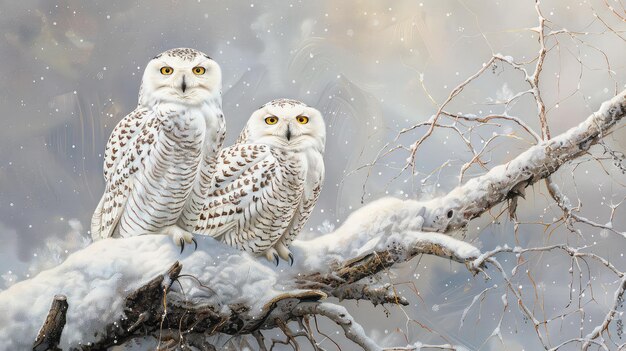
In the vast, unforgiving expanse of the Arctic tundra, where winter’s icy grasp can endure for months, the snowy owl reigns as a testament to nature’s ingenuity and resilience. Amid biting winds, subzero temperatures, and prolonged darkness, these majestic birds have evolved an array of remarkable strategies to conserve energy. Understanding how snowy owls navigate the formidable challenges of the Arctic winter not only unveils the intricate ballet of survival but also deepens our respect for one of the most enigmatic avian inhabitants of the polar realm.
Adaptive Morphology: The First Line of Defense Against the Cold
The snowy owl’s physical constitution is tailored exquisitely to its frigid environment. Its pristine, thick plumage serves as an impermeable shield against the brutal cold, a natural thermal insulator. Unlike many other owls, the snowy owl boasts dense feathering that extends even to its toes and legs, forming an aviary equivalent of winter boots. This specialized feather coverage minimizes heat dissipation from extremities, countering the typical vulnerability of appendages in low temperatures.
Moreover, the compact body shape of the snowy owl reduces surface area relative to volume. This geometric adaptation lowers the rate of heat loss, a concept known as Allen’s Rule, optimizing the owl’s thermal regulation. The bird’s rounded head and lack of prominent ear tufts not only promote aerodynamic silence but also reduce heat loss by limiting exposed surface area. Collectively, these morphological features concoct an exquisite armor that preserves precious warmth, allowing the owl to endure days where the frostbite threshold looms all around.
Behavioral Strategies: Conserving Energy Through Calculated Stillness
Beyond mere anatomy, snowy owls exhibit fascinating behavioral adaptations that strategically curtail energy expenditure. During the arctic winter, when prey is scarce and the environment is energy-draining, these owls often employ protracted periods of immobility and roost are carefully selected to shelter them from relentless winds. By minimizing unnecessary movement, snowy owls reduce metabolic demands, essentially ‘idling’ in the face of adversity.
At times, snowy owls adopt a posture called “tucking,” wherein the bird compresses its feathers tightly around its body while resting or perching. This behavior significantly decreases heat loss by trapping a warming layer of air close to the skin. Snowy owls also schedule their hunting expeditions with remarkable circadian synchronization, capitalizing on lighter daylight windows to optimize foraging efficiency without squandering energy during the prolonged Arctic night. Such rigor in activity management exemplifies energy conservation at a behavioral level.
Metabolic Modulation: Balancing Energy Needs and Reserves
Metabolism in snowy owls is a finely tuned instrument, modulating physiological processes to match food availability and climatic demands. Throughout the harsh Arctic winter, these birds enter a state of reduced basal metabolic rate, a metabolic downshift that diminishes caloric burn during periods of inactivity. This hypometabolic adjustment is a strategic conservation measure, allowing the owl to endure longer fasting intervals while relying on stored fat reserves.
In alignment with metabolic modulation, snowy owls accumulate substantial fat layers during the more abundant late summer and autumn months. These fat deposits function as critical energy stores, mobilized judiciously during winter scarcity. The biochemical orchestration within snowy owl physiology balances energy input through limited prey capture with energy expenditure, ensuring survival without exhausting finite resources. Such metabolic plasticity is a cornerstone of their Arctic endurance.
Ecological Interplay: Foraging Adaptations That Conserve Energy
Efficient hunting is paramount in an environment where missed meals could be fatal. Snowy owls demonstrate astute ecological adaptations to maximize prey capture efficiency while minimizing energy outlay. They commonly hunt by perching silently atop elevated vantage points, scanning the snow-covered landscape for signs of activity. This sit-and-wait predation tactic reduces flight time and metabolic cost.
Prey selection also plays a pivotal role in energy economics. Snowy owls predominantly feed on small mammals like lemmings, which, despite their limited size, offer abundant caloric rewards when captured in multiples. When prey is abundant, snowy owls engage in “hyperphagia,” increasing food intake to build fat reserves in anticipation of leaner times. Moreover, these owls exhibit remarkable site fidelity, returning to locales with consistent prey availability—an ecological strategy rooted in predictability and energy economy.
Thermoregulatory Mechanisms: Minimizing Heat Loss Through Physiological Means
Physiological thermoregulation complements morphological and behavioral adaptations. Snowy owls possess an extraordinary ability to regulate peripheral blood flow, constricting vessels in their legs and feet to minimize heat dissipation without compromising circulation. This countercurrent heat exchange system preserves core temperature even when standing on ice or snow. The bird’s core temperature remains stable through sophisticated hypothalamic control mechanisms, balancing heat production and heat loss elegantly.
Additionally, during extremely cold spells, snowy owls may exhibit controlled hypothermia in peripheral tissues, temporarily lowering temperature at body extremities to conserve energy. This calculated physiological adjustment prevents excessive caloric consumption while maintaining overall viability, a testament to the owl’s evolutionary ingenuity in thermoregulation.
Seasonal Migration and Energy Conservation
Not all snowy owls remain stationed throughout the infinite winter nights. Some engage in partial migration, moving southward to more temperate zones where energy demands can be alleviated. This seasonal vacillation is not arbitrary but finely calibrated; it balances the energetic costs of migration itself against potential savings in thermoregulation and foraging efficiency.
These migratory patterns demonstrate adaptive plasticity, enabling snowy owls to exploit environments where energy expenditure is lower during certain seasons. This behavioral flexibility is key to the species’ survival amid the capricious Arctic winters and variable prey cycles.
Conclusion: The Art of Endurance in the Arctic Crucible
The snowy owl’s orchestration of energy conservation within the stark Arctic winter is a symphony of evolutionary precision. From structural insulation and metabolic modulation to behavioral prudence and ecological savvy, these birds embody resilience through multifaceted adaptation. Their survival transcends mere endurance; it is a dynamic equilibrium between energy intake, expenditure, and conservation, crafted over millennia.
By unraveling the layers of their adaptive strategies, one gains profound insight into the interplay of biology, environment, and survival. The snowy owl does not merely persist; it thrives in one of Earth’s most relentless landscapes, standing as a majestic symbol of nature’s tenacity and the exquisite complexity of life’s evolutionary endeavors.