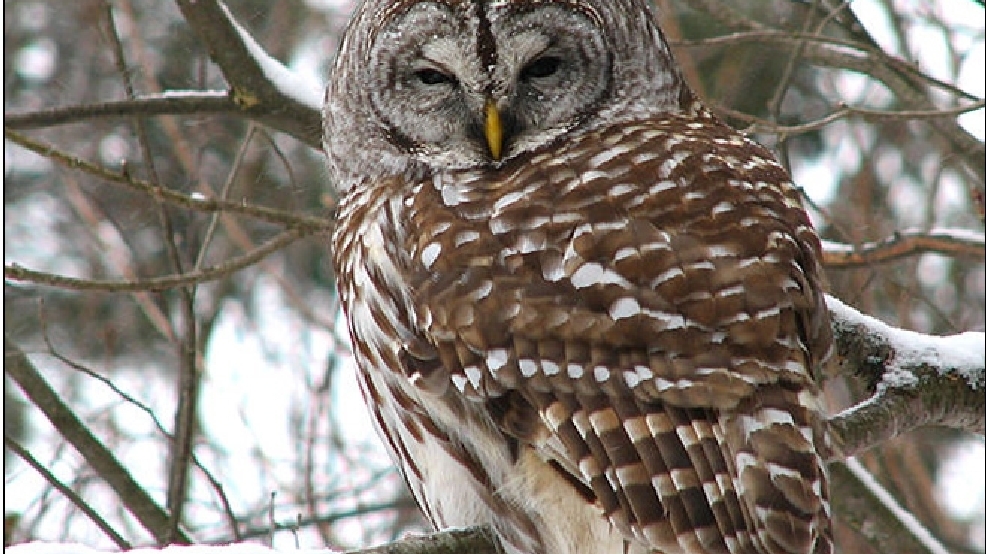
The Pacific Northwest, a realm of emerald forests and mist-laced valleys, has long been a sanctuary for biodiversity. Yet, beneath the canopy’s whispering leaves, an ecological drama has unfolded—one that pits native wisdom against invasive cunning. The barred owl, a charismatic interloper from the eastern woodlands, has quietly upended the delicate balance of this ancient ecosystem. But now, a bold experiment is underway: a management plan that seeks not just to curb, but to restore. What if this audacious endeavor could rewrite the rules of coexistence? What if the barred owl’s reign in the West was not an inevitability, but a fleeting chapter in a much grander story?
The Barred Owl’s Silent Invasion: A Tale of Unintended Consequences
Picture, if you will, the barred owl—not as a villain, but as a wanderer, a survivor of eastern forests who found itself adrift in the Pacific Northwest’s temperate embrace. With its haunting eight-note call echoing through unfamiliar trees, it thrived. The absence of natural predators, coupled with an abundance of prey and nesting sites, allowed its population to swell unchecked. Yet, this success came at a cost. The barred owl’s voracious appetite and aggressive nature have pushed native spotted owls—already teetering on the edge of survival—to the brink. The once-dominant raptor of these woods now finds itself outcompeted, its habitat fragmented, its future uncertain. This is not just a clash of species; it’s a collision of evolutionary legacies, where the invader’s adaptability becomes the native’s undoing.
The Management Plan: A Delicate Dance of Science and Ethics
Enter the U.S. Fish and Wildlife Service’s barred owl management plan—a controversial, yet necessary gambit. The strategy is twofold: targeted removal of barred owls in select areas to alleviate pressure on spotted owls, paired with rigorous monitoring to gauge the plan’s impact. Critics decry it as a form of ecological triage, while proponents argue it’s the only way to buy time for the spotted owl’s recovery. But this is no blunt instrument of eradication. It’s a calculated intervention, one that demands precision, transparency, and an unwavering commitment to ecological integrity. The plan acknowledges that coexistence may not be possible—at least, not yet. For now, the focus is on creating pockets of refuge where the spotted owl can reclaim its rightful place in the forest’s symphony.
Early Signs of Hope: What the Data Reveals
The first whispers of success are emerging. In regions where barred owl removals have taken place, spotted owls have shown signs of resurgence—nests repopulated, fledglings taking flight, the once-familiar hoots of the native species growing louder. It’s a fragile victory, one that hinges on the balance between intervention and observation. Yet, these early indicators suggest that the plan is not just a shot in the dark. It’s a calculated risk, one that could redefine conservation in the 21st century. The barred owl, after all, is not an evil force; it’s a symptom of a larger imbalance—one that humans have played a part in creating. By addressing this imbalance, we’re not just saving a species; we’re restoring a narrative of resilience that stretches back millennia.
The Ethical Tightrope: Balancing Compassion and Conservation
But let’s not mistake pragmatism for cruelty. The removal of barred owls is a somber task, one that forces us to confront uncomfortable questions. Is it ethical to cull one species to save another? Can we justify such actions in the name of biodiversity? The answers are not black and white. Conservation is, at its core, an act of prioritization—of choosing which voices in the forest deserve to be heard. The barred owl, though charismatic, is not native to these lands. Its presence is a historical anomaly, a ripple in the pond of time. The spotted owl, on the other hand, is an icon of the Pacific Northwest’s ancient forests, a living relic of an ecosystem that has existed for centuries. The choice, then, is not between good and evil, but between competing futures. And in this case, the future of the native species must take precedence.
The Broader Implications: A Blueprint for the Future
This plan is more than a localized experiment; it’s a litmus test for conservation in an era of rapid change. Climate shifts, habitat loss, and invasive species are rewriting the rules of nature. The barred owl’s story is a microcosm of a global challenge: how do we preserve what remains when the world is in flux? The Pacific Northwest’s approach offers a potential roadmap—a blend of bold action and adaptive management. It challenges us to think beyond static preservation and embrace a dynamic, responsive conservation ethos. If this plan succeeds, it could set a precedent for other ecosystems grappling with similar crises. If it fails, it will serve as a cautionary tale about the limits of human intervention. Either way, it forces us to ask: What kind of stewards do we want to be?
The Human Element: Communities at the Heart of the Solution
Behind the science and the policy debates are the people who call the Pacific Northwest home. For Indigenous communities, the forest is not just an ecosystem but a living archive of culture and tradition. For loggers, hikers, and wildlife enthusiasts, it’s a place of livelihood and wonder. The barred owl management plan is not just about owls; it’s about the people who depend on these forests. Engaging these communities—listening to their fears, their hopes, and their knowledge—is essential. Conservation cannot be a top-down endeavor. It must be a collaborative endeavor, one that weaves together scientific rigor with local wisdom. The success of this plan may well hinge on whether it can unite these diverse voices under a shared vision of restoration.
A Glimpse into the Future: What Comes Next?
As the barred owl management plan unfolds, the Pacific Northwest stands at a crossroads. Will this be the beginning of a new chapter in ecological harmony, or a cautionary tale of unintended consequences? The answer lies not just in the actions of scientists and policymakers, but in the collective will of a society to reimagine its relationship with nature. The barred owl, with its soulful eyes and haunting calls, may never be fully eradicated from these forests. But perhaps, with time and effort, the spotted owl can reclaim its voice—and with it, the soul of the ancient woods. The story is far from over. The forest is listening. And so, too, should we.