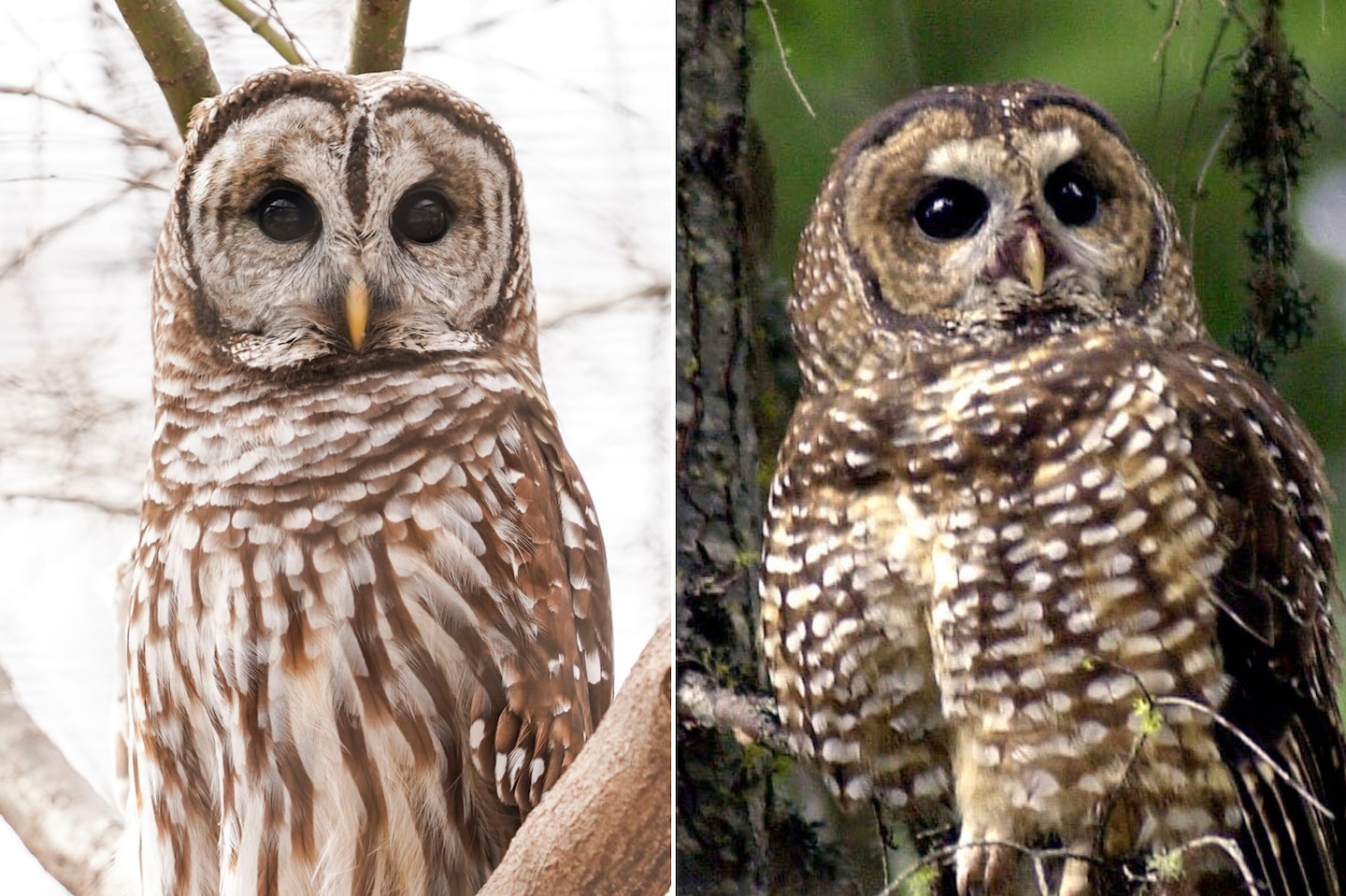
In the shadowed cathedrals of the Pacific Northwest’s ancient forests, a silent drama unfolds—one scripted by evolution but complicated by the ravages of human intervention. The barred owl and the spotted owl, two avian protagonists with overlapping stages, are locked in a contest of survival that teeters on the edge of ecological tragedy. Amidst this quiet war, satellite tracking emerges as a beacon, illuminating the clandestine movements and behaviors of these elusive creatures. It is a tool as precise as a surgeon’s scalpel, dissecting the tangled web of interspecies conflict, conservation efforts, and ecological balance.
The Duel of the Owls: A Tale of Two Species
The barred owl, a stout and adaptable newcomer, resembles a dark knight invading the realm once sovereignly patrolled by the more delicate and reclusive spotted owl. Both species share similarities in habitat preference and diet, yet their coexistence has proven fraught with tension. The spotted owl, sensitive to habitat disruption and an emblem of old-growth forest ecosystems, faces existential threats from the expanding barred owl population, which is more versatile and robust. Their interspecies competition is not merely a battle for space, but a complex struggle that intertwines ecological roles, genetic integrity, and survival imperatives.
Satellite Tracking: Unraveling the Invisible Threads
Like stargazers charting distant constellations, scientists employ satellite technology to map the invisible migratory and territorial pathways of these owls. Tiny transmitters, affixed as discreetly as a whisper on an owl’s back, beam data that reveals patterns once shrouded in mystery. This technology transcends traditional field observation, penetrating fog and darkness to provide granular insights into owls’ habits, territorial shifts, and interactions. Tracking data has unveiled the barred owl’s expansive penetration into spotted owl territories, detailing the pace and mechanics of this biological encroachment with startling clarity.
Decoding the Ecological Symphony: Interactions and Impacts
Each GPS ping tells a story — a whispered note in an ecological symphony where harmony is threatened by dissonance. Barred owls, with their aggressive territoriality and adaptability, often outcompete spotted owls for prime nesting sites and prey resources. Satellite tracking permits conservationists to monitor these confrontations in real time, revealing that barred owls not only usurp habitat but also alter prey dynamics, exacerbating stress on spotted owl populations. These data cultivate a deeper understanding of how one species’ resilience can inadvertently precipitate another’s decline, raising profound moral and scientific questions about intervention.
The Conservation Conundrum: Weighing Ethics and Efficacy
In the theater of wildlife management, the decision to cull barred owls to protect spotted owls resonates like the clashing symbols of mercy and necessity. Satellite tracking informs this contentious strategy by identifying hotspots of barred owl encroachment and pinpointing critical spotted owl habitats where intervention might yield meaningful results. Yet, the act of removing tens of thousands of barred owls triggers ethical debates that reverberate beyond science—a discourse about human responsibility, the sanctity of life, and the complexity of manipulating natural processes. It is a poignant reminder that conservation is not merely an ecological imperative but a philosophical quandary.
The Unique Insights Satellite Technology Affords
Beyond facilitating management decisions, satellite tracking offers an unprecedented window into the secretive lives of these nocturnal sentinels. Fine-scale movement data enrich our comprehension of breeding behavior, dispersal, and habitat utilization. Researchers can discern temporal patterns, such as seasonal shifts in range or responses to environmental stressors, crafting a multidimensional portrait of owl ecology. This high-resolution data embodies the convergence of technology and biology—a tool that transforms abstract concerns into actionable intelligence, making conservation proactive rather than reactive.
Looking Forward: A Path Carved by Data and Determination
The story of the barred and spotted owls is emblematic of broader environmental challenges where technology and stewardship must intertwine. Satellite tracking, while not a panacea, offers a compass guiding conservation efforts through the labyrinth of ecological uncertainty. Its revelations cultivate hope that with vigilance and adaptability, coexistence, or at least balance, can be achieved in the long shadow of old-growth forests. This saga beckons a future where precision science empowers guardianship, turning the tide for species perched precariously between oblivion and survival.