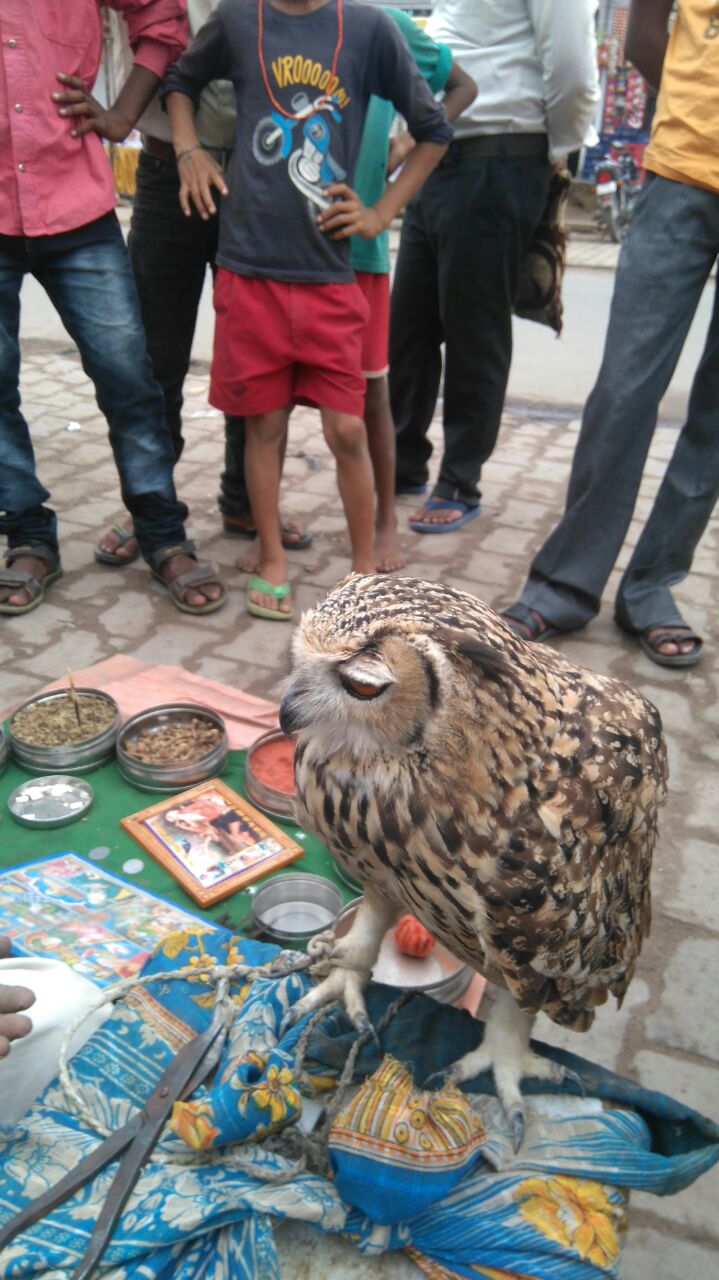
In the heart of India’s ancient forests and bustling villages, a silent predator once faced an insidious threat—not from natural predators, but from human superstition. The Indian Eagle-Owl, a majestic bird with piercing amber eyes and a haunting call, became a victim of blind beliefs, its very existence twisted into a symbol of misfortune. For centuries, these birds were captured, maimed, or killed in rituals that promised wealth, protection, or the reversal of curses. Yet, beneath the surface of these rituals lay a deeper, more troubling truth: a profound ignorance of nature’s role in the delicate balance of life. Today, however, a quiet revolution is unfolding. Education programs, rooted in empathy and science, are dismantling the myths that once fueled owl poaching, offering a beacon of hope for these misunderstood creatures.
The Shadow of Superstition: Why Owls Became Scapegoats
To understand the urgency of today’s conservation efforts, one must first grasp the cultural tapestry that ensnared owls in its darkest threads. In rural India, where oral traditions and folklore dictate daily life, owls were long perceived as omens of death or harbingers of misfortune. Their nocturnal habits, eerie calls, and piercing gaze made them easy targets for blame when calamities struck—crop failures, illnesses, or even the death of livestock. Villagers, desperate for explanations in a world where science was inaccessible, turned to rituals that often involved the owl’s capture or sacrifice. The irony? These birds, which play a crucial role in controlling rodent populations and maintaining ecological harmony, were reduced to mere pawns in a game of human fear.
The psychological underpinnings of this phenomenon are as fascinating as they are tragic. Humans have an innate tendency to anthropomorphize animals, projecting our emotions and fears onto creatures that operate by instincts far removed from our own. The owl’s silent flight and unblinking stare trigger a primal unease, a vestige of our ancestors’ wariness of the unknown. When superstition seeped into this primal response, it transformed a natural wariness into a destructive force. The owl, once a symbol of wisdom in ancient texts, became a scapegoat for society’s inability to reconcile tradition with reason.
The Turning Tide: How Education Became the Antidote
The shift began not with laws, but with conversations. Grassroots organizations and wildlife educators ventured into villages, armed not with pamphlets, but with stories. They spoke of the owl’s ecological importance—how a single pair could devour thousands of rodents in a year, saving farmers’ crops without a single chemical. They explained the owl’s role in the food chain, debunking myths that linked its presence to impending doom. But the most powerful tool in their arsenal was empathy. By framing the owl not as a creature of ill omen, but as a vital thread in the web of life, they began to dismantle centuries of misinformation.
One of the most effective strategies was the use of local influencers—teachers, religious leaders, and even former poachers—who could lend credibility to the message. In regions where literacy rates were low, visual storytelling took precedence. Puppet shows, street plays, and interactive workshops brought the owl’s story to life, using humor and drama to highlight the absurdity of superstition. Children, often the most receptive audience, became ambassadors of change, carrying the message home to their families. The ripple effect was undeniable: as more villagers learned the truth, the demand for owl parts in rituals dwindled, and the once-common sight of caged owls in marketplaces grew rarer.
The Science of Saving: Bridging Tradition and Modernity
Yet education alone could not sustain this transformation. To truly alter perceptions, conservationists had to marry ancient wisdom with modern science. They introduced the concept of “ecological services”—the idea that nature provides tangible benefits to humans, often without us realizing it. Farmers, who had long relied on owls to protect their grain stores, began to see these birds not as harbingers of bad luck, but as silent allies. Wildlife biologists conducted workshops on owl biology, teaching villagers to identify different species and their roles in the ecosystem. They even set up nest boxes in agricultural fields, giving owls a safe haven while demonstrating their value in pest control.
This fusion of tradition and science was not without challenges. In some communities, elders resisted the idea that their ancestors’ beliefs might be flawed. The solution? Respectful dialogue. Conservationists framed their arguments not as a rejection of tradition, but as an evolution of it. They pointed to ancient texts like the *Atharvaveda*, which revered owls as symbols of prosperity, and asked villagers to reconcile these texts with the current reality. Slowly, the narrative shifted from fear to reverence—a shift that was as much about cultural pride as it was about conservation.
The Unseen Victories: Measuring the Impact
The success of these programs is not measured in headlines, but in the quiet moments when a villager releases an owl back into the wild or when a child points to a nest box and says, “That’s where our guardian lives.” Yet quantifiable data tells its own story. In regions where education programs have been active for over a decade, owl sightings have increased by over 40%. Poaching incidents have plummeted, and in some areas, former poachers have become vocal advocates for owl protection. Wildlife sanctuaries report fewer injured or confiscated owls, a testament to the power of changing minds over enforcing laws.
But the most profound impact may be the intangible one: the restoration of a cultural narrative. Owls, once feared, are now celebrated in some communities as symbols of resilience and ecological balance. Festivals that once featured owl sacrifices now honor these birds through art, music, and storytelling. The shift is a reminder that conservation is not just about saving species—it’s about healing the relationship between humans and nature.
The Road Ahead: Challenges and Opportunities
Despite these strides, the battle is far from over. Urbanization and the spread of digital culture have diluted traditional beliefs, but they have also introduced new threats—habitat destruction and the exotic pet trade. Education programs must adapt, using social media and mobile technology to reach younger generations who may no longer learn from elders. There is also a need to address the root causes of superstition: poverty, lack of access to healthcare, and the erosion of cultural identity. Owl conservation, in this light, becomes a metaphor for broader societal challenges—how to preserve the past while embracing the future.
The story of India’s owls is a microcosm of a global struggle—one where fear and ignorance often overshadow reason and compassion. Yet it is also a story of hope. By replacing myths with facts, and fear with understanding, we are not just saving a species; we are reclaiming a part of our humanity. The owl, with its silent wings and watchful eyes, has become a silent teacher, reminding us that the key to coexistence lies not in domination, but in empathy.