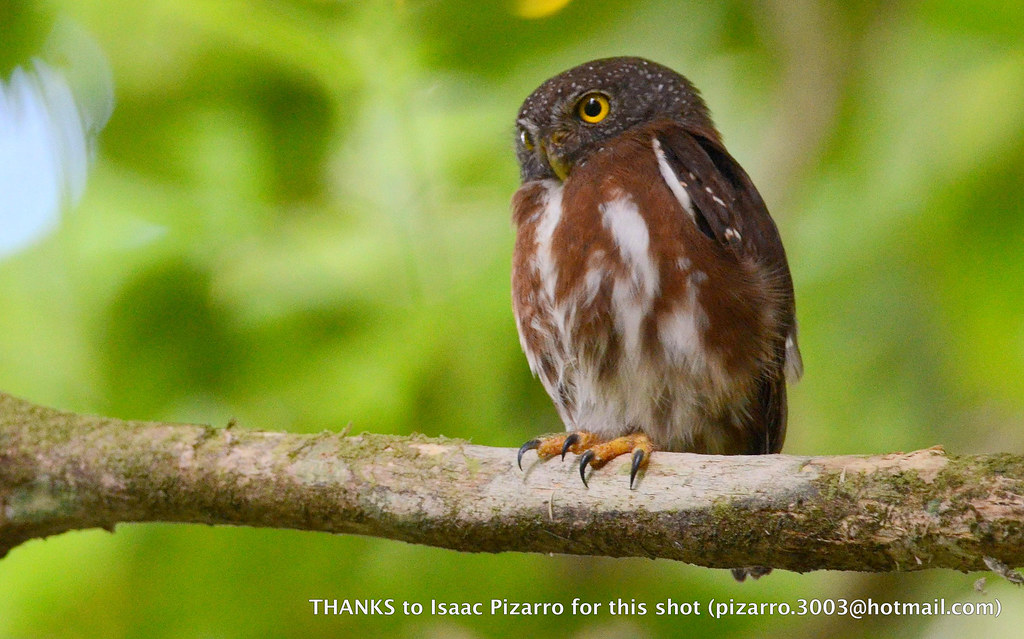
What if I told you that a tiny, feathered sentinel of the Mexican cloud forests—once teetering on the brink of silence—now flits through the emerald canopy with renewed vigor? The Central American pygmy owl, no larger than a sparrow yet brimming with fierce determination, has become an unlikely beneficiary of human intervention. Captive breeding programs, those meticulously orchestrated symphonies of conservation, have played a pivotal role in rewriting its fate. But how exactly did these initiatives transform a species on the edge? And what unexpected hurdles did they encounter along the way?
The Vanishing Canopy: A Species on the Edge of Extinction
Imagine a world where the dawn chorus of the forest fades into a whisper, where the rustle of leaves no longer carries the telltale *hoo-hoo* of a pygmy owl’s call. For decades, the Central American pygmy owl faced a silent siege—habitat fragmentation, agricultural expansion, and illegal pet trade chipped away at its numbers. By the early 2000s, biologists sounded the alarm: this diminutive raptor, *Glaucidium griseiceps*, was slipping through the cracks of Mexico’s biodiversity tapestry. Its survival hinged on a delicate balance—one that humans had tipped too far.
Yet, unlike its larger, more charismatic cousins, the pygmy owl lacked the public adoration that often fuels conservation funding. Its plight was a whisper in a world shouting for tigers and pandas. So, how does a species so unassuming capture the attention—and resources—necessary for its rescue? The answer lay not in its size, but in the ingenuity of those who recognized its ecological significance. As a keystone species, its presence regulates rodent populations and maintains the health of its forest home. Without it, the entire ecosystem could unravel, like a thread pulled from a tapestry.
The Birth of a Lifeline: How Captive Breeding Took Flight
Enter the captive breeding programs—a fusion of science, patience, and sheer stubborn optimism. These initiatives didn’t just pluck owls from the wild; they recreated the conditions of their cloud forest homes in controlled environments. The first challenge? Understanding the pygmy owl’s secretive life. Unlike barn owls, which nest in open barns, pygmy owls favor the dense, moss-draped branches of highland forests. Breeders had to mimic the humidity, temperature, and even the scent of decaying wood to coax the birds into breeding.
But here’s where it gets fascinating. The pygmy owl’s courtship is a ballet of chirps and aerial displays, a performance often missed by human eyes. Breeders had to become fluent in owl body language—tilted heads, puffed feathers, and the telltale *tsip-tsip* calls that signaled readiness. Once pairs bonded, the real work began: hand-rearing chicks. Pygmy owl hatchlings are altricial, meaning they’re born blind and featherless, utterly dependent on their parents. In captivity, this meant round-the-clock feedings of tiny mice and insects, a task that tested the endurance of even the most dedicated caretakers.
Yet, the breakthroughs were worth the effort. By 2015, some programs reported a 70% success rate in fledgling survival—a staggering improvement from the 30% seen in the wild. The owls, it seemed, were thriving under human care. But was this enough?
The Reintroduction Gambit: Can the Wild Embrace Its Lost Chicks?
Here’s the crux: captive-bred pygmy owls are like teenagers raised in a bubble, suddenly thrust into the chaos of the real world. Reintroduction isn’t just about releasing them into the forest—it’s about ensuring they can hunt, evade predators, and, most importantly, find a mate. The first hurdle? Predation. While adult pygmy owls are fearless hunters, their fledglings are vulnerable to snakes, larger birds, and even domestic cats. Some released owls never made it past their first week.
Then there’s the issue of territory. Pygmy owls are fiercely territorial, and established pairs won’t welcome newcomers with open talons. Biologists had to strategically release birds in areas with low owl density, a delicate chess game of habitat mapping. Worse still, some released owls exhibited bizarre behaviors—confusing power lines for perches, or attempting to nest in abandoned shoe boxes left by hikers. The forest, it turned out, was far more complex than any human-made enclosure.
Yet, the most insidious challenge was psychological. In the wild, pygmy owls learn survival skills from their parents. Captive-bred owls, deprived of this education, often lacked the instinct to avoid danger. Some starved because they didn’t recognize prey, while others flew into windows, mistaking reflections for open sky. The question loomed: Were these owls truly saved if they couldn’t survive without human intervention?
The Unseen Costs: Ethical Dilemmas in Conservation
Captive breeding isn’t a silver bullet—it’s a bandage on a gaping wound, and bandages come with their own complications. The ethical tightrope walk begins with the source of the birds. Should programs rely on wild-caught individuals, risking further depletion of fragile populations? Or should they focus solely on captive-born owls, even if it means slower genetic diversity? Some critics argue that these programs create a false sense of security, diverting attention from the real enemy: habitat destruction.
Then there’s the issue of genetic bottlenecks. When a species is reduced to a handful of individuals, inbreeding becomes a ticking time bomb. Pygmy owl populations in Mexico were so fragmented that some lines carried rare, deleterious genes. Breeders had to introduce unrelated individuals from distant regions—a logistical nightmare that required permits, transport, and, inevitably, stress for the birds. Was the cure worse than the disease?
And let’s not forget the human cost. These programs demand years of funding, expertise, and emotional investment. When a released owl vanishes into the canopy, never to be seen again, the heartbreak is palpable. Conservationists often joke that captive breeding is 10% science and 90% hope—a gamble where the house (nature) always has the final say.
The Ripple Effect: Beyond the Owl’s Survival
Yet, for all its flaws, captive breeding has undeniable benefits. The pygmy owl’s resurgence has become a symbol—a feathered mascot for Mexico’s cloud forests. Local communities, once indifferent to the owl’s plight, now participate in nest-box programs, turning their farms into owl-friendly zones. Ecotourism has bloomed, with birdwatchers flocking to see the “owl of the mist” in its natural habitat. The pygmy owl, it seems, has become an ambassador for its ecosystem.
But the story doesn’t end there. The techniques honed for the pygmy owl are now being applied to other threatened species—from the elusive ocelot to the vibrant quetzal. The lessons learned are a blueprint for rewilding, a testament to what happens when science and passion collide. Still, the greatest victory isn’t the owl’s survival—it’s the realization that even the smallest creatures can rewrite the rules of conservation.
So, the next time you hear the distant *hoo-hoo* of a pygmy owl in the Mexican highlands, pause. Behind that call lies a tale of resilience, ingenuity, and the fragile thread that connects human ambition to nature’s quiet triumphs. And ask yourself: What other lost voices are waiting to be heard?