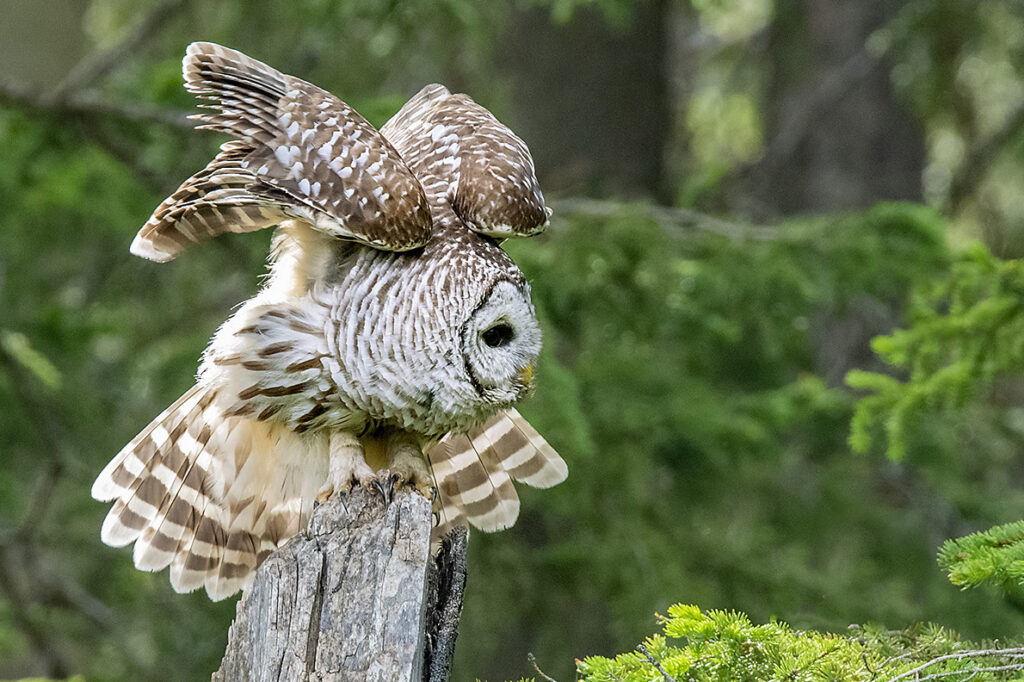
In the vast tapestry of video game narratives and character design, certain creatures emerge not just as background aesthetics but as potent symbols and storytellers in their own right. Among these fascinating beings, the Barred Owl holds a distinctive place. Many gamers might have encountered this mysterious nocturnal avian, yet few pause to consider how the Barred Owl transcends mere presence to embody deeper layers of storytelling, atmosphere, and cultural resonance within gaming worlds. Exploring their appearances and inspirations unveils a fascinating interplay between myth, symbolism, and interactive storytelling, promising a refreshing shift in perspective about this enigmatic bird’s power in video games.
The Symbolic Essence of Barred Owls in Game Lore
The Barred Owl, with its hauntingly melodic hoot and haunting visage, has long symbolized wisdom, intuition, and an eerie connection to the unseen. In video games, this symbolism is often amplified, transforming the owl from mere fauna to a carrier of arcane knowledge or guardian of ethereal realms. Unlike more common eagle or hawk characters, barred owls evoke a nocturnal familiarity—residents of shadowy forests, watchers of hidden truths. This intrinsic mystique prompts game creators to weave them into narratives as sentinels or guides, urging players to look beyond the surface and question the nature of reality within the game’s universe.
Leveraging their barred feather pattern as a visual motif, developers craft environments and quests suffused with cryptic codes, puzzles, and hidden paths—each echoing the owl’s cryptic patterns. Their presence often signals moments of revelation or turning points in a storyline, inviting players to adopt a new lens, one that embraces subtlety and depth over brute force and simplistic solutions.
Barred Owls as Characters: From Mystical Guides to Enigmatic Villains
In character form, barred owls demonstrate remarkable versatility. Some games elevate them as wise mentors or spiritual allies, whispering secrets crucial to the protagonist’s journey. These characters are imbued with a stoic calmness, their knowledge often ancient and steeped in forgotten traditions. They become mediators between the mortal world and mystical dimensions, offering cryptic advice or unlocking hidden abilities. Their dialogue, usually sparse and riddled with metaphor, demands players engage cognitively and emotionally, deepening immersion.
Conversely, the barred owl’s eerie aura can be harnessed for more ominous effects. Certain titles recast them as shadowy antagonists—foreboding presences that stalk the player through dim forests or decrepit ruins. These versions of the owl tap into primal fears of the night’s unknown, heightening tension and suspense. Their sudden appearances, almost ghostlike, serve as formidable reminders of nature’s mysteries and the thin line between knowledge and danger. This duality highlights the owl’s ambiguous place in folklore, neither wholly benevolent nor purely malevolent, fostering unpredictable narrative developments.
Environmental and Atmospheric Contributions in Game Worlds
Beyond characters, barred owls provide critical atmospheric depth to game settings. Their hooting calls pierce nightscapes, imbibing forests and old-growth woods with an almost palpable sense of life and watchfulness. Sound designers meticulously layer these calls into ambient soundtracks, turning silence into a living entity. This auditory presence influences player psychology—calming and unsettling in equal measure, it reinforces the game’s mood and heightens sensory awareness.
Graphically, the barred owl’s presence signifies untamed wilderness and organic mystery. Their interactions with light—catching moonbeams on barred wings or flitting between shadows—are rendered with painstaking detail in some games, elevating them to symbols of natural beauty and complexity. The owl’s silhouette itself becomes a visual leitmotif, linking story chapters or marking significant locales, creating a symbolic geography unique to each narrative experience.
Inspirations from Mythology and Folklore Feeding Game Design
Designers often draw upon the rich tapestry of barred owl-related folklore to infuse their games with thematic depth. Across cultures, the owl serves as a herald of change, a bearer of omens, or a bridge between worlds—realms of the living, the dead, and the magical. This mythological cachet provides fertile ground for developers pursuing layered storytelling.
For example, leveraging Native American legends, where the barred owl might be a guardian spirit or embodiment of ancestral wisdom, games reimagine these themes with respect and creativity, crafting unique questlines that challenge players to reconcile the tangible and the transcendent. Similarly, European traditions linking owls with witchcraft and hidden knowledge inspire enigmatic magic systems or secret societies within games, often featuring barred owl motifs on crests and relics. Through such homage, barred owls become conduits connecting players to a collective cultural imagination, enriching gameplay with narrative gravitas and symbolic resonance.
Case Studies: Notable Appearances of Barred Owls in Video Games
Several games stand out for their compelling incorporation of barred owls. In some immersive RPGs, barred owls appear as familiars or spirit companions, their subtle animations and sounds enhancing player attachment and offering gameplay advantages such as detection of hidden threats or environmental clues. Other narrative-driven games cast them as puzzle elements or mysterious entities that unlock secret levels or story arcs when players decipher their calls or patterns.
These implementations showcase a deliberate move away from superficial animal sidekicks toward nuanced characters with embedded lore and functional gameplay impact. Experiencing barred owls in these contexts challenges players to engage with natural elements thoughtfully, nudging them towards a more contemplative, explorative mindset—one that emphasizes patience, observation, and respect for the game world’s “wild” intelligence.
Redefining Player Perspectives Through Barred Owl Integrations
The transformative potential of the barred owl in video games lies in its ability to shift player perception. By intertwining these creatures with the storyline, environment, and mechanics, developers invite players to adopt an observant, reflective stance. Instead of charging headfirst into action, players are encouraged to listen—to the hoots echoing through virtual forests, to the subtle hint of movement beyond the campfire’s glow, to the riddles whispered in owl-like cadence.
This engagement model nurtures a different kind of gameplay experience, one where curiosity supplants aggression and mystery replaces mere challenge. Barred owls become silent mentors, guiding players toward unexpected discoveries and new ways of interpreting interactive worlds. In doing so, they expand the narrative and emotional range of video games, proving that sometimes, wisdom—and wonder—really does come on silent wings under cover of night.