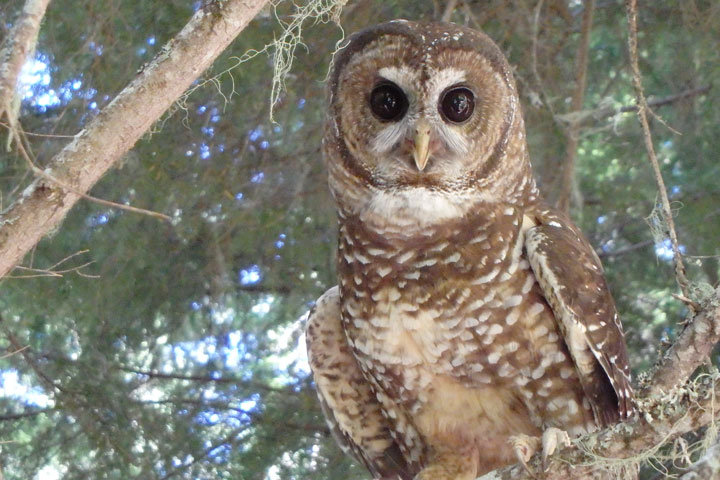
The ancient forests of the Pacific Northwest once echoed with the haunting calls of the northern spotted owl—a bird whose fate became inextricably woven into the fabric of environmental policy, corporate lobbying, and the fiery breath of wildfires. These flames, both feared and revered, have sculpted ecosystems for millennia, but their relationship with the spotted owl is far from simple. It is a tale of survival, adaptation, and the delicate balance between destruction and renewal. To understand the role of wildfires in shaping spotted owl populations is to peer into a world where fire is not merely an enemy but a silent architect of change.
The Pyric Pulse: How Fire Reshapes the Forest’s Skeleton
Wildfires are the forest’s great transformer, carving through centuries-old stands with a ferocity that belies their ecological necessity. In the Pacific Northwest, where the spotted owl once reigned as an apex predator of the night, fire’s touch is both destructive and regenerative. The owl’s habitat—dense, old-growth forests—is not static; it is a living tapestry, constantly rewoven by the threads of disturbance. When fire sweeps through, it does not merely consume; it recalibrates. The towering Douglas firs and ponderosa pines, adapted to fire’s embrace, may perish, but their ashes nourish the soil, birthing a new generation of flora that will, in time, provide shelter for the owl once more.
Yet, this cycle is not without its casualties. The spotted owl, a creature of habit and deep forest, finds itself caught in the crosshairs of a changing landscape. The fires of today are not the same as those of a century ago. Climate change has stoked their intensity, turning what were once cleansing burns into infernos that scorch the earth bare. The owl’s domain, already fragmented by logging and urban sprawl, now faces a new threat: a forest that burns too hot, too fast, leaving behind a wasteland where once there was a cathedral of green.

The Owl’s Dilemma: Adaptation in a World Ablaze
The spotted owl is a creature of paradox. It thrives in the deep, dark heart of old-growth forests, yet it is not immune to the whims of fire. As wildfires grow more frequent and severe, the owl must either adapt or retreat. Some populations have shown remarkable resilience, nesting in the charred remnants of trees or exploiting the post-fire flush of prey—rodents and insects that flourish in the newly sunlit understory. Others, however, are pushed to the brink, their territories shrinking as the forest’s mosaic becomes a patchwork of blackened scars and skeletal trees.
This adaptation is not without cost. The owl’s reproductive success hinges on the stability of its habitat. A fire that burns too hot may destroy the very cavities where owls nest, leaving them to seek refuge in less ideal territories. The stress of displacement can weaken their immune systems, making them vulnerable to disease and predation. In this way, wildfires do not merely reshape the landscape; they test the very resilience of the species that call it home.
Fire’s Double-Edged Sword: The Paradox of Destruction and Renewal
To speak of wildfires and spotted owls is to confront a paradox: fire is both the owl’s nemesis and its silent partner. In the absence of fire, forests become overgrown, choked with underbrush that fuels catastrophic blazes. The owl, adapted to a landscape maintained by frequent, low-intensity fires, finds itself in a world where the natural order has been upended. Without fire’s periodic touch, the forest grows dense and impenetrable, leaving the owl with fewer hunting grounds and less visibility to spot its prey.
Yet, when fire returns with a vengeance, it can reset the forest’s clock, creating openings where sunlight can penetrate and new life can take root. The spotted owl, though not a fire-adapted species in the traditional sense, can benefit from these disturbances—if they are not too severe. The key lies in balance: fires that are too frequent or too intense can push the owl toward extinction, while those that are carefully managed can create a mosaic of habitats that sustain the species for generations.
The Human Hand: How Policy and Climate Change Alter the Equation
The fate of the spotted owl is no longer dictated solely by the whims of nature. Human hands have reshaped the equation, from the policies that govern forest management to the global forces of climate change. Fire suppression, once hailed as a triumph of modern forestry, has led to an accumulation of fuel that now feeds the megafires of today. Meanwhile, climate change has altered weather patterns, creating hotter, drier conditions that turn forests into tinderboxes.
In this altered world, the spotted owl faces a gauntlet of challenges. Conservation efforts have sought to protect its habitat, but the fires rage on, fueled by a climate that grows increasingly inhospitable. The owl’s survival now depends on a delicate interplay between human intervention and natural processes—a balance that is increasingly difficult to strike.
The Future in the Ashes: Can the Spotted Owl Endure?
The story of the spotted owl and wildfires is far from over. As the climate continues to warm and forests continue to burn, the owl’s future hangs in the balance. Some scientists predict that the species will adapt, finding new refuges in the post-fire landscape. Others warn that the window for survival is closing, that the fires of tomorrow will be too fierce, too frequent, for the owl to endure.
Yet, in the ashes of the old forests, there is hope. The spotted owl is a survivor, a creature of quiet strength and adaptability. If given the chance—if forests are managed with fire in mind, if climate change is curbed, if the owl’s habitat is protected—the species may yet find a way to thrive in a world that is constantly being reborn from the flames.
The wildfires of today are not just a threat; they are a challenge. A challenge to the resilience of nature, to the ingenuity of conservationists, and to the very future of the spotted owl. In the dance of destruction and renewal, the owl may yet find its rhythm—and in doing so, remind us all that even in the darkest of fires, there is the potential for light.