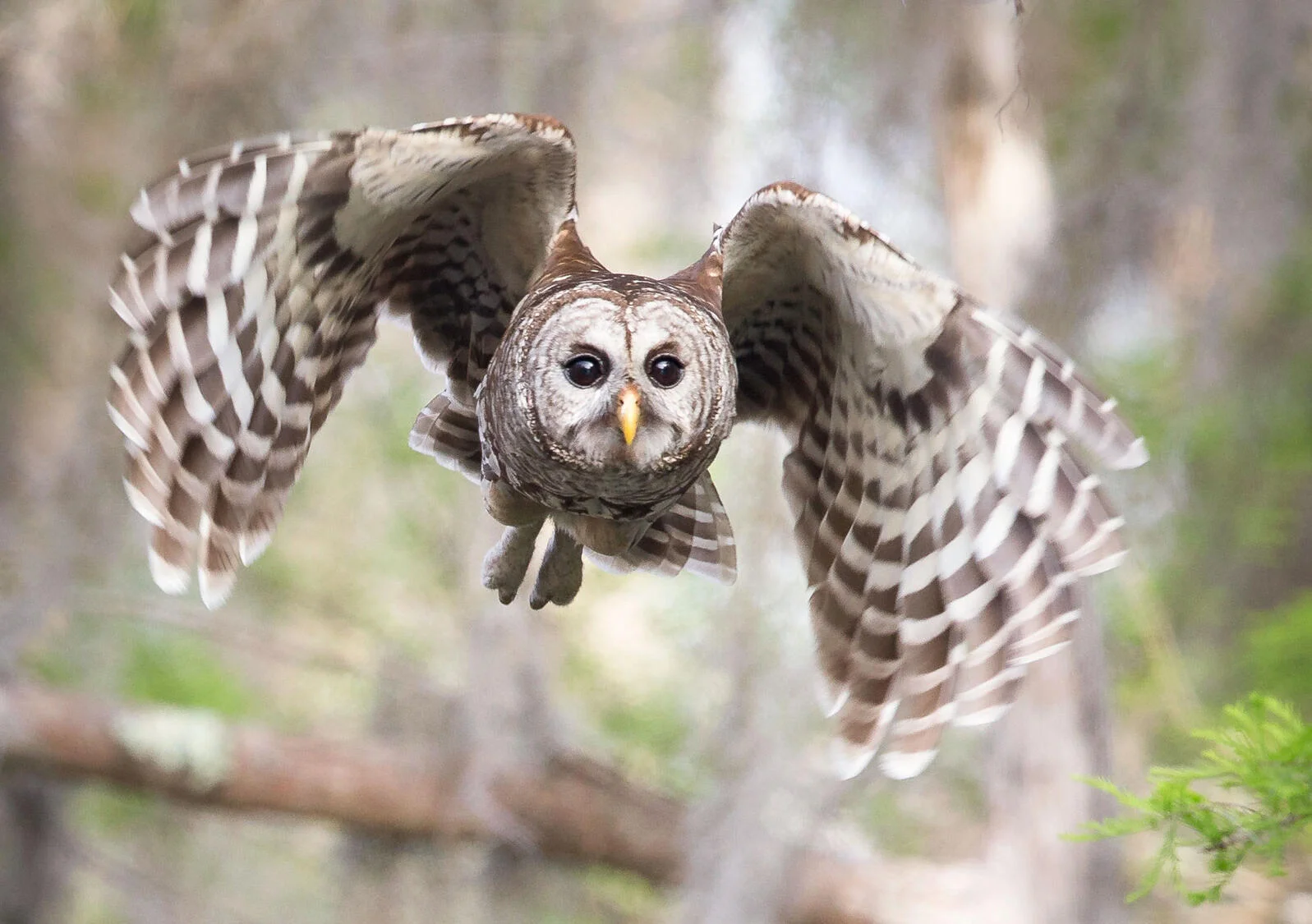
In the hushed twilight of Pacific Northwest forests, a silent rivalry unfolds. Barred owls, with their haunting Who-cooks-for-you? calls, have expanded their range, encroaching upon the territories of the endangered spotted owl. This ecological tension has sparked a heated debate: Can we curb the barred owl’s dominance without resorting to lethal measures? The answer lies not in eradication, but in innovation—harnessing science, policy, and community action to restore balance. Let’s explore the multifaceted strategies that offer hope for coexistence.
The Ecological Conundrum: Why Barred Owls Pose a Threat
Barred owls (*Strix varia*), native to eastern North America, have surged westward, their adaptability outpacing that of their spotted owl (*Strix occidentalis*) counterparts. These interlopers are larger, more aggressive, and less picky about habitat, outcompeting spotted owls for food and nesting sites. The result? A steep decline in spotted owl populations, pushing them further toward extinction. The dilemma is stark: barred owls are thriving at the expense of a species already teetering on the brink. Yet, their presence isn’t inherently malicious—it’s a symptom of broader ecological disruption, from climate change to deforestation. To control their spread without violence, we must first understand the root of their success.
Habitat Modification: Reshaping the Landscape for Balance
One of the most subtle yet powerful tools in ecological management is habitat manipulation. By altering the structure of forests, we can create conditions that favor spotted owls while discouraging barred owls. Selective thinning of dense understories, for instance, reduces the barred owl’s preferred hunting grounds, forcing them to seek territories where spotted owls already dominate. Planting late-successional forests—mature woodlands with complex canopies—can also tip the scales in favor of the native species. These methods require patience and precision, but they offer a non-lethal path to rebalancing the ecosystem. The key lies in tailoring interventions to the specific needs of each owl species, ensuring that barred owls are nudged rather than eradicated.

Acoustic Deterrents: The Power of Sound to Redirect Behavior
Nature has its own language, and barred owls are fluent in it. Researchers have experimented with acoustic deterrents—playing recorded spotted owl calls or distress signals—to discourage barred owls from settling in contested areas. The idea is simple: if barred owls associate a territory with the presence of a dominant competitor, they may avoid it altogether. Early trials show promise, though results are mixed. Some barred owls ignore the calls, while others retreat, suggesting that context matters. The effectiveness of this method depends on timing, volume, and the owls’ behavioral plasticity. Still, it’s a low-impact strategy that avoids harm, relying instead on the owls’ own instincts to guide their movements.
Nest Boxes and Artificial Nesting Sites: A Competitive Edge
In the race for real estate, spotted owls often lose to barred owls, who are less particular about nesting sites. One solution? Provide spotted owls with a competitive advantage through nest boxes and artificial nesting platforms. Strategically placed in mature forests, these structures mimic the natural cavities spotted owls prefer but are less likely to be usurped by barred owls. The approach has shown success in other owl conservation efforts, and preliminary studies suggest it could work here too. By ensuring spotted owls have secure, high-quality nesting options, we can reduce their vulnerability to displacement. It’s a small intervention with outsized potential—proof that sometimes, the best offense is a well-designed defense.
Community Engagement: The Role of Citizen Science
Conservation isn’t just the domain of scientists—it’s a collective endeavor. Engaging local communities in barred owl monitoring can yield invaluable data while fostering stewardship. Citizen science projects, where volunteers record owl calls or report sightings, help researchers track barred owl movements without invasive methods. These efforts also raise awareness, turning neighbors into allies in the fight to protect spotted owls. Workshops, guided owl-watching tours, and school programs can further embed conservation into the cultural fabric of the region. When people feel invested in the outcome, they become powerful advocates for non-lethal solutions. The message is clear: the future of these owls isn’t just in the hands of experts—it’s in ours.
Policy and Regulation: Crafting a Legal Framework for Peaceful Coexistence
No ecological intervention exists in a vacuum, and policy plays a critical role in shaping outcomes. Current regulations, such as the U.S. Fish and Wildlife Service’s barred owl management plan, allow for limited lethal control in extreme cases. However, expanding non-lethal alternatives within these frameworks could provide a middle path. Advocacy for stricter habitat protections, incentives for private landowners to manage forests sustainably, and funding for research into innovative deterrents are all vital. Policymakers must balance urgency with ethics, ensuring that conservation efforts don’t inadvertently harm other species or ecosystems. The goal isn’t just to slow the barred owl’s advance, but to create a legal and financial environment where coexistence is the default.
Technological Innovations: Drones, AI, and the Future of Owl Management
The frontiers of conservation are being redrawn by technology. Drones equipped with thermal imaging can survey vast tracts of forest, pinpointing barred owl nests without disturbing them. Artificial intelligence, trained to recognize owl calls from audio recordings, can process data at speeds impossible for humans, identifying patterns in barred owl expansion. Even blockchain is being explored to track conservation efforts transparently. These tools aren’t silver bullets, but they offer precision and scalability. The challenge lies in making them accessible and affordable for wildlife agencies. As technology evolves, so too does our ability to manage ecosystems with minimal intervention—proving that even in conservation, the future is automated.
Ethical Considerations: The Moral Weight of Non-Lethal Control
At its core, this debate is about ethics. Is it right to manipulate the behavior of one species to save another? The answer isn’t straightforward. Non-lethal methods acknowledge the intrinsic value of barred owls while prioritizing the survival of a critically endangered species. Yet, they also raise questions about human intervention in nature. Are we playing puppet master, or stewards? The key is transparency—ensuring that every action is justified, monitored, and reversible. Conservation isn’t about playing God; it’s about correcting the imbalances we’ve created. By choosing non-lethal strategies, we affirm that life, in all its forms, deserves a chance to thrive.
A Glimmer of Hope: Success Stories from the Field
Amid the challenges, there are beacons of hope. In parts of California, where barred owl populations have been aggressively managed, spotted owl numbers have stabilized in some areas. Hybrid zones—where both species coexist—are being studied for clues on how to foster balance. Even in regions where barred owls dominate, small-scale interventions have shown that spotted owls can reclaim territory when given the right conditions. These successes, though modest, prove that non-lethal control isn’t just a theoretical ideal—it’s a practical reality. The path forward is uncertain, but it’s paved with possibility.
The barred owl dilemma is more than a wildlife issue; it’s a mirror reflecting our relationship with nature. Can we coexist without destruction? The answer lies in our willingness to innovate, collaborate, and rethink our role in the natural world. By embracing non-lethal solutions, we don’t just save a species—we redefine what conservation can be: a harmonious blend of science, compassion, and foresight.